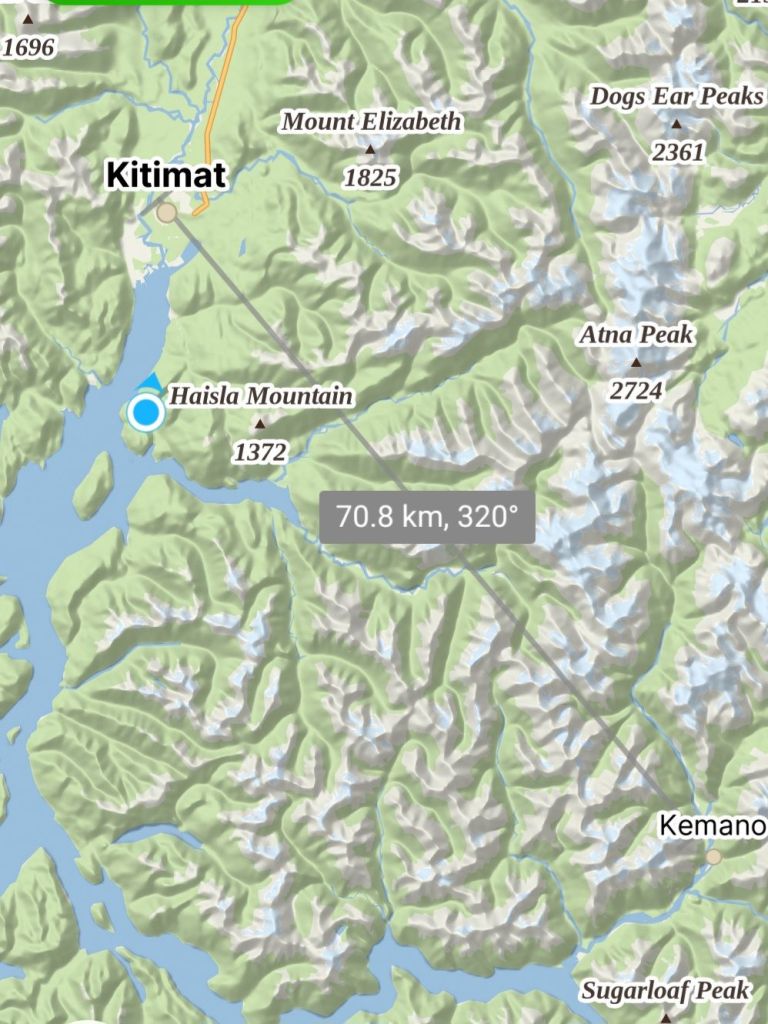
Kitimat had the world’s biggest aluminum smelter in the 1950s. I’ve never understood how this project works. Let’s try together.
British Columbia is rocks, trees and rain. And down in the corner, the bit best avoided, Vancouver. The government had some boffins looking for opportunities, and they noticed the Coast Mountains were steep, and the rivers flowed east away from the Pacific in some places.
If we pick the right river, build a big dam, and run the river backwards through a huge tunnel drilled through a mountain, we can make a ton of electricity on the Pacific coast where no one lives.
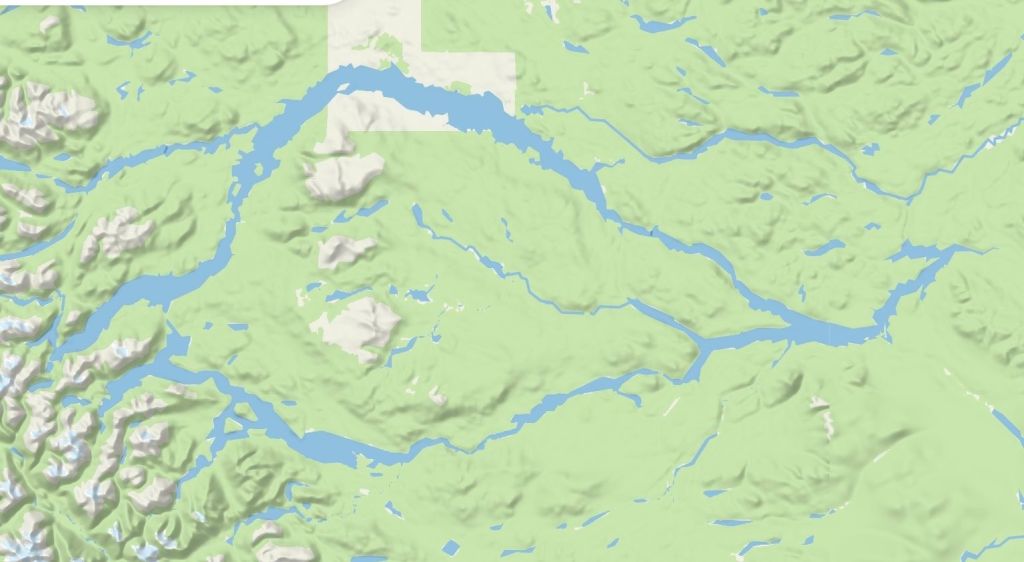
The lake is over 200km long. Comparable to the volume and area of the Three Gorges reservoir in China. Tiny when compared to the James Bay project in Quebec. Canada did massive projects not too long ago.Now that we’ve built the largest rockfill dam in the world (at the time), we need to punch a tunnel for the water to go west, under the spine of the Coast Mountains.And then convert 800 vertical meters of water pressure (scary) into electricity, and ship it over the mountains to the nearest deep fjord.
What do you do with all this electricity in the middle of nowhere? Aluminum has a problem – it’s ore is common and cheap, but needs a ridiculous amount of electricity to turn into metal. Electrons are way too scary to ship around, so the easiest solution is to send the ore where electricity is cheap. Kitimat.
The project was privately funded, and done in 5 years. The whole company was bought by Rio Tinto. We visited the birthplace of Rio Tinto in Spain this spring. Literally Red River. Swimming not advised.
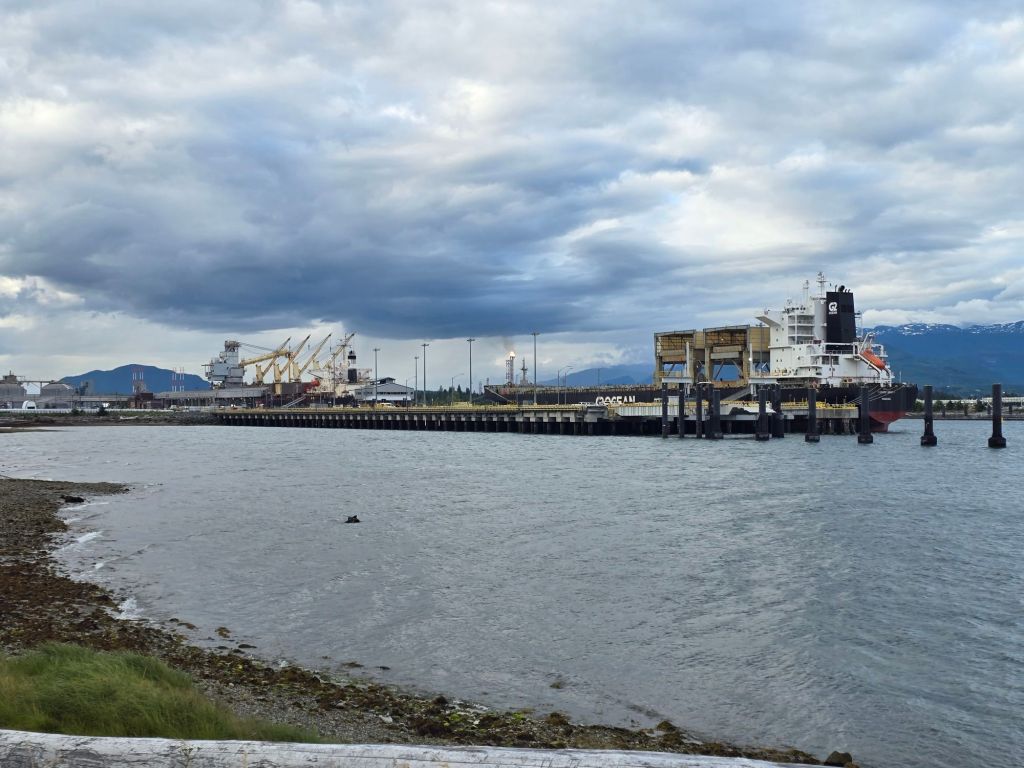
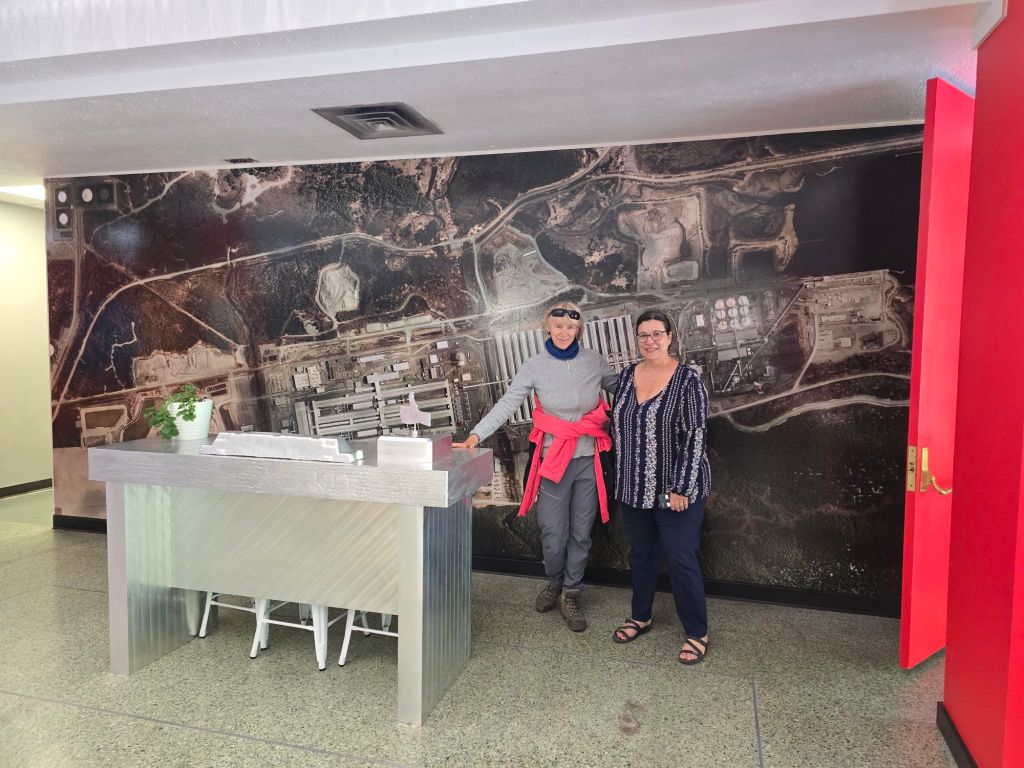
One ship in port is direct from India, and the other from South Korea.The promised tours only happen on Friday, and Marta is clinically waiting-challenged. This nice lady talks to us anyway. Lots of construction and demolition ongoing. This plant was built when engineers considered asbestos underwear to be a solution for Taco Bell.Kitimat is a company town – there are reminders everywhere to be safe. Company parking lots mandate backing into parking stalls – not the norm in Canada.
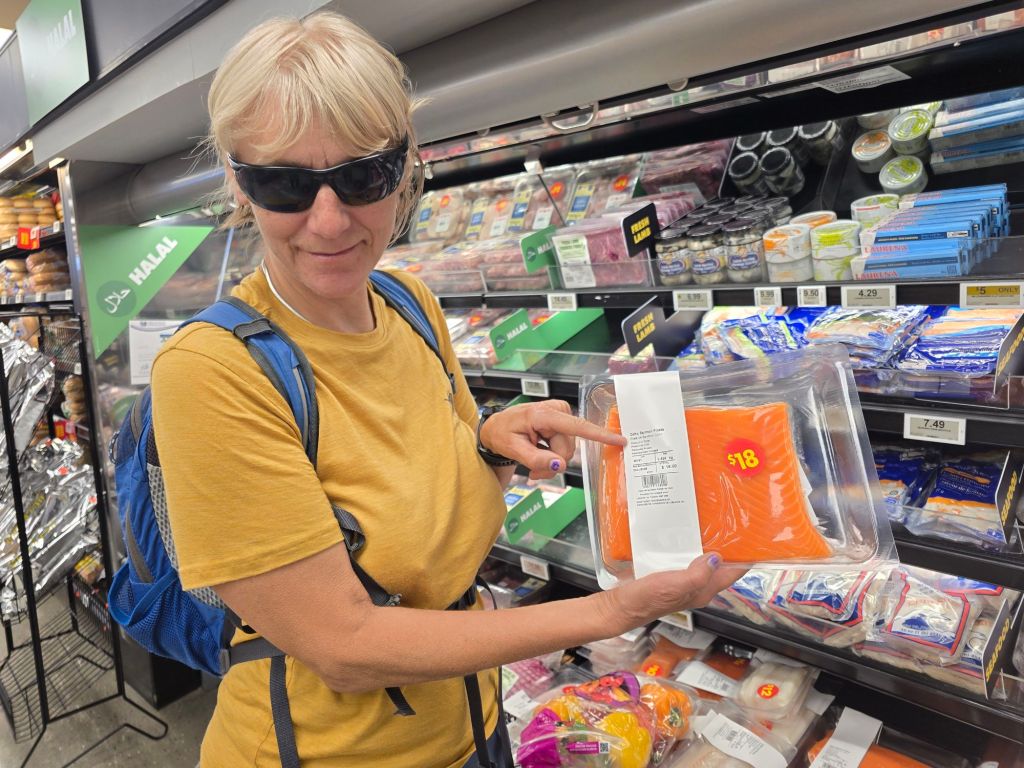
This seal is making itself unpopular, eating the salmon right off the hook.We arrive at the end of the spring salmon run. Fisherman are pulling meter-long salmon out down the street, and this salmon filet came from Chile. Ah, globalization.
It’s not fair to blame this on corporations. There are many special interest groups focused on making sure a fisherman can’t sell the fish they just pulled out of the river. I feel a kinship with the Mexicans we seen this winter, turning a pig into Carnitas into pesos in a morning. Or an old broken pickup truck and a bag of fertilizer into silver ore. Very not allowed in Canada.
In spite of Canada’s excessive rules, I also like sleeping at night, and wow – Canada feels safe!
Marta is feeling sick, so we take a zero day close to Kitimat, but not so close I get thrown in jail for flying the drone
I made a ton of videos about Delicas. Not much good at sitting in the sun.
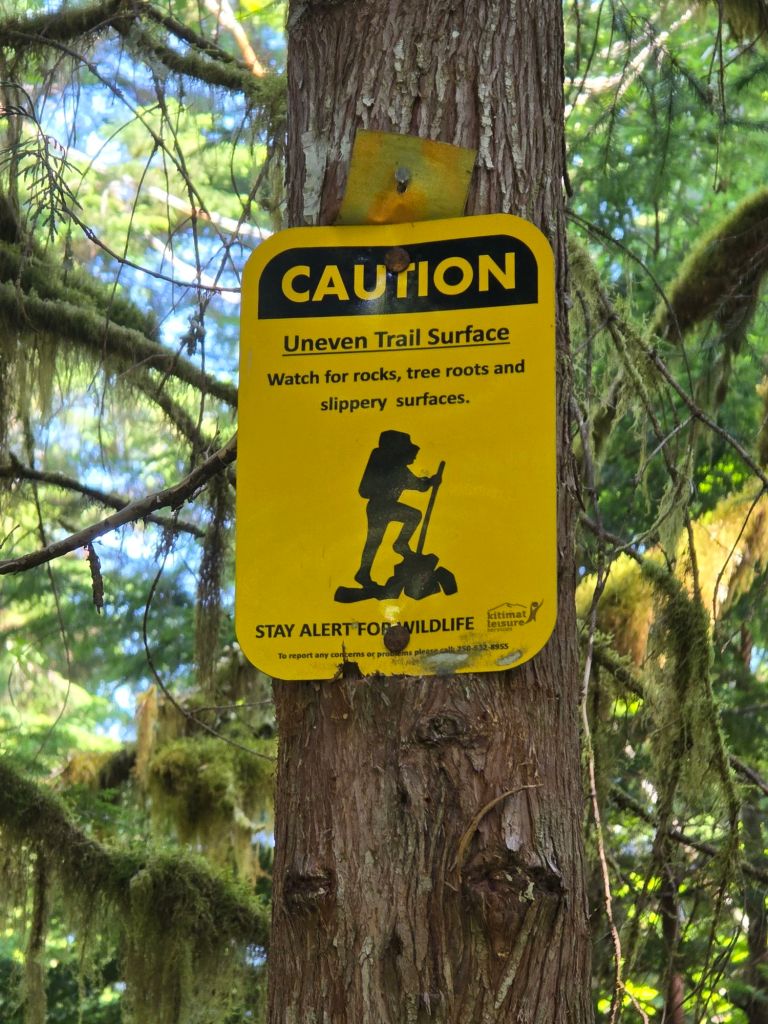
Marta is still sick, so our hikes stay small. But pretty.
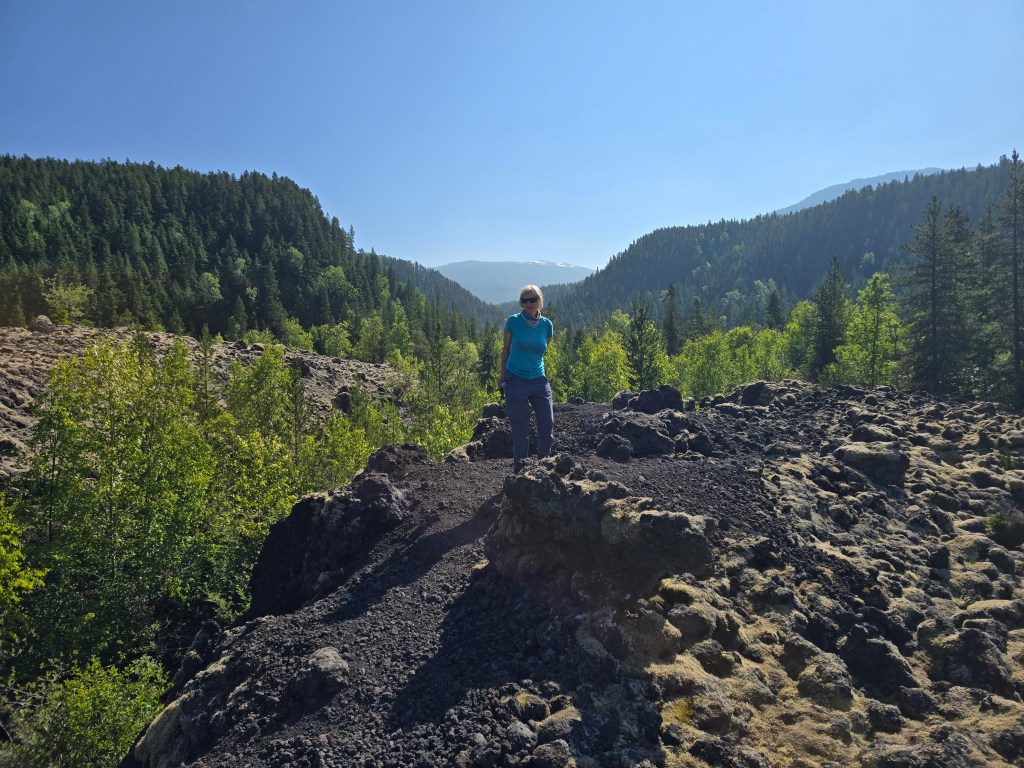
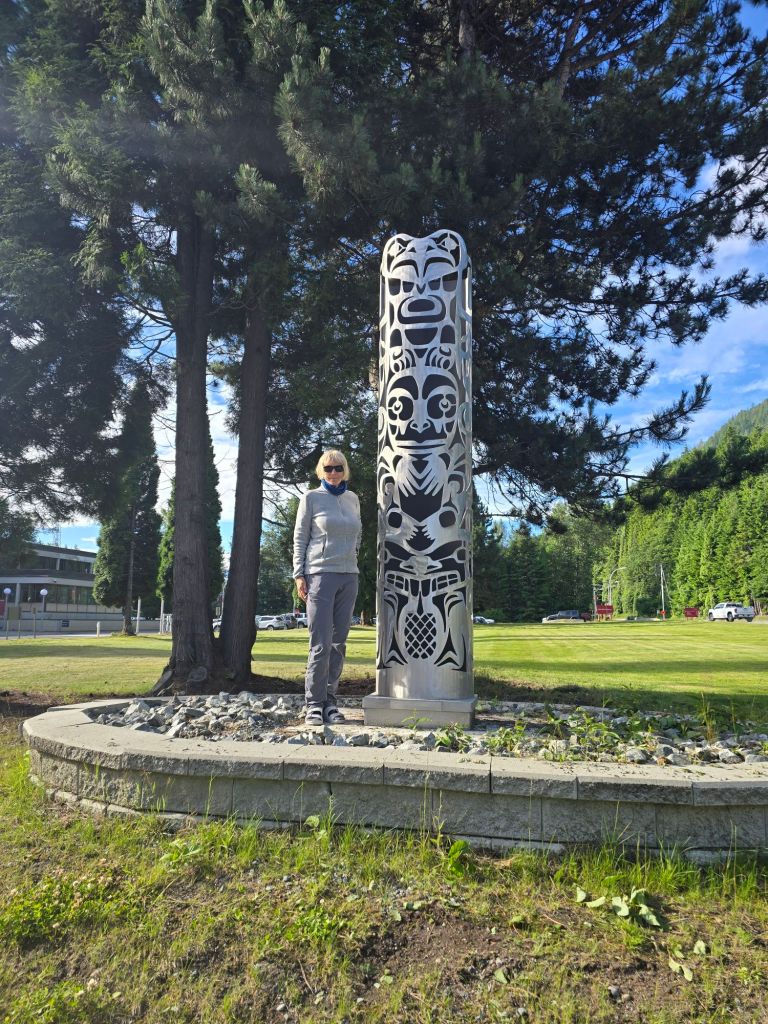
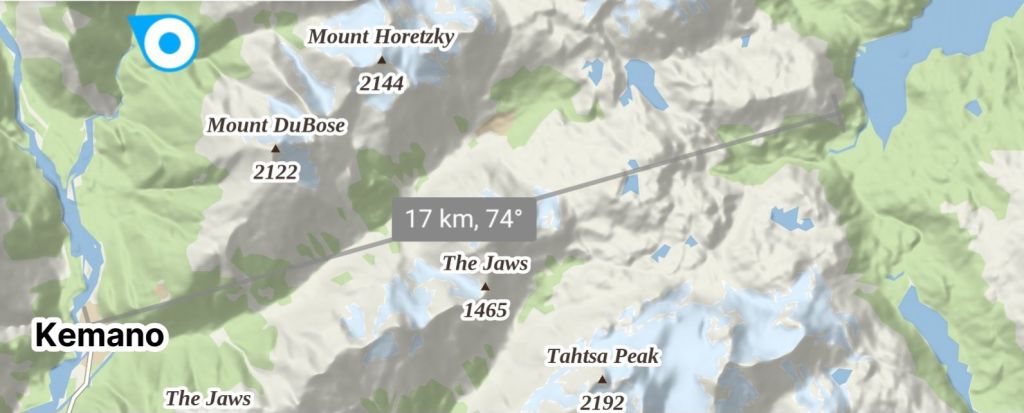
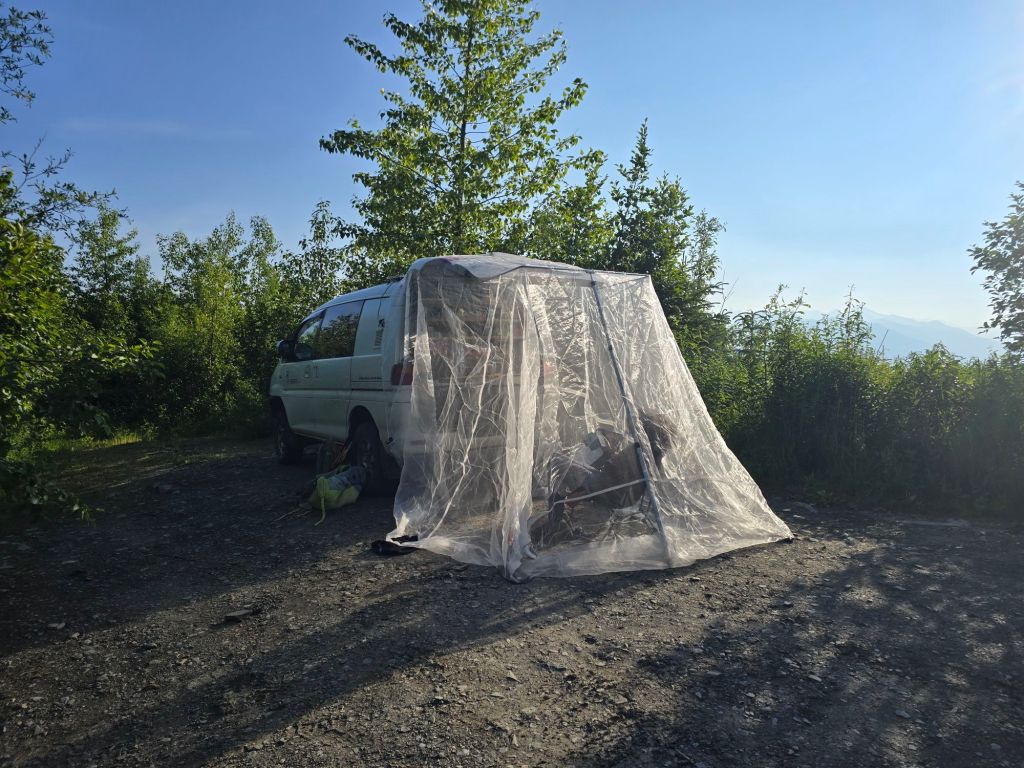
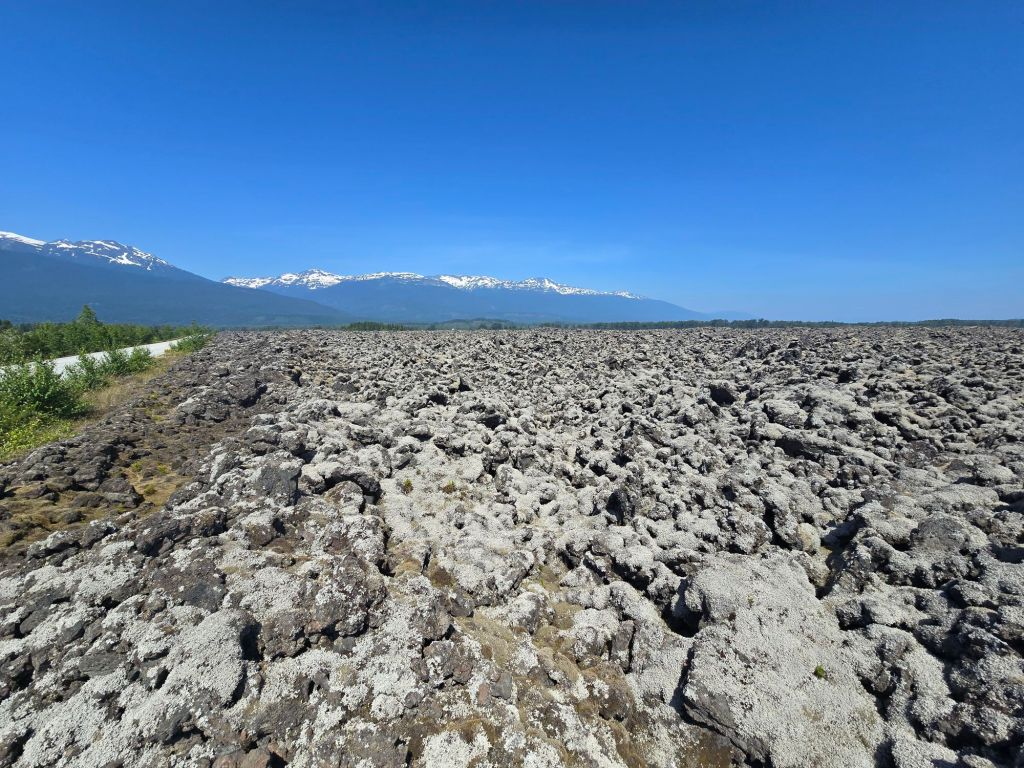
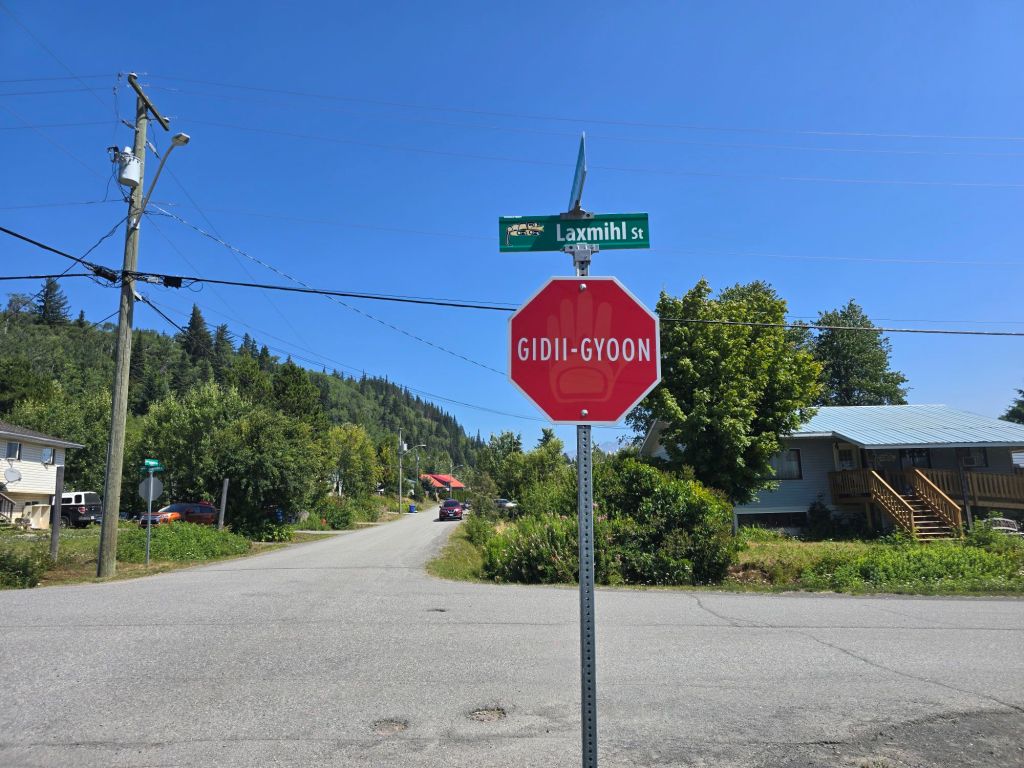
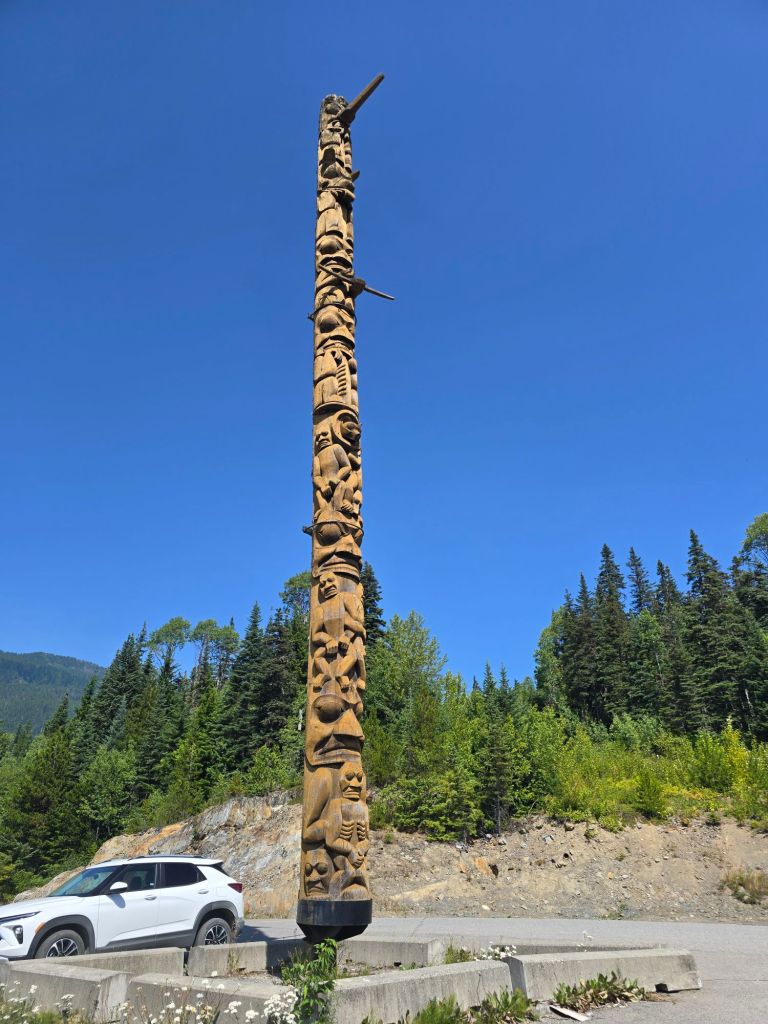
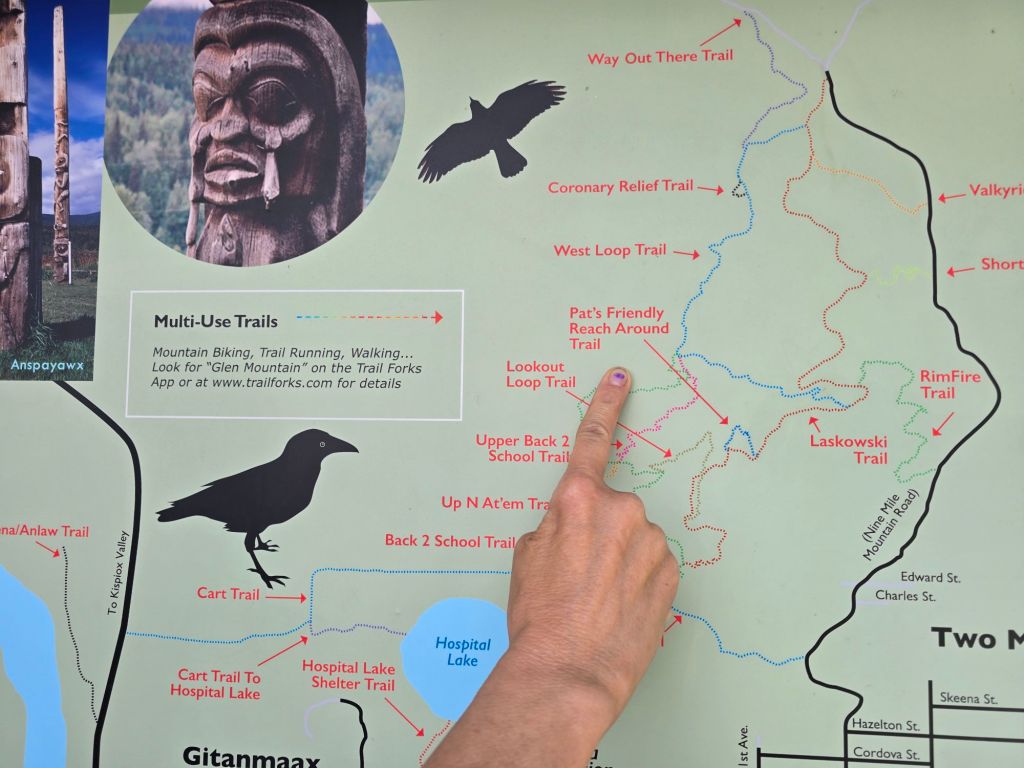
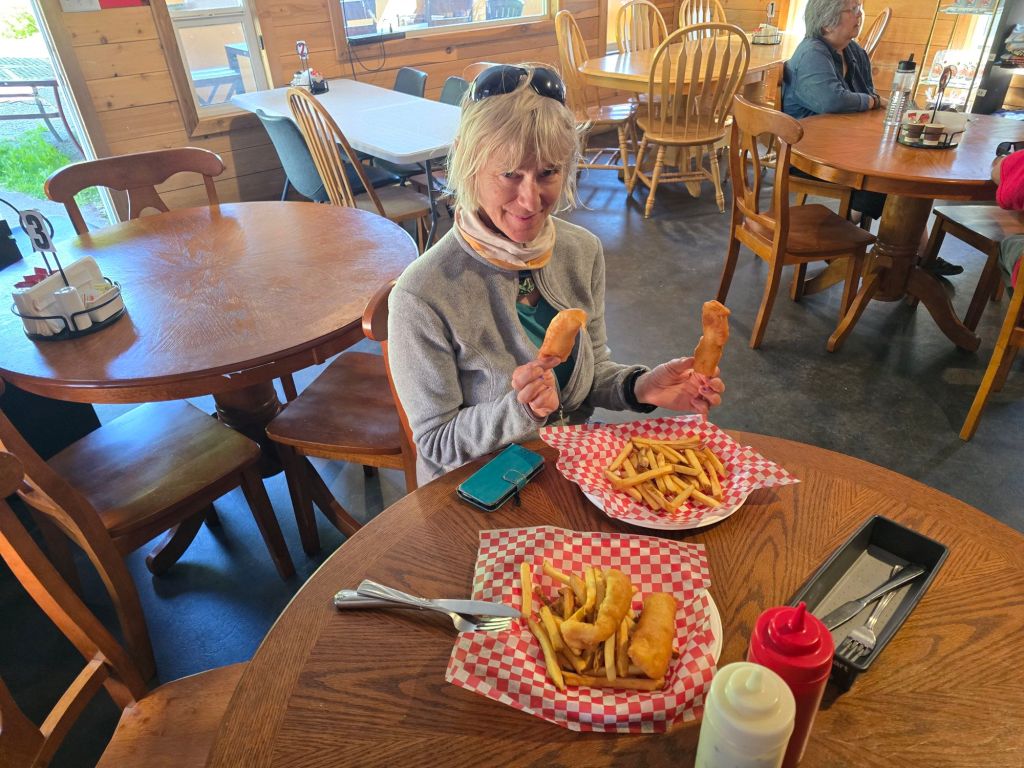
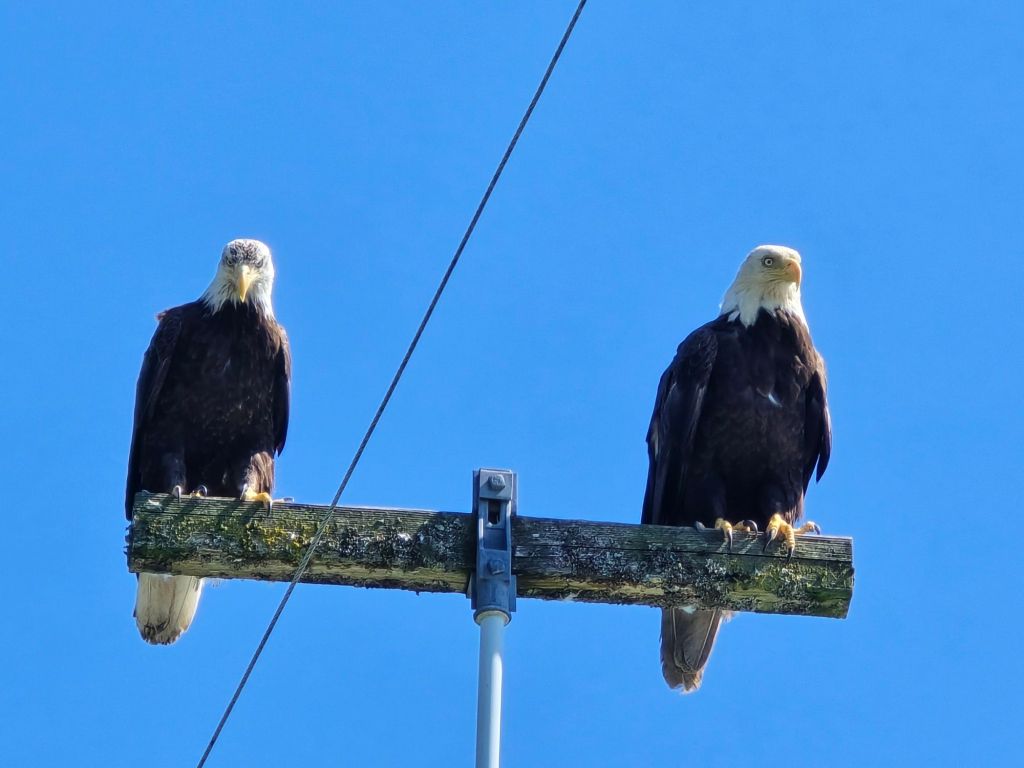
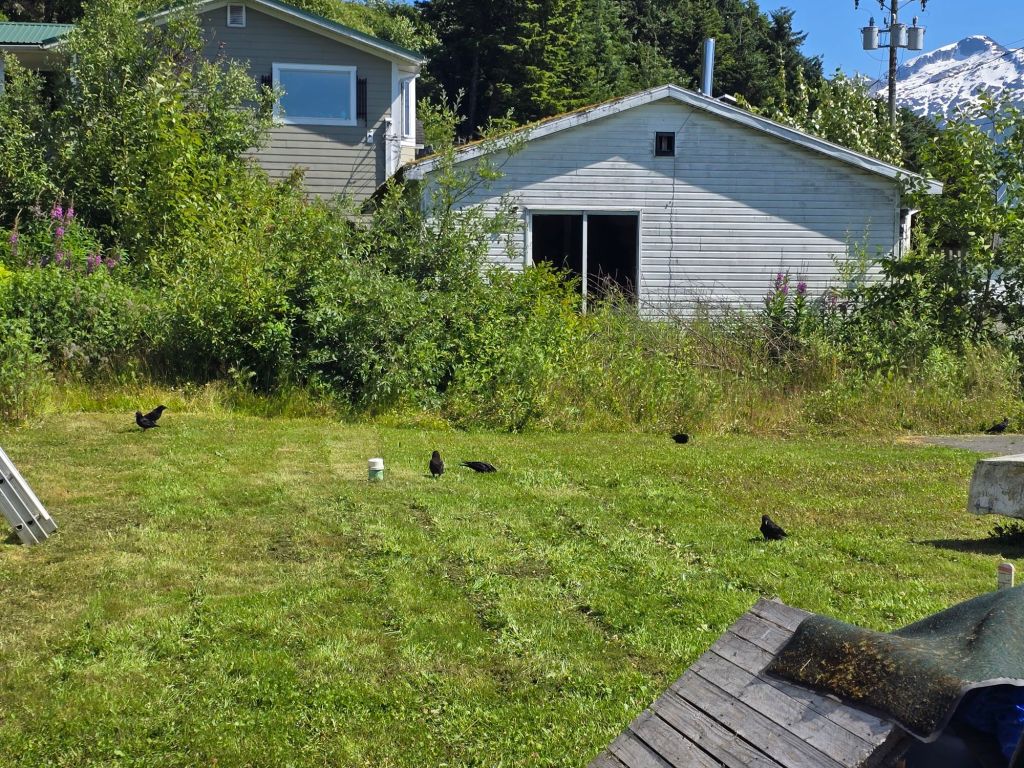
There continues to be hiking trails through the brush to the alpine. We are heading north to the lava fields. Turns out Canada has places like Iceland, where the land is being torn apart and built anew. I didn’t know that…For the first time, we deploy our customized bugnet in anger. Works well enough, but this siting trapped us in the sun, and the evenings are long…A lava flow (very unusual in Canada) wiped out villages of the Nisgaa people 300 years ago.Nice design! It’s a Chevy Trailblazer. Just kidding, the totem poles are spectacular. I wonder how they got them stood up, before cranes and civil engineers.The Internet ruins everything. (Map of trails by Smithers)I had hoped for fish and chips in Gibraltar, and on the other side of the planet, we kill the craving in Gingolx. Lots of eagles (a concordance to be precise) as we get arrive on the coast.And a murder of crows. We did not see a parliament of owls – I wouldn’t wish that on any species. The English language is ridiculous.
 Marta and Chester's Maleficent Adventures