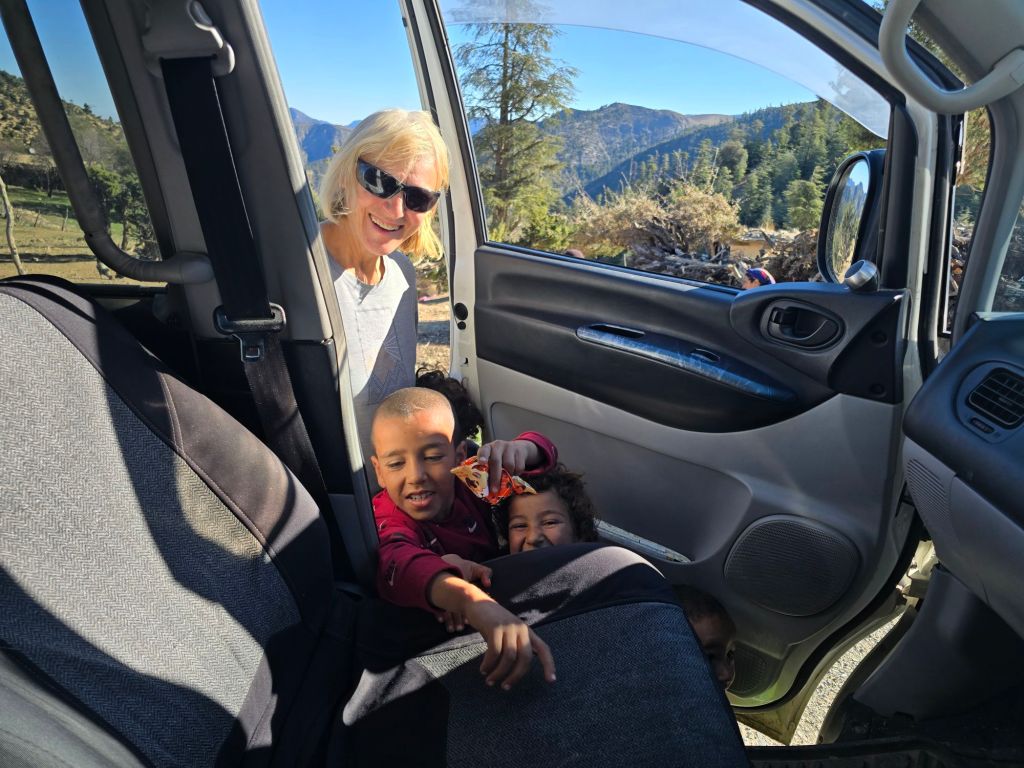
Children in Morocco can be a handful. These youngsters are fighting hard for more candy. Their mother sat back and watched with amusement – your problem, not mine.
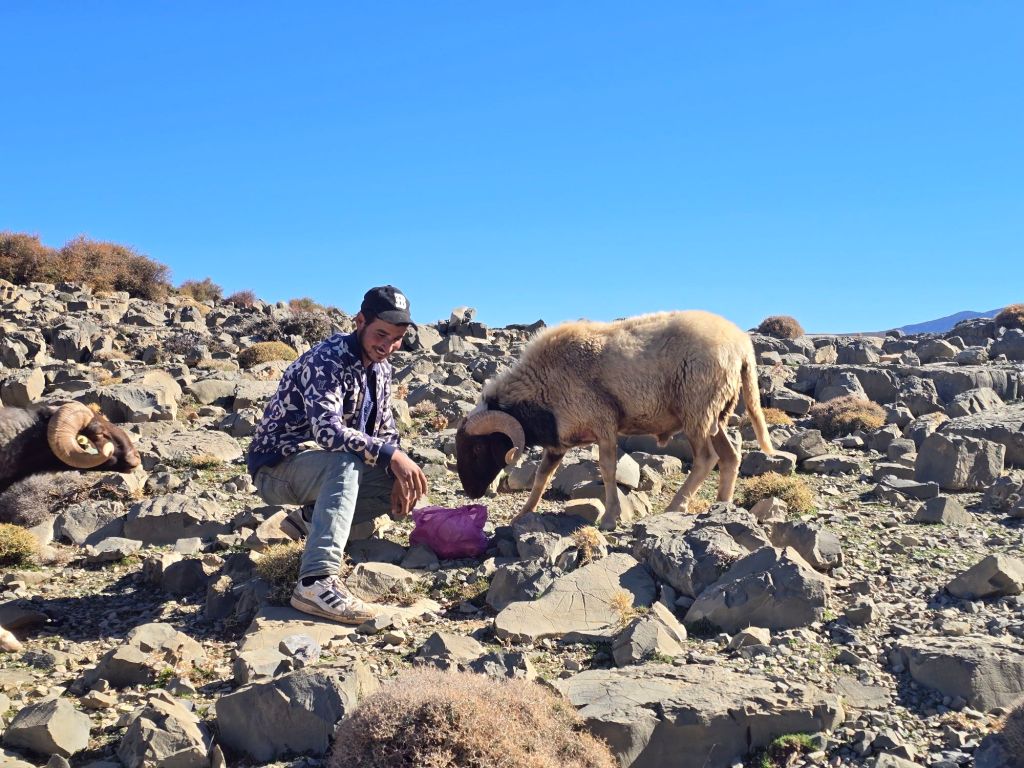
These water troughs are placed beside a water pipeline running along the road. Very convenient for us to fill up! In the background, you can hear the call to prayer from the village mosque.This shepherd gave us directions up the mountain, and then showed off wrestling one of his rams. One of my first memories is getting flattened by a male sheep – the term battering ram is literal.
This guy gave us a pomegranate – the usual hospitality. The next shepherd we met asked if we had an extra pair of shoes. He was walking around in a pair of Crocs. This was the first time we grasped how tenuous life is for some people.
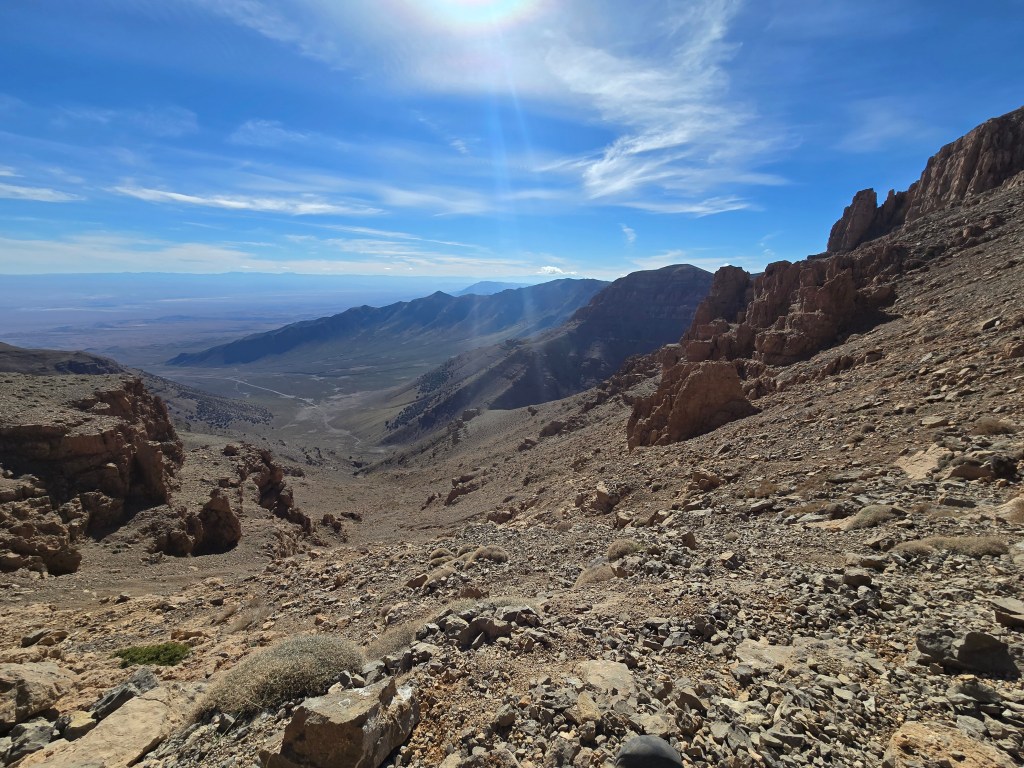
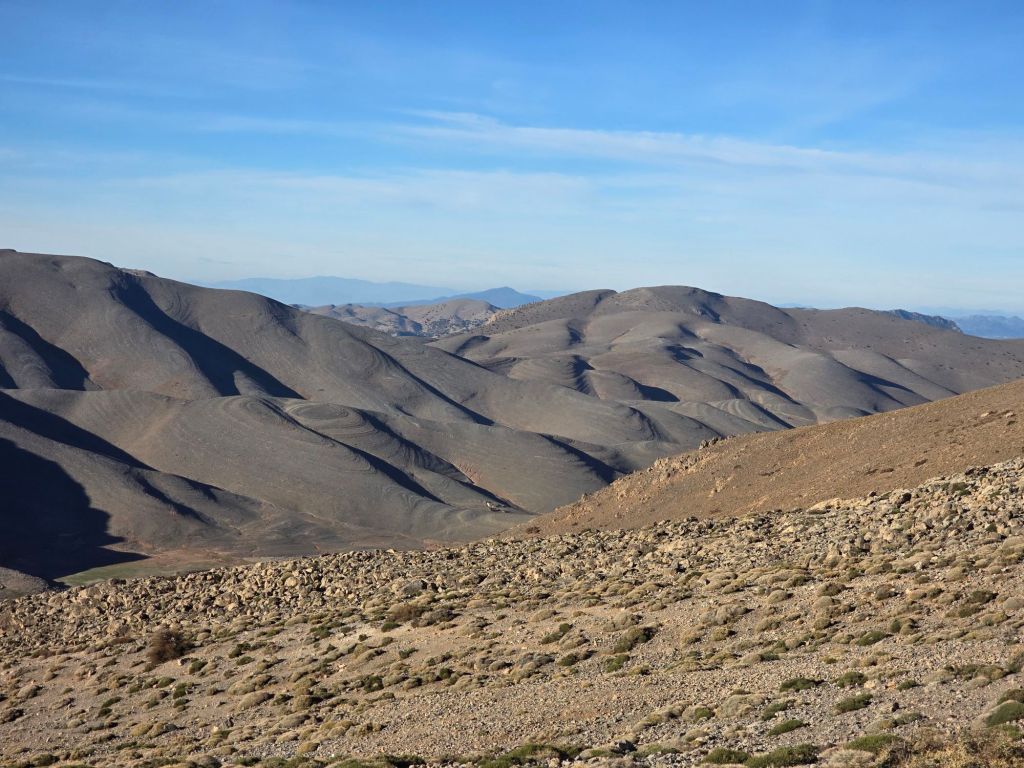
As we move east along the Middle Atlas mountains, rainfall drops off and we can’t figure out what the herds of sheep eat. I hope they descend before winter arrives.
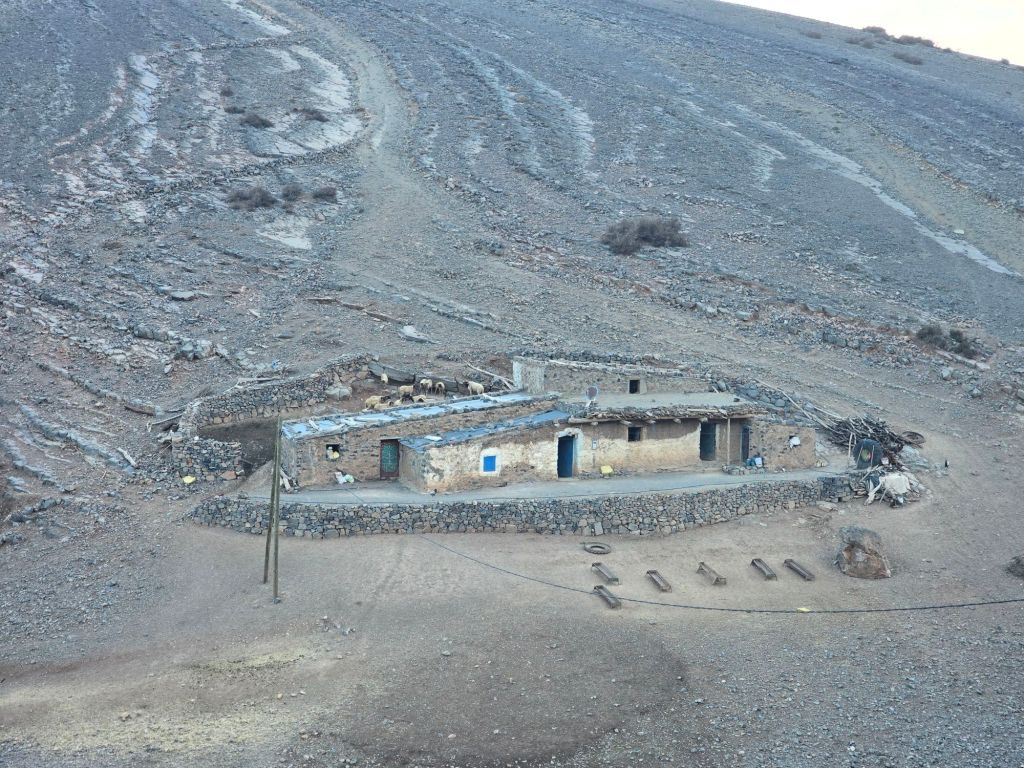
I have the feeling that the land is being overgrazed – too many goats and especially sheep. Very different from Spain, where a lot of land is abandoned as the next generation moves to the cities.
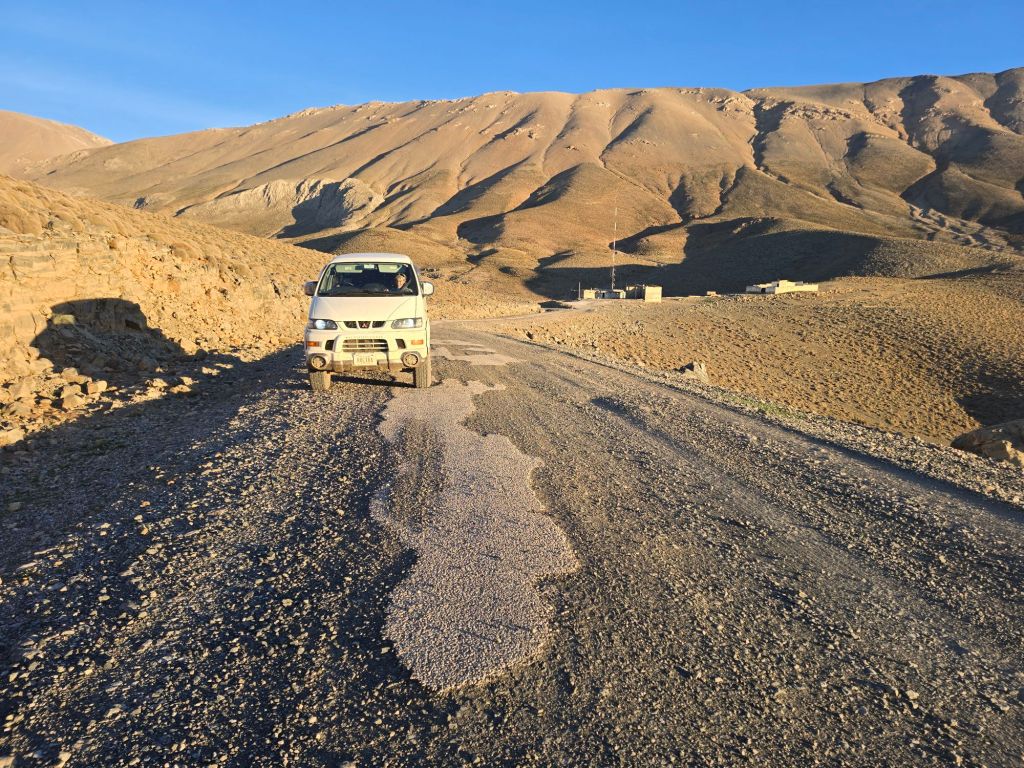
We see lots of fascinating scenes, but many people in Morocco are shy about being photographed.This road may be in bad shape, but every secondary highway in Alberta looked like this in the mid 90s.Morocco looks inhospitable for travelers, but it’s easy mode compared to Ladakh in northern India.
Ladakh had valley bottoms at 3500m, humidity around 5%, and every hill was several vertical kilometers of incredibly steep hard packed mud. And the drivers are insane.
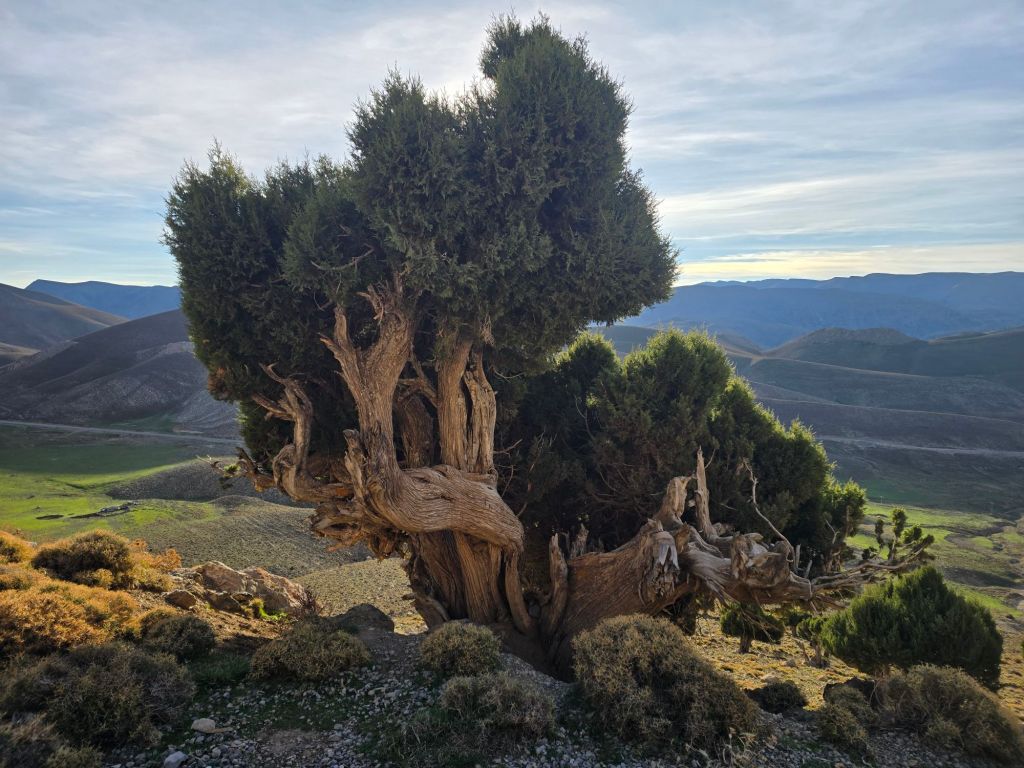
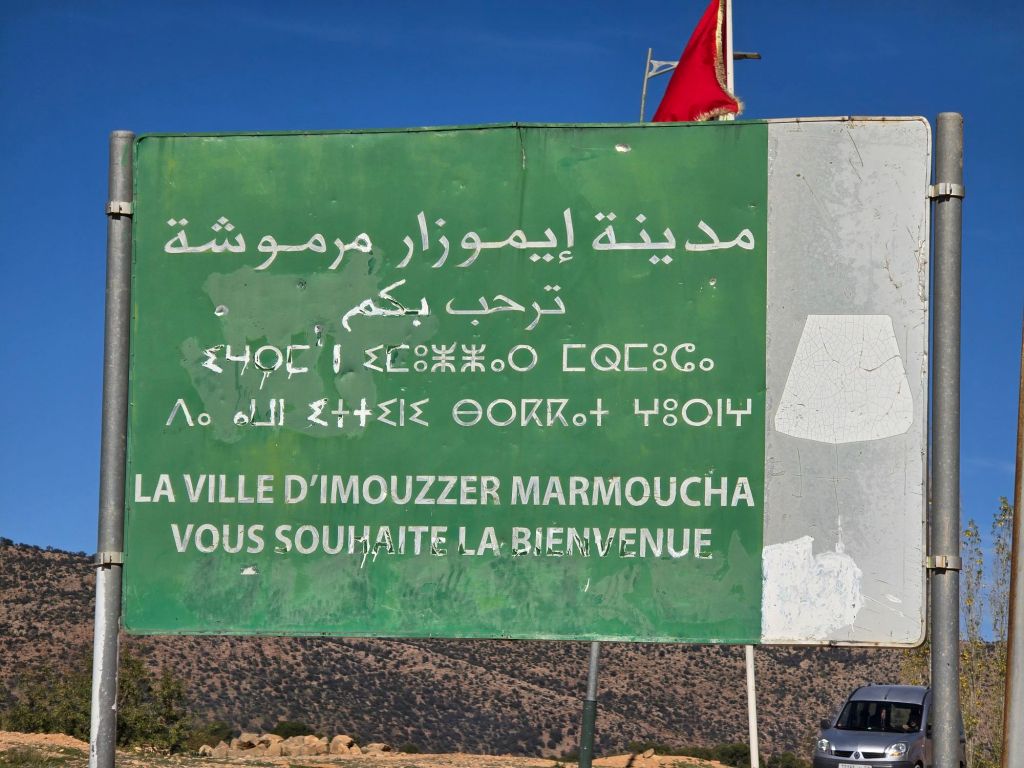
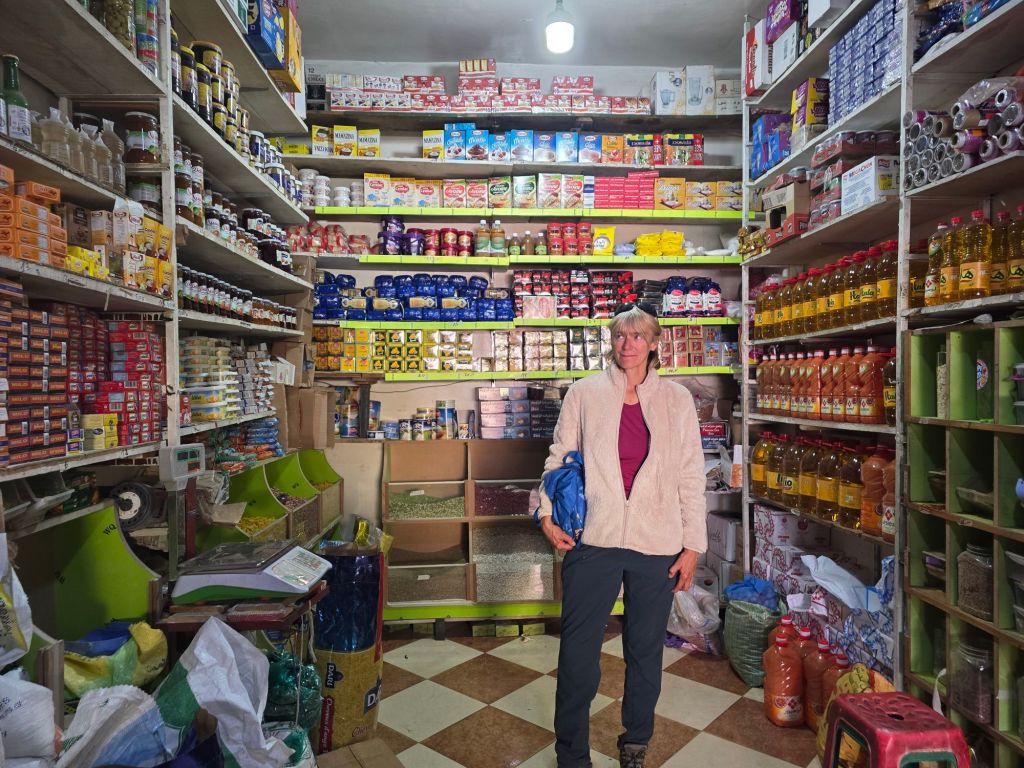
The climate has obviously dried out, so there are no young juniper and cedar trees on some slopes. Language in Morocco is a challenge. There is standard Arabic, Darija which is a mixture of Arabic with local words, the original local language Tamazight, some French, a little English and Spanish.There are many small grocery stores, this one is a bit bigger than usual. Like WC Fields, we are forced to live for days on nothing but food and water.
Joking aside, we had heard that alcohol was available in Morocco. We now realize that this is only true if you are in “Tourist Morocco”. Alcohol is so prevalent in the west that I’m surprised that it’s nowhere to be found.
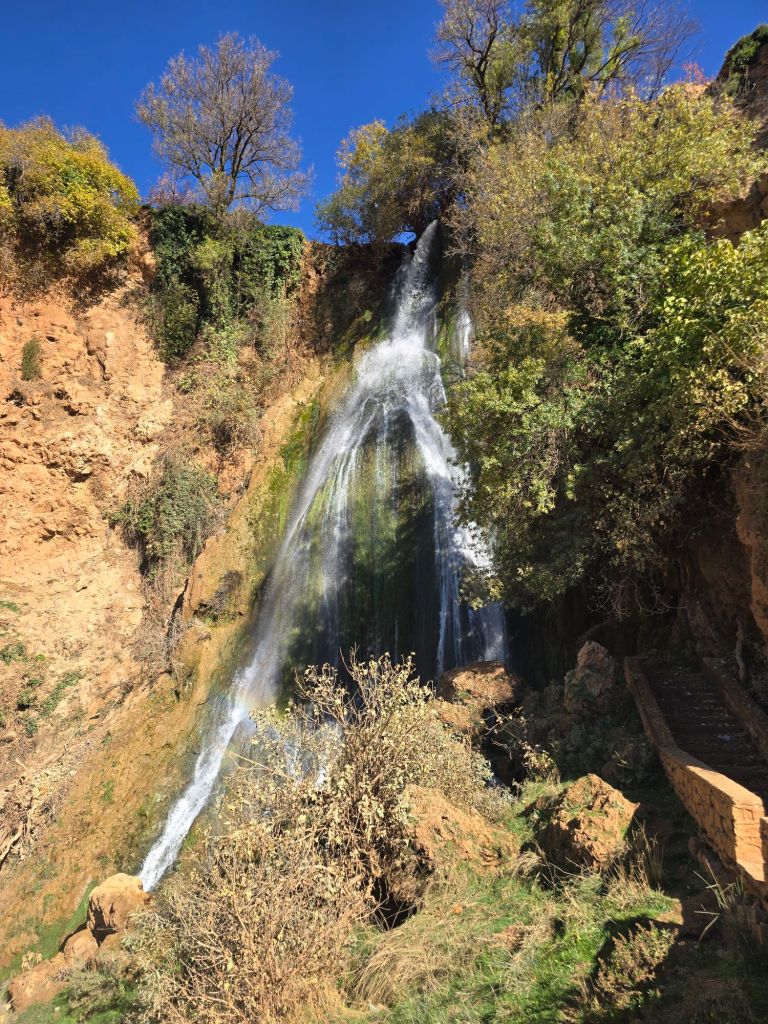
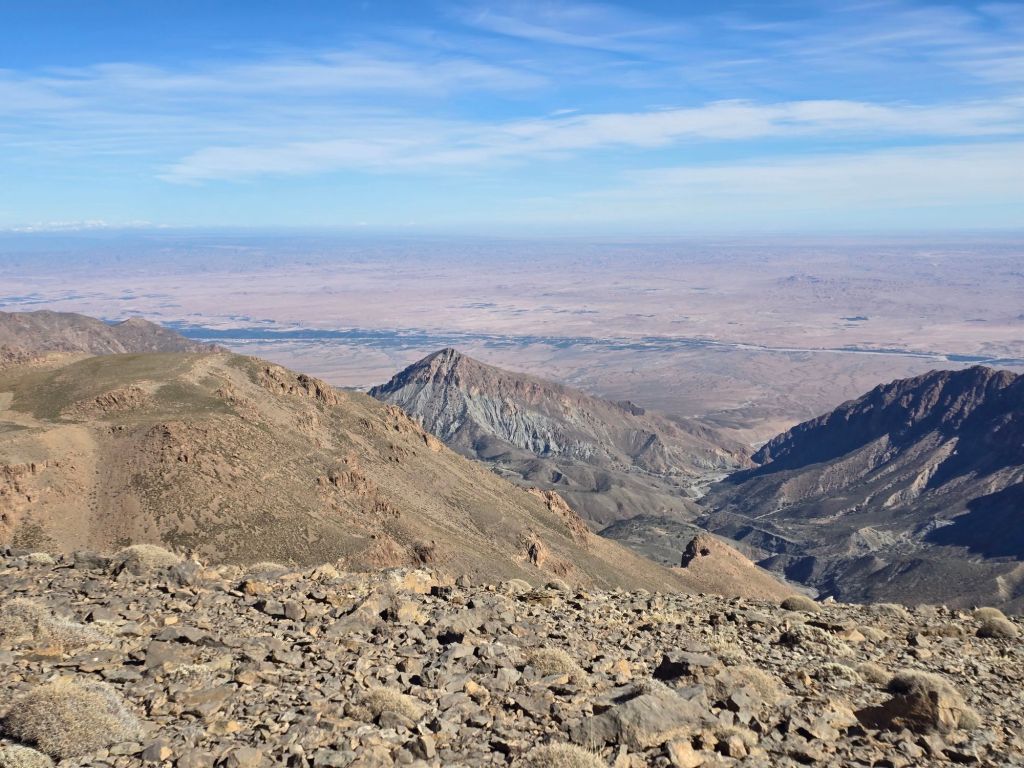
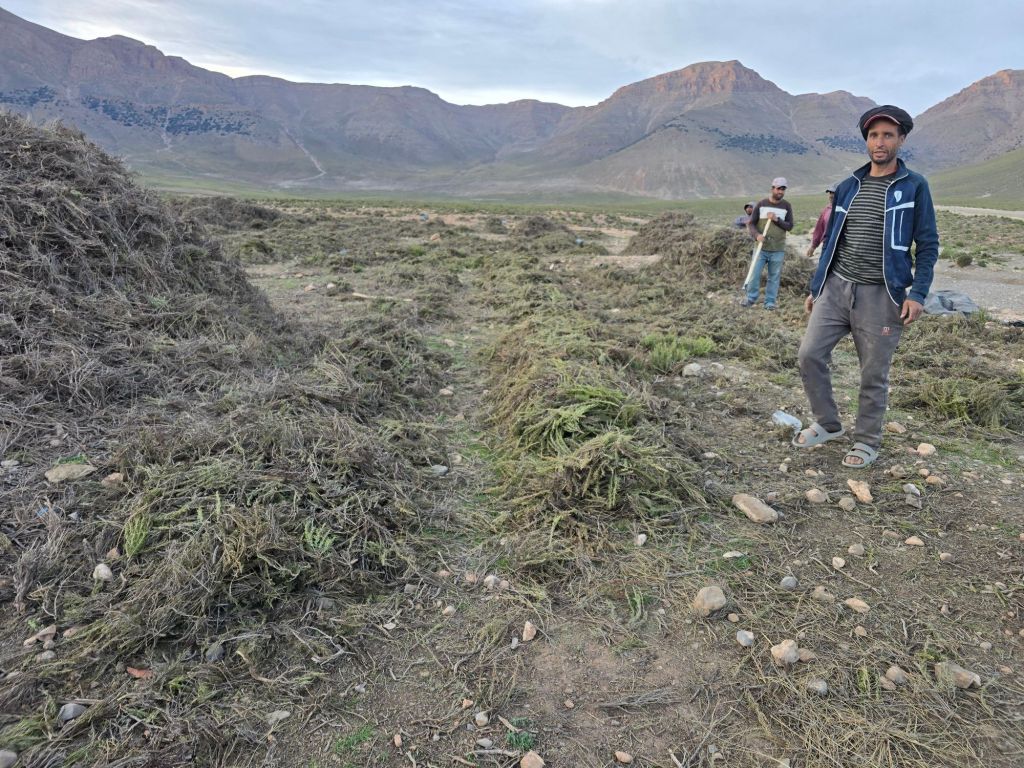
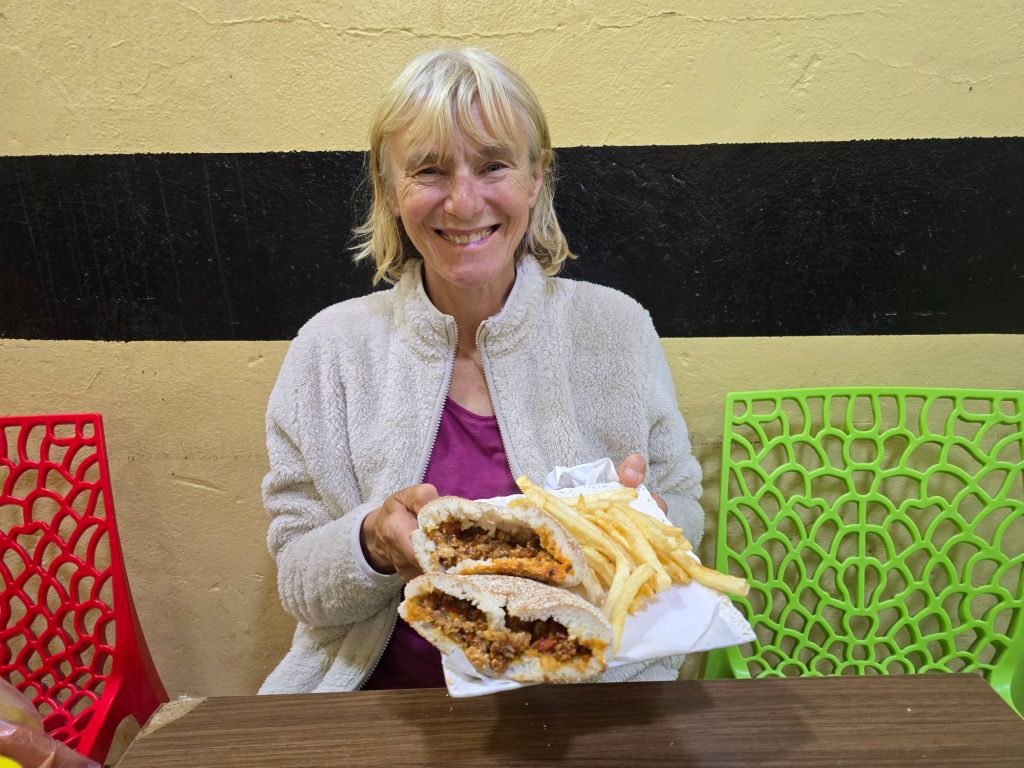
A waterfall in the desert. This must be amazing during the summer months.We go after the highest peak in the Middle Atlas mountains, weirdly right at the end of the chain. Morocco is like Spain where there are many rough roads that are useful for getting close to peaks. Unlike Spain, there are no gates or signs forbidding access. Lovely.This crew is drying and bailing thyme – I think..After 9 days in country, we finally find some tasty street food. Small towns usually have no restaurants. I assume that the women always cook at home, so going out doesn’t happen.
Sweet mint tea is basically free. Coffee (espresso) is the drink of men. It takes the place of coffee and alcohol in the west. Men sit down for a coffee at anytime of the day, but it’s most striking in the evening. Streets are full of cafes with hundreds of guys sipping their espressos. Nobody is eating, and the women are off in a different world.
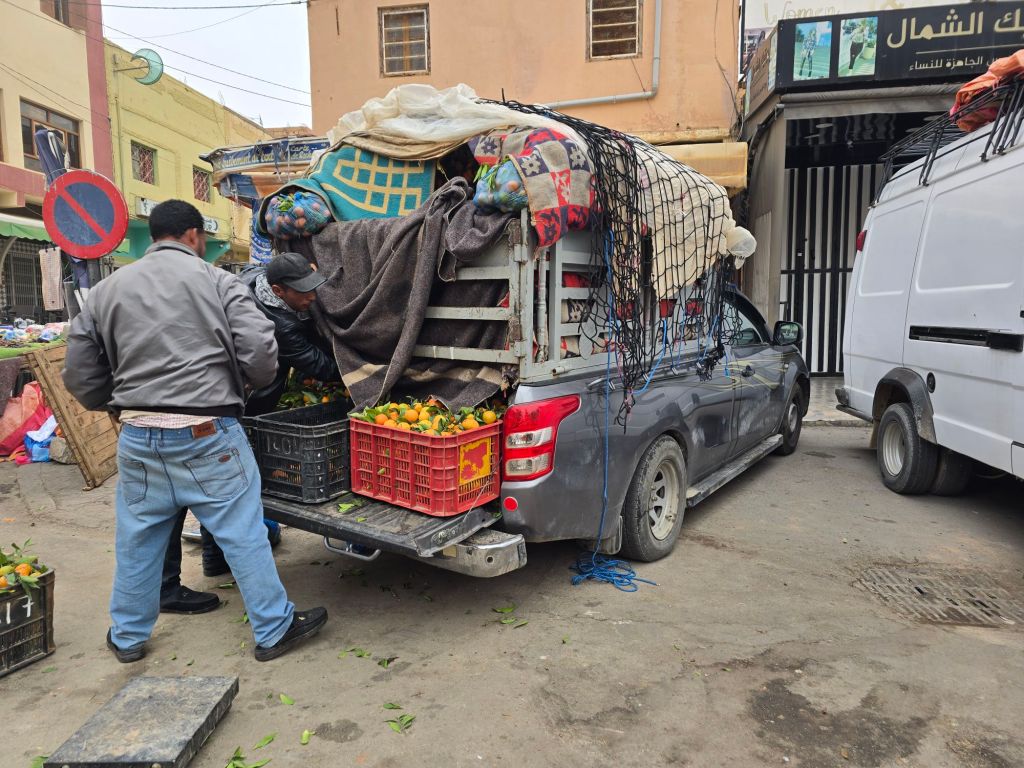
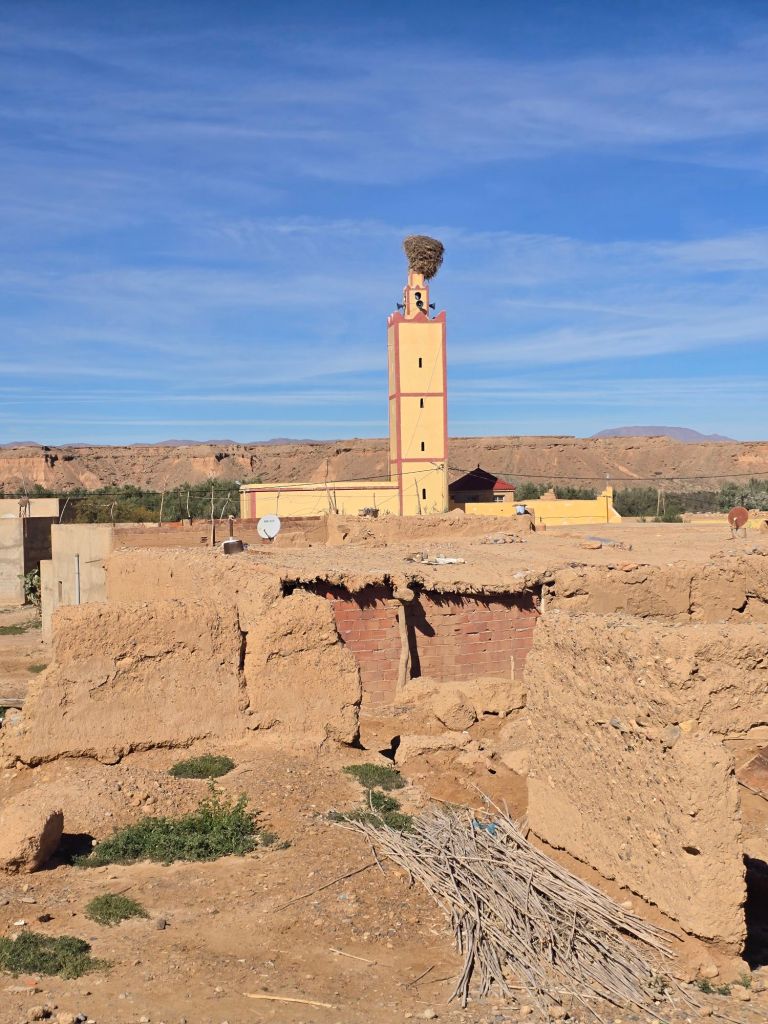
This poor truck is loaded with a huge mound of oranges. Fruit and vegetables are plentiful and tasty – they feel almost free compared to Europe and Canada.A truly massive stork nest on this mosque. The buildings in the foreground are made from mud – a maintenance hassle and usually abandoned.
Morocco is officially Islamic, with 99% of people identifying as Sunni. In practice, we see some people clearly following a strict interpretation of Islam, and other people dressing in secular garb.
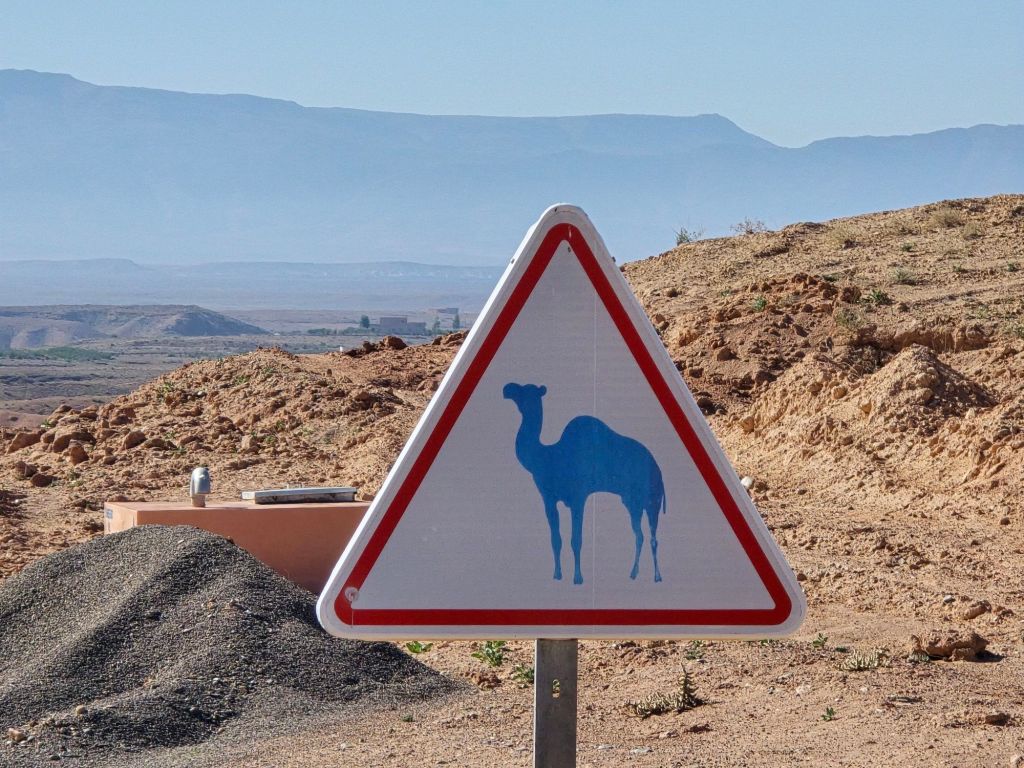
Morocco has some very elegant signs. We are pumped to see camels!
And in a few minutes, there they are.
With winter bound to show up eventually, we are heading to the High Atlas next. The Sahara desert with its Anti-Atlas mountains will still be there when the big mountains are buried in snow.