2026 – Europe – Week 2 (Mar 9) – Cáceres, Spain – UNESCO Town
We would have stayed longer in the region, but we woke up to fog and drizzle. The rain had caught up with us here as well. We hadn’t seen any large grocery stores since crossing into Spain, and our food supplies were running low. Chester was craving meat, cheese, and proper warm breakfasts.
Breakfast of champions. 😄 Wine is cheap here in Spain, unlike in Mexico.
The rain helped us make the decision to look for a larger store. We eventually found one in Cáceres. Luckily, we also managed to beat the rain there and enjoyed a relatively dry morning exploring this amazing UNESCO town.
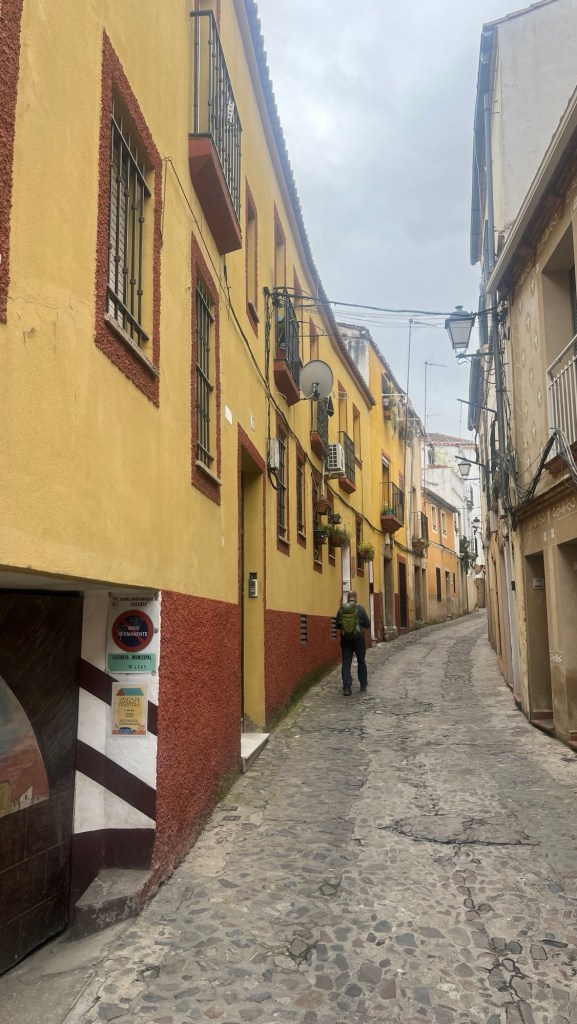
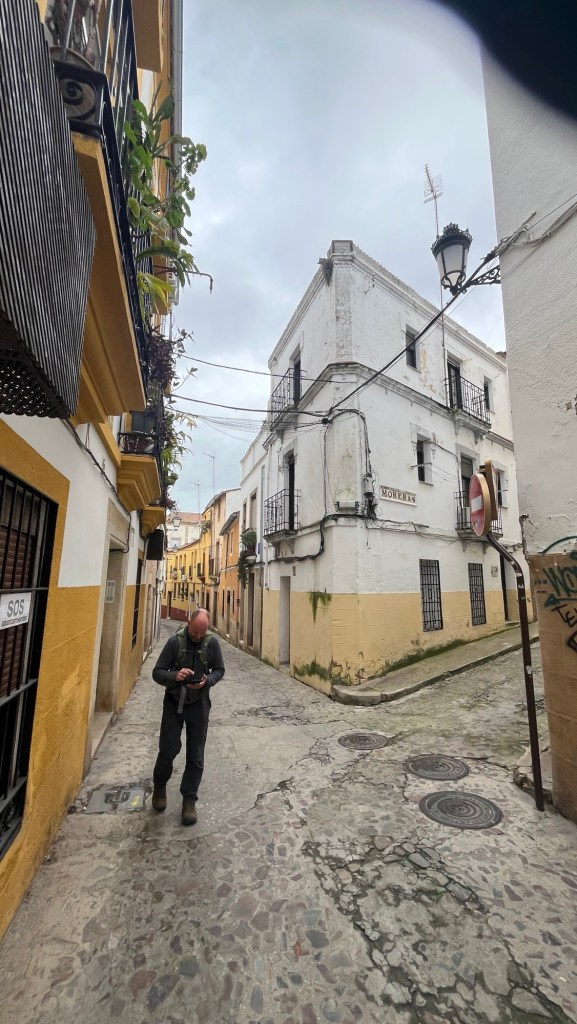
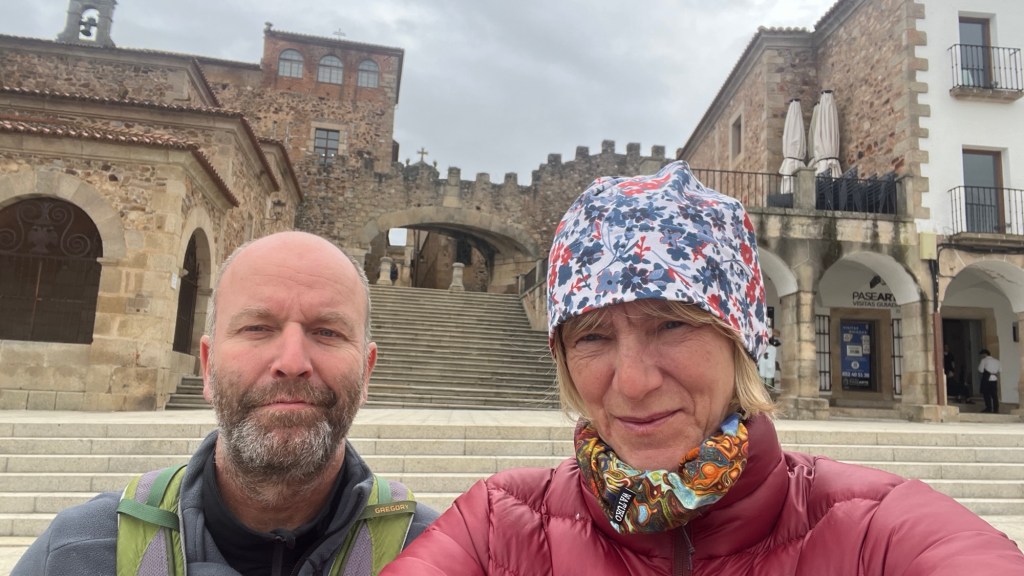
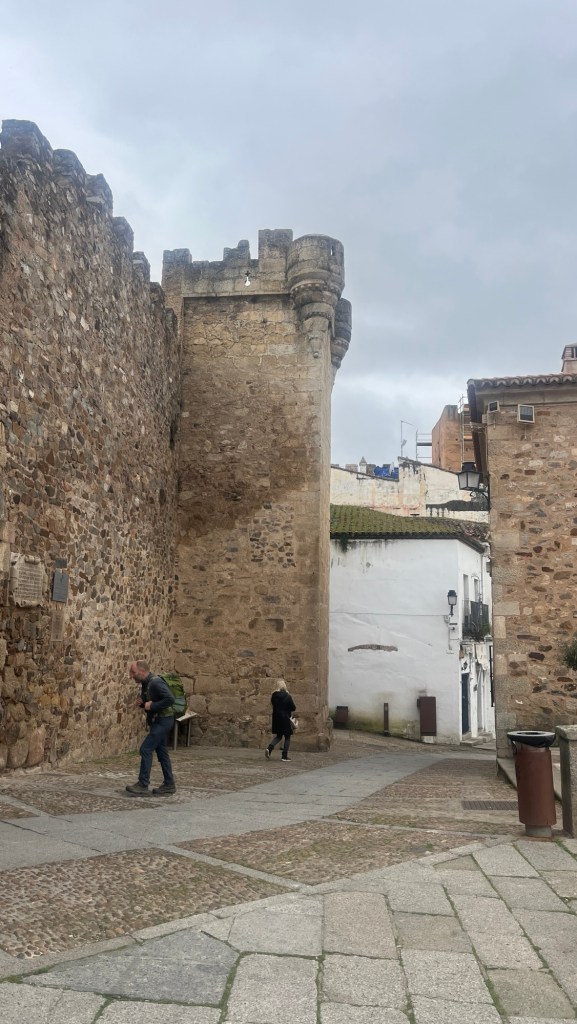
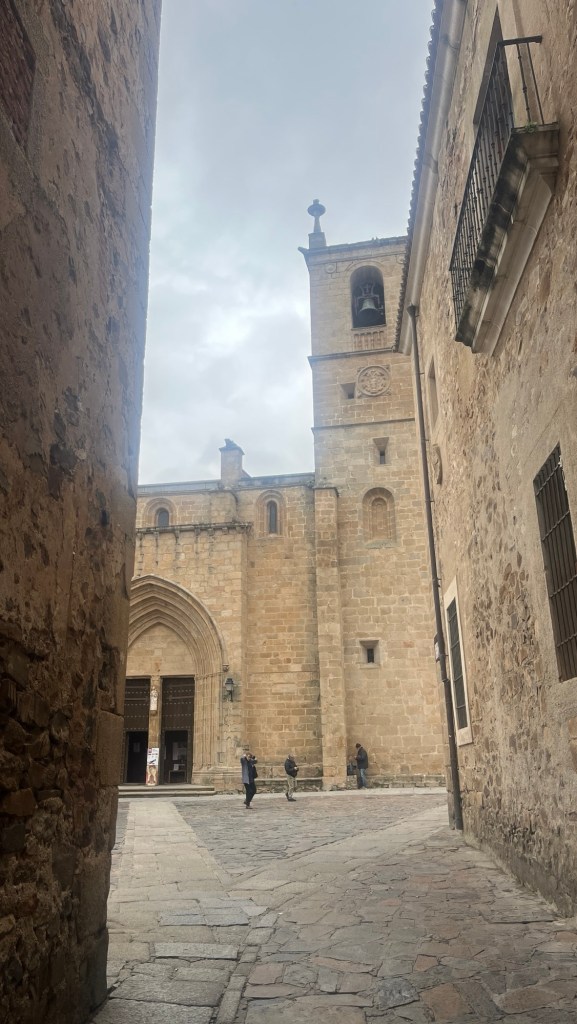
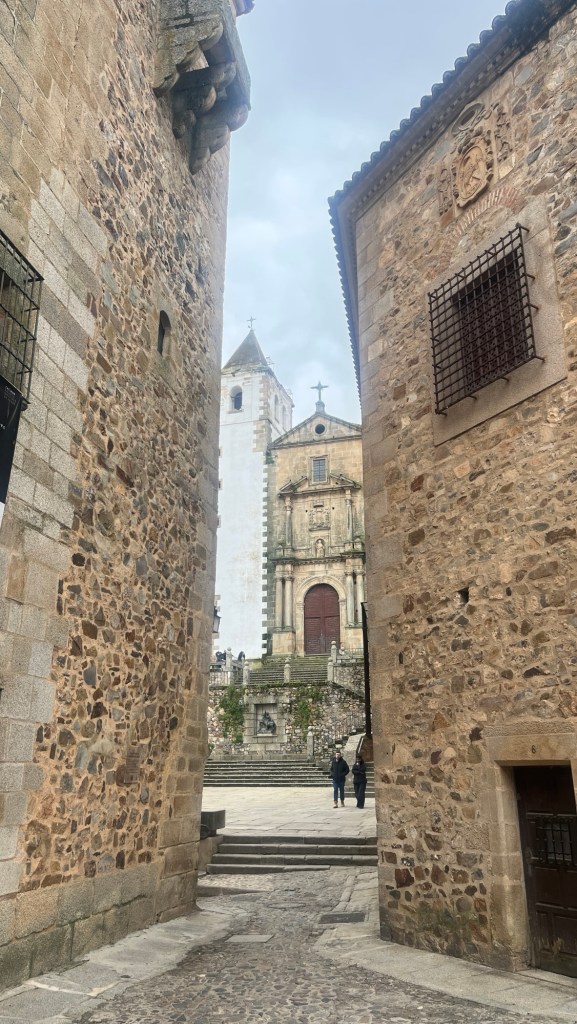
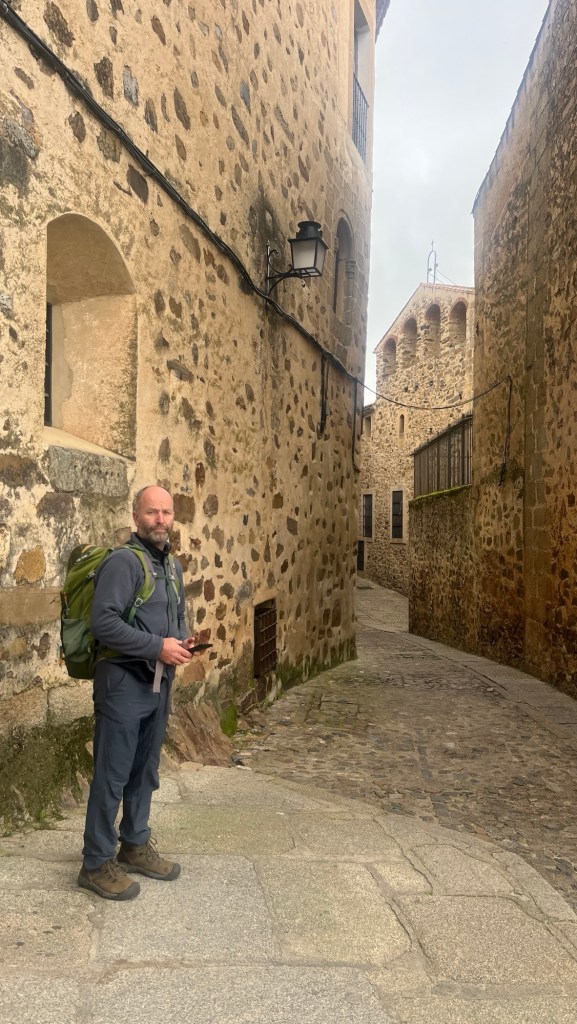
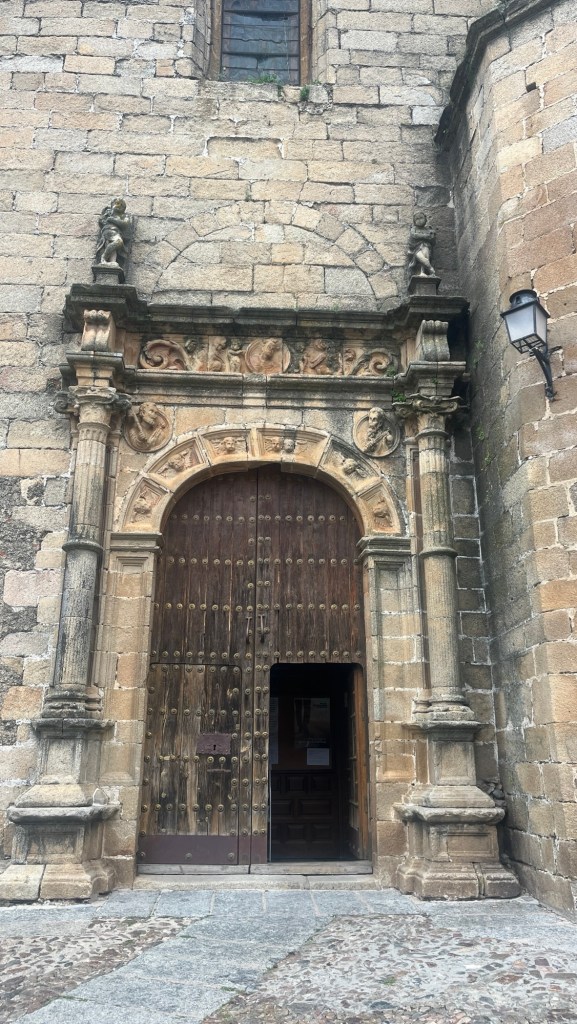
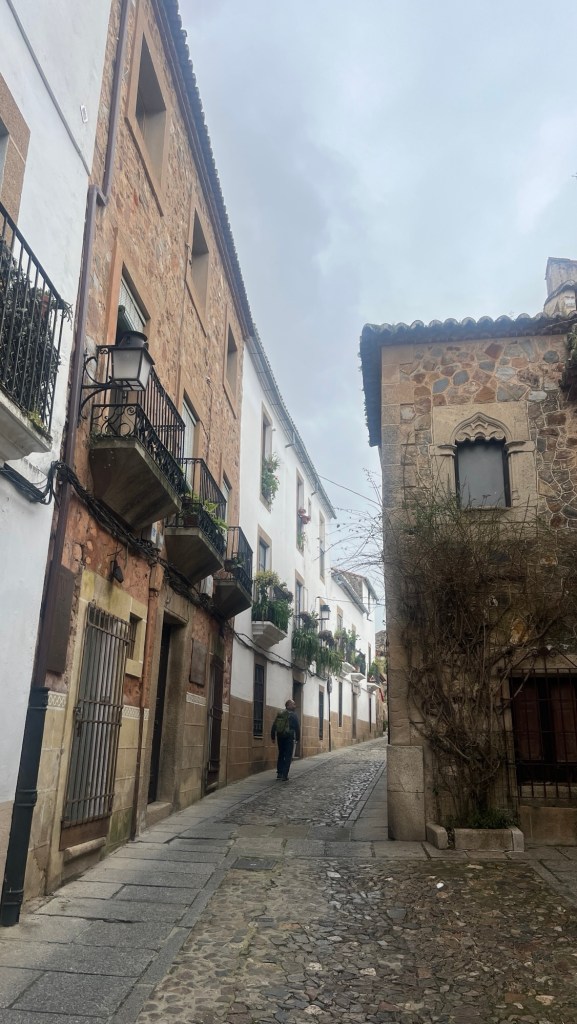
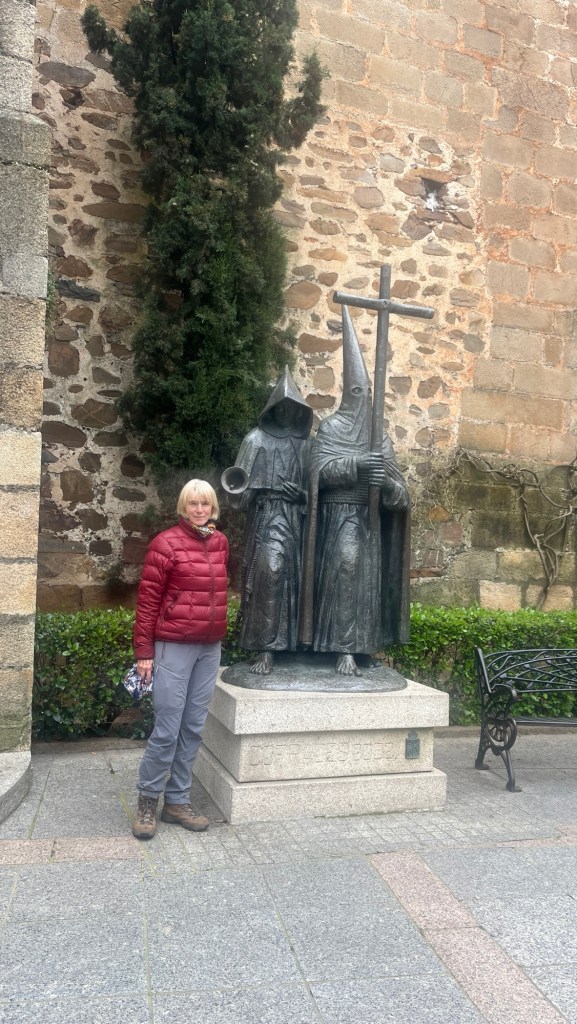
Now after we did grocery shopping time for a bit of culture Walking the narrow streets of Cáceres, which lead to the old townThe Old Town of Cáceres is guarded by defensive walls and fortified towers. We are about to enter it. The city walls stretch over a kilometre and include around 30 towers from the Islamic period.And now the stone streets are even narrowerChurches are built on former mosques Cáceres is often called “a living medical city” and used as a historical setting for filmmakers. Scenes from the Game of Thrones were filmed here.We practically have the city to ourselves, no crowds like in Seville or BarcelonaI feel like stepping into 15-16th century, enjoying the architecture and setting almost unchanged for centuries.No photos can describe the charm of this town. It is a gem well worth visiting.A Christian pointed hat is called a capirote. It forms uniform of various brotherhoods. Also worn by penitents. Used during reenactment during Holy Week in Spain. Got a different vibe in southern USA
Cáceres has a long history shaped by several civilizations. The Romans founded a colony here around 25 BC and built roads and military routes. When the Roman Empire fell, the city came under Muslim (Moorish) rule during the 8th and 9th centuries. Finally, in 1229, the city was conquered by Alfonso IX of León during the Christian Reconquista. The cultures that lived here—Roman, Islamic, Jewish, and Christian—all left their mark on its architecture.

 Marta and Chester's Maleficent Adventures