Looking southwest from the Castle of Monfragüe, Chester spotted mountains in the distance to the west. The sun was out, the weather looked promising, and the peaks stood out clearly. “Let’s go!” It turned out to be a perfect decision.
The drive was fabulous, and the scenery kept getting better as we approached the peak of the Villuercas (1,595 m).
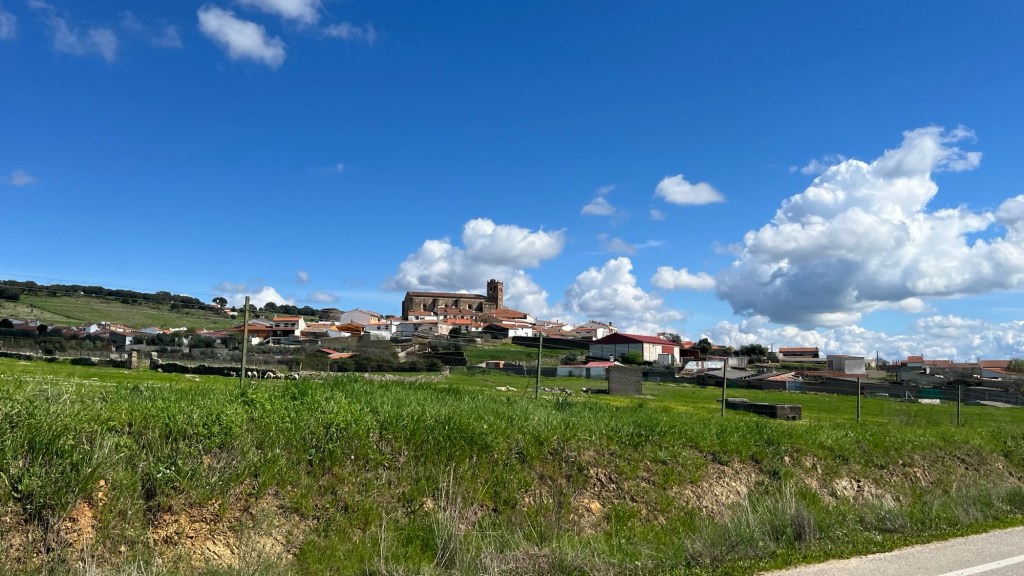
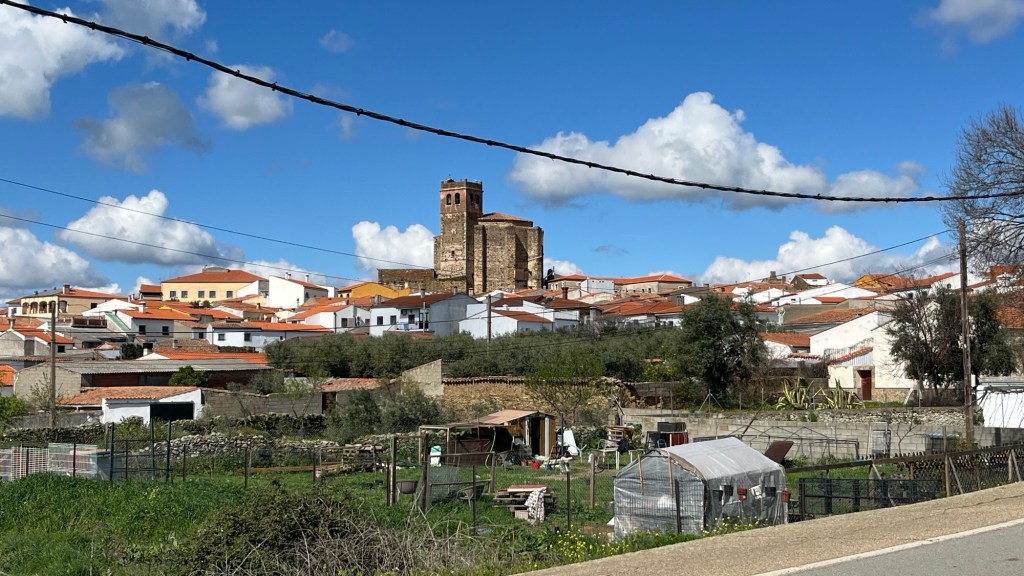
We practically drove up that peak! The road was narrow, twisty, but asphalted all the way!
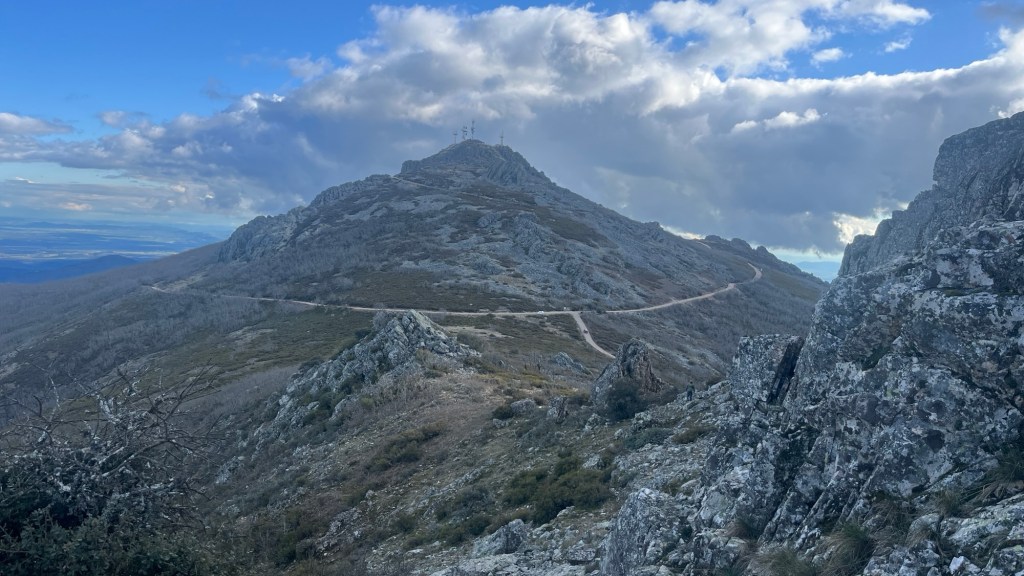
It turns out this is a well-known cycling and mountain-biking destination. At the top there is an old military installation, which makes reaching the actual summit somewhat awkward.
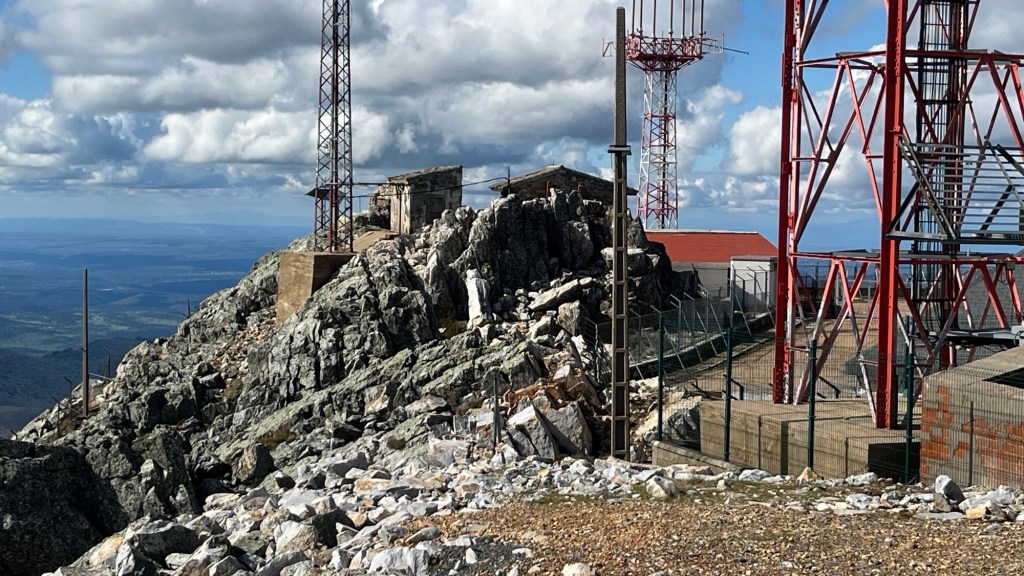
I walked along the fence and scrambled up a few steps to stand on the highest point. It was also possible to scramble up the rocks, which I did on my descent.
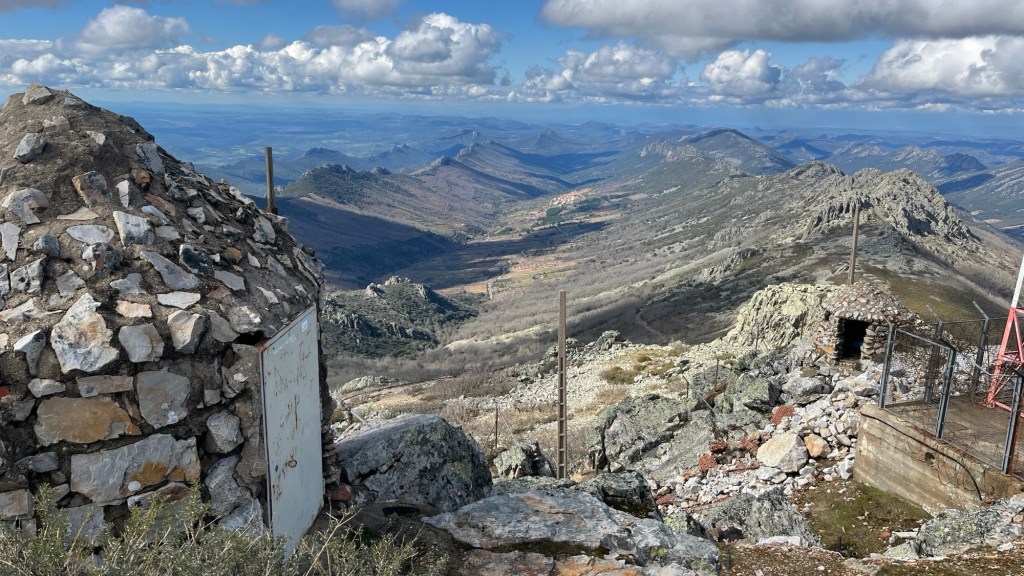
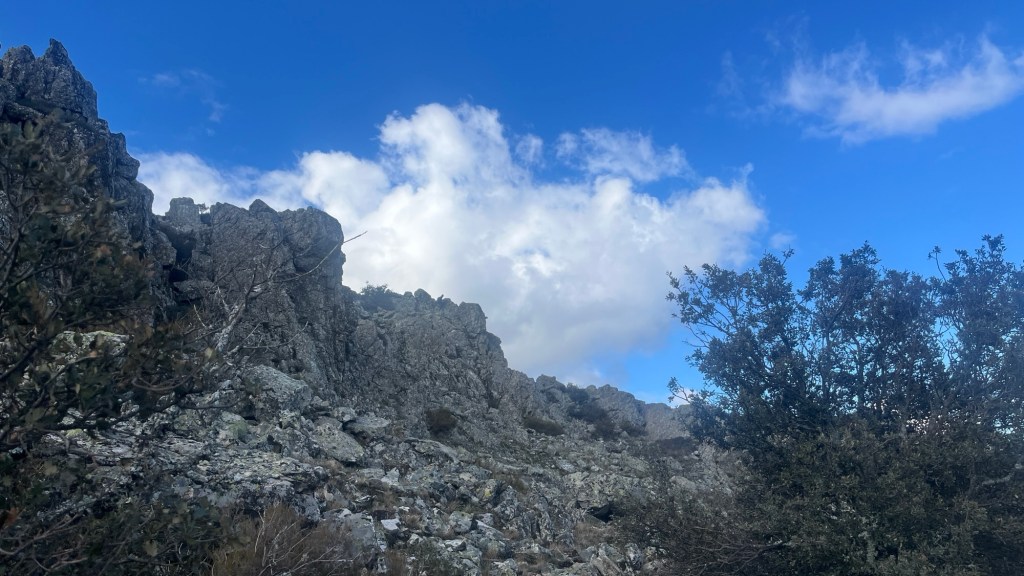
This was by far the most spectacular area we have driven into in Spain so far. We tried to scramble up another nearby peak, but it turned into a very exposed scramble. It might have been fun a couple of years ago, but I’m not quite there yet.
Not far from the Villuercas peak lies the famous Royal Monastery of Santa María de Guadalupe, located in the small town of Guadalupe in the province of Cáceres.
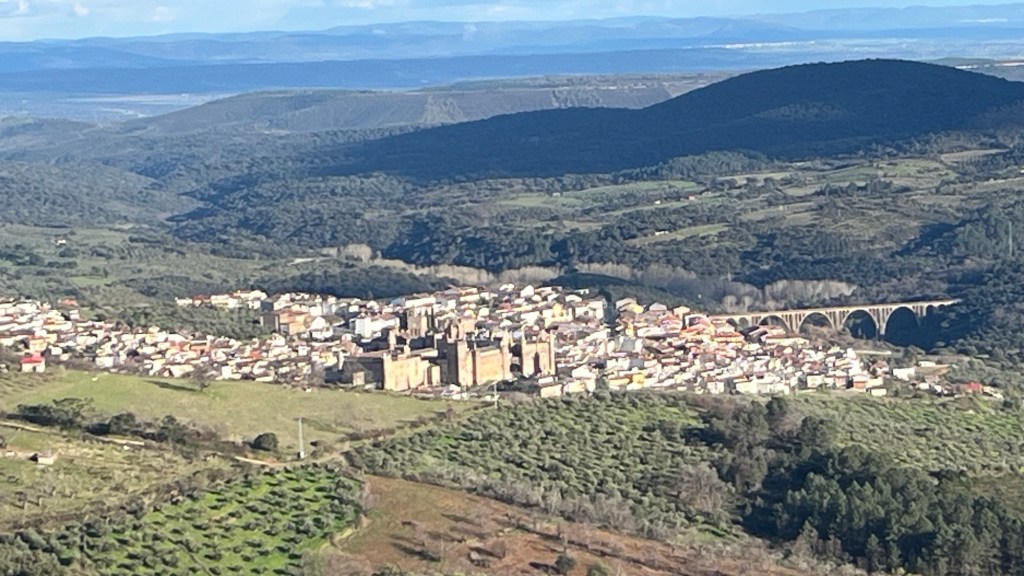
It was established in 1340 by Alfonso XI of Castile. The complex includes a basilica church, cloisters, chapels, and museums, combining Gothic, Mudéjar, Renaissance, and Baroque architectural styles.
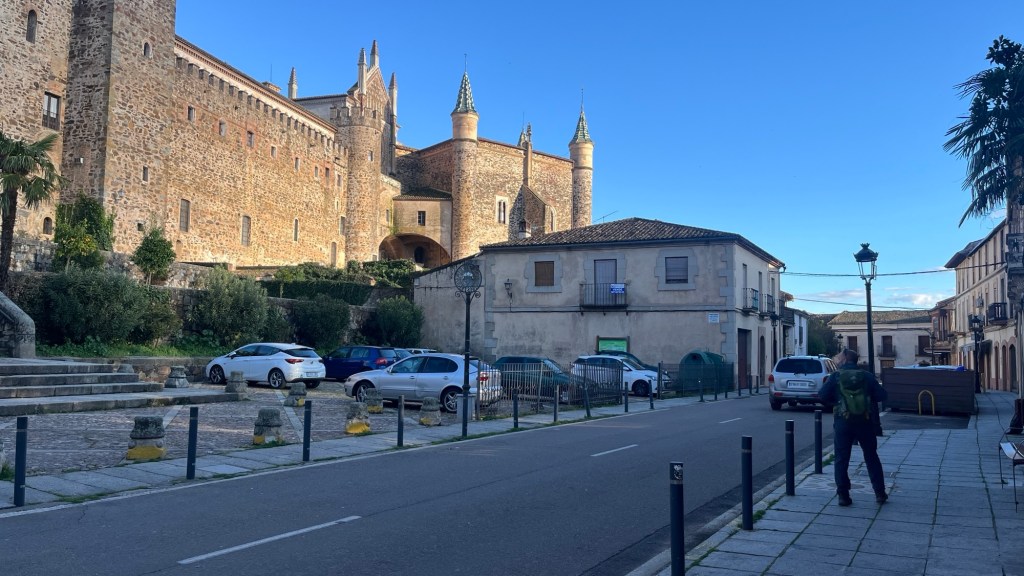
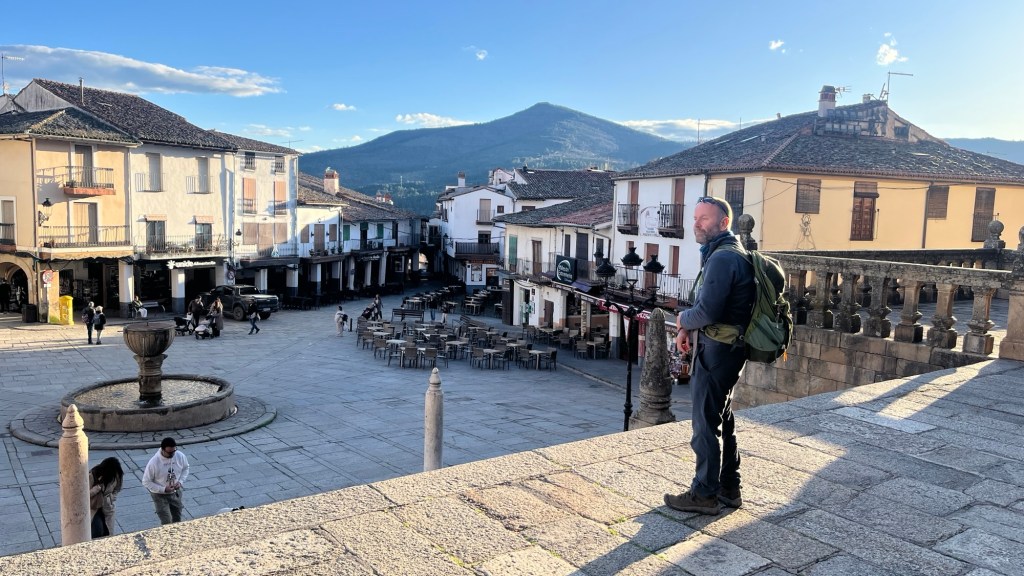
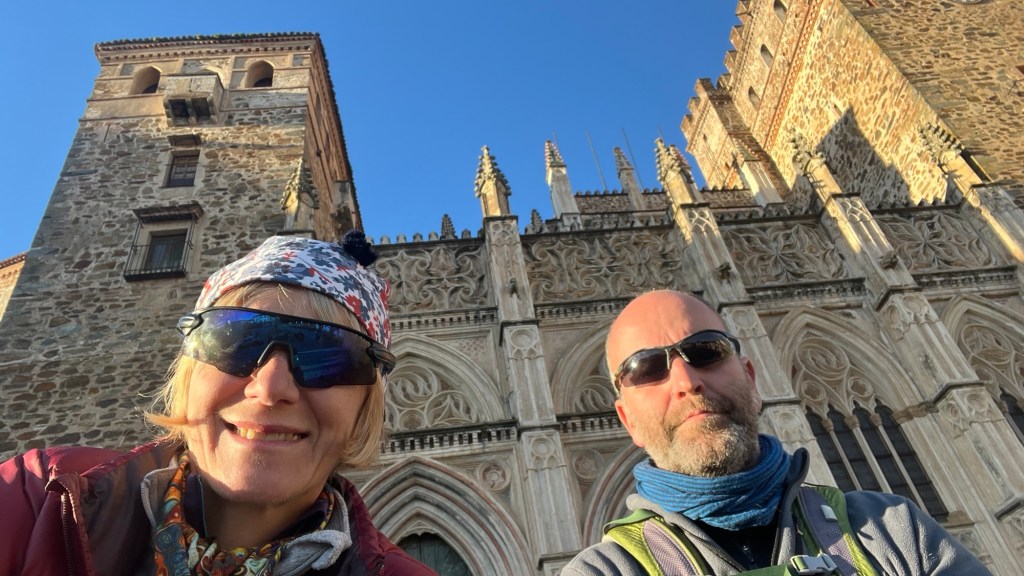
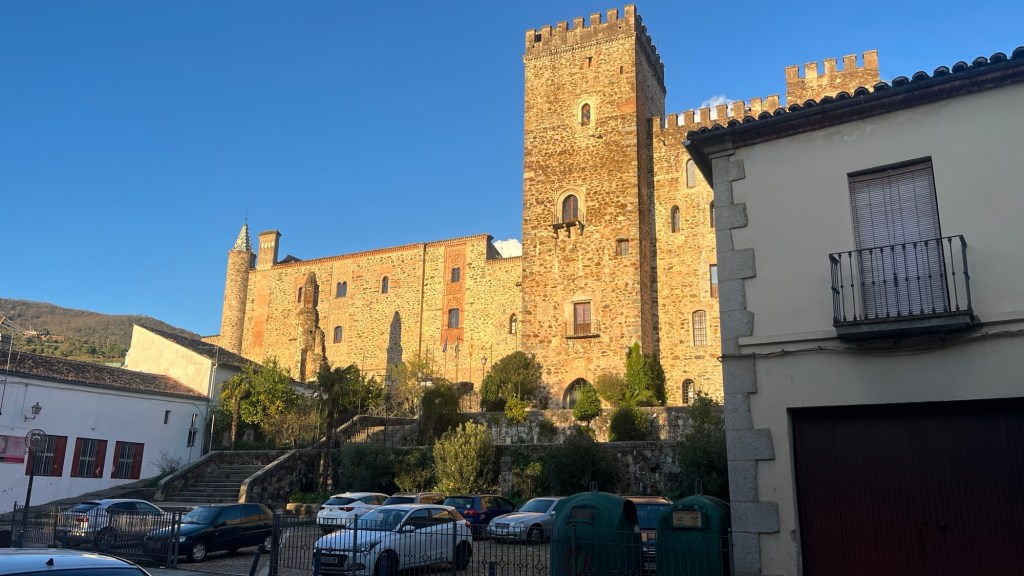
During the Middle Ages this place became one of the most important pilgrimage sites in Spain. After his first voyage to America in 1492, Christopher Columbus made a pilgrimage here to give thanks for the discovery of the New World. Devotion to Our Lady of Guadalupe spread from this Spanish shrine to the Americas.
We came across statues of Our Lady of Guadalupe in Mexico all the time.
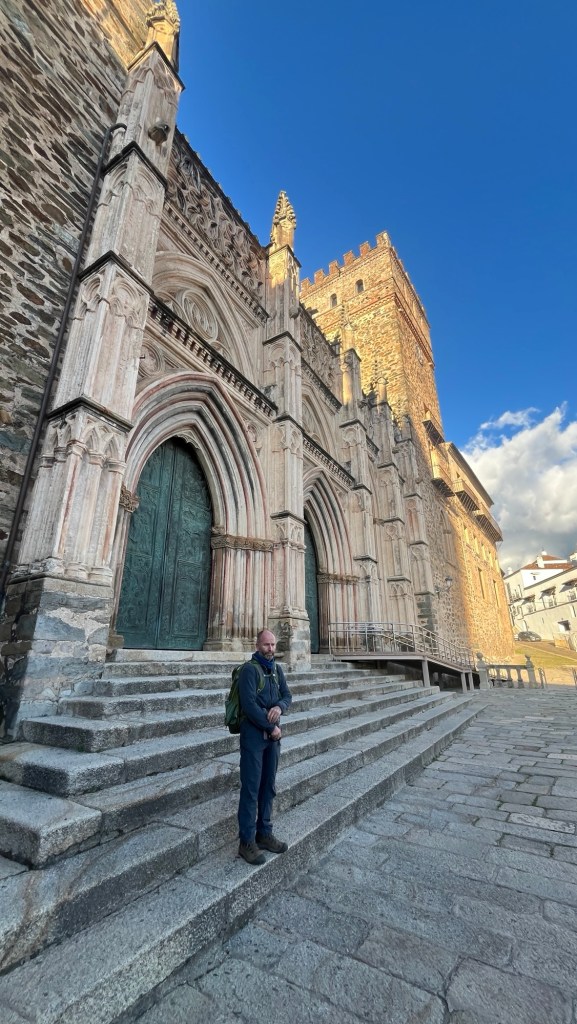
As we were enjoying this fabulous UNESCO site, one of the locals smiled at Chester with his big green backpack and wished him “Buen Camino,” assuming he was a pilgrim.
 Marta and Chester's Maleficent Adventures