
Just as I am a connoisseur of mountains, Chester enjoys industrial landscapes of all kinds: design, manufacturing, infrastructure, and mining. What really makes him tick is the human mind’s ability to make things happen—to solve problems and transform ideas into practical forms. He enjoys learning all the things.
We had already had our fair share of epic landscapes on this trip, and now we were heading toward the places that once made Spain rich—the silver and gold mines of Mexico, which began operating here about 500 years ago.
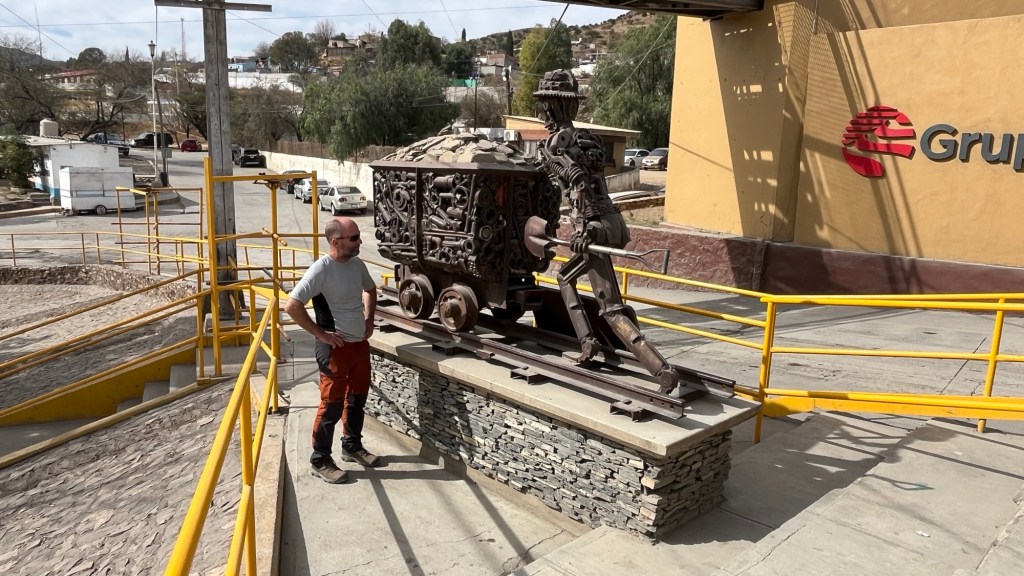
Our first mining stop was San Francisco del Oro, and it surprised me. It is a pretty town, a bit run-down, but full of unique character. We were greeted by a sculpture of a miner.

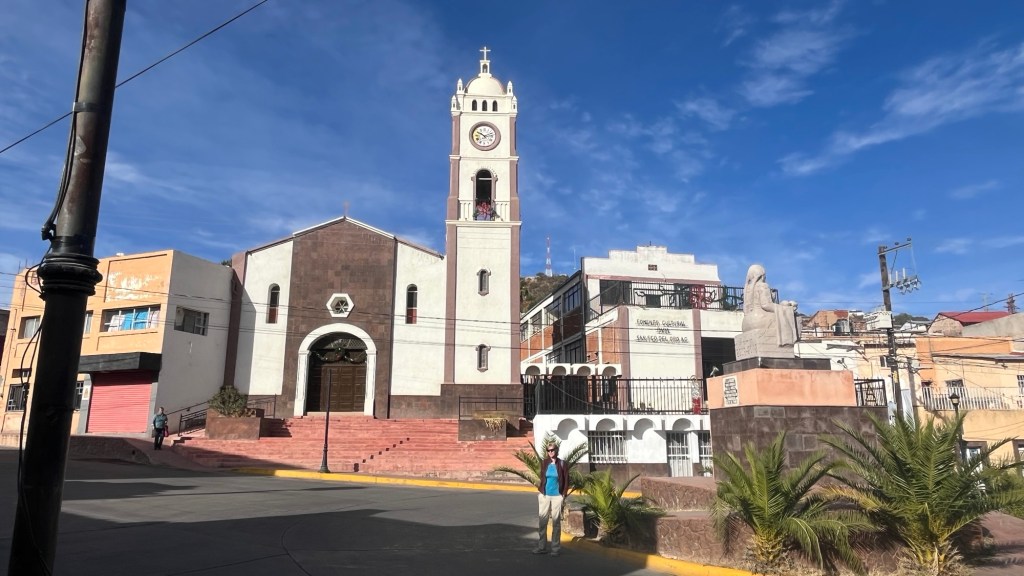
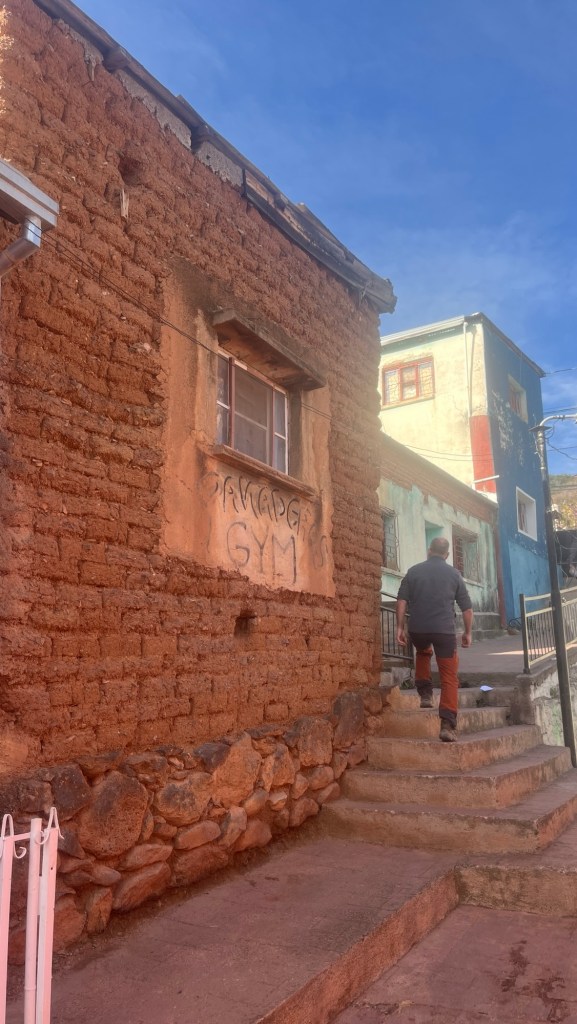
Walking through the streets, we found the Frisco Mining Museum, but it was closed. A passerby told us it would open the next day. At a small restaurant, Chester tried his first menudo. He liked it so much that I ended up eating both his portion and mine.
There is a mountain road connecting San Francisco del Oro and Santa Bárbara, with many mines scattered along it. Chester suggested we drive to Santa Bárbara first and then attempt the road.
Santa Bárbara is another great town.
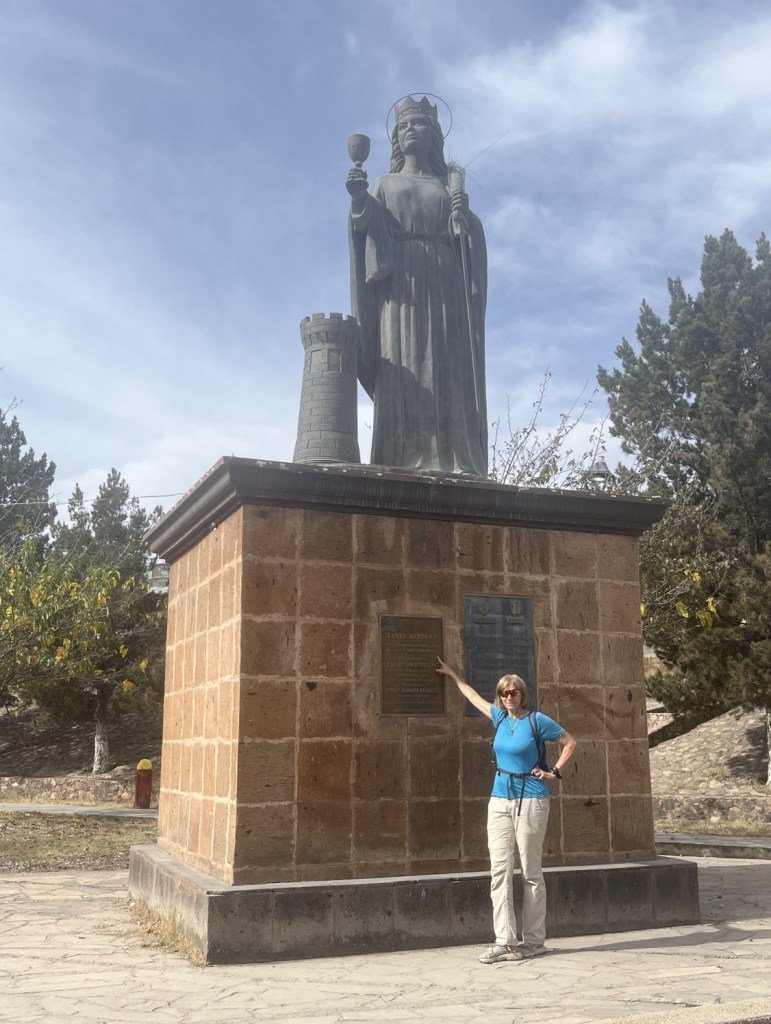
Santa Barbara is well known as the patron saint of miners. In Poland, she watches over coal miners; here in Mexico, she protects those working in silver, gold, zinc, lead, and more. But who was she? According to tradition, she was a young, intelligent woman kept isolated by her pagan father. Despite this, she learned about Christianity and was tortured and executed for her faith, while her father was later killed by lightning. The connection to mining? Not entirely clear.
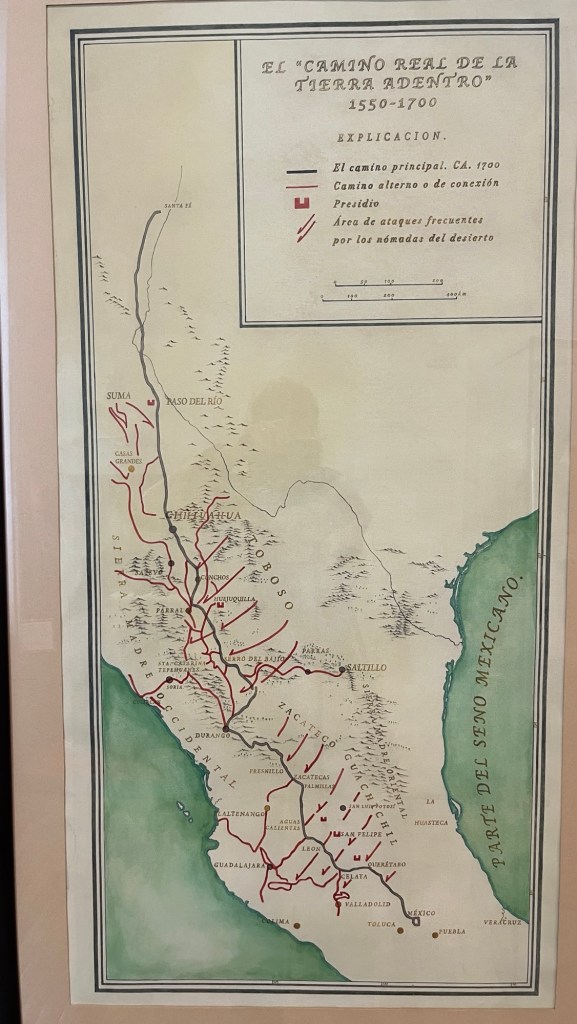
In Santa Bárbara, we also learned about El Camino Real de Tierra Adentro, or the Silver Route—a 2,500-kilometer-long trade route between Mexico City and Santa Fe. Yes, that is not an error: two and a half thousand kilometers!
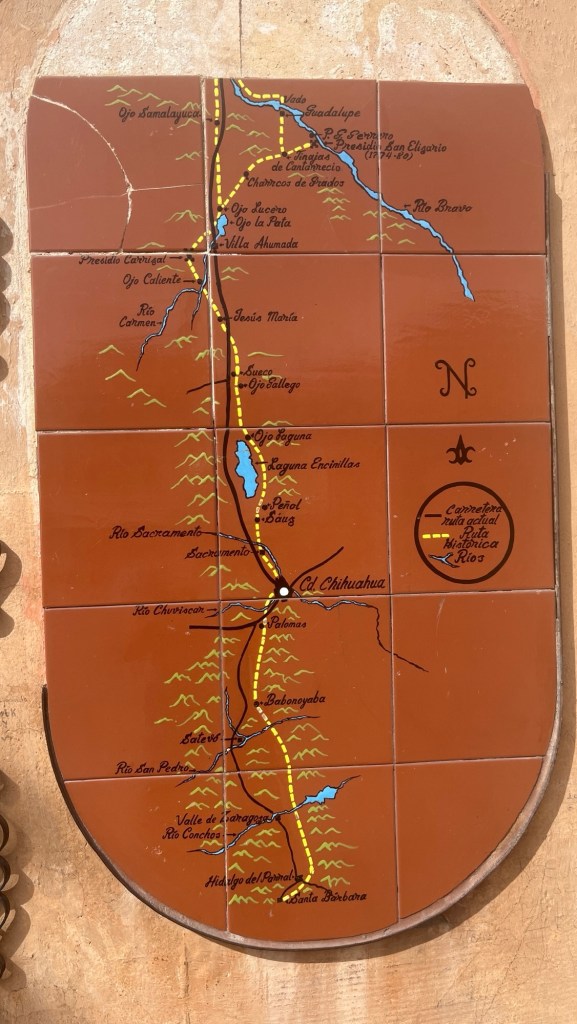
Long before the Spaniards arrived, Indigenous peoples had well-established trade routes across the Americas, exchanging goods such as turquoise, obsidian, salt, and feathers. After the Spanish conquest, the route was used for over 300 years to transport silver from the northern mines, along with cattle, wool, textiles, and other goods.
I was especially impressed by the conductas—a resupply system for missions, northern ranches, and presidios. Wagon caravans would depart from Mexico City to Santa Fe every three years. A typical journey took about six months and involved countless challenges: difficult river crossings, water shortages, and bandit attacks. In dangerous areas, the caravans would arrange their wagons in a circle for protection.
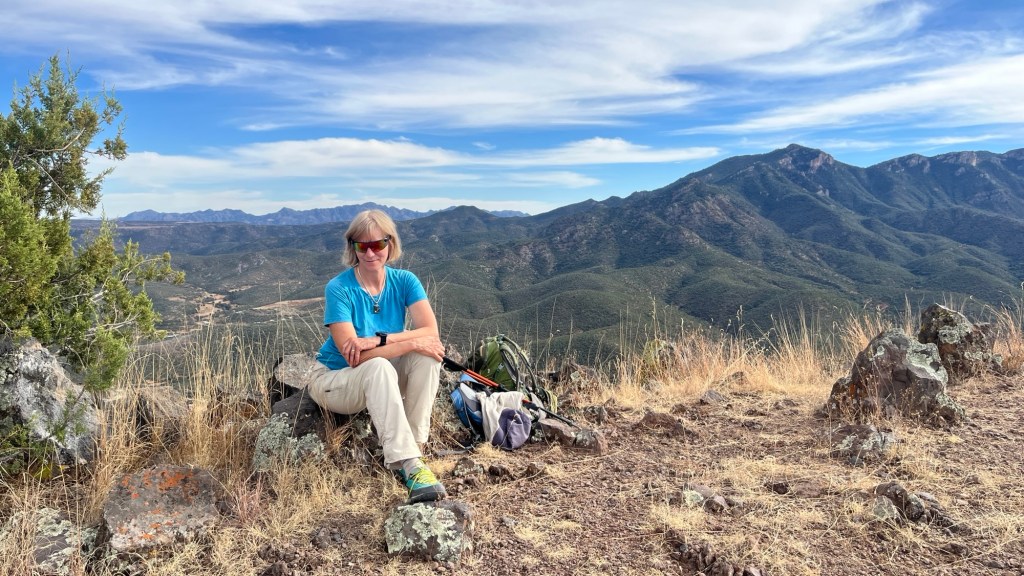
Before venturing onto the mining road, we hiked Cerro La Sierpe, a small peak above Santa Bárbara. I was thrilled to climb 270 meters and add a new entry to Peakbagger—everyone has to start somewhere.

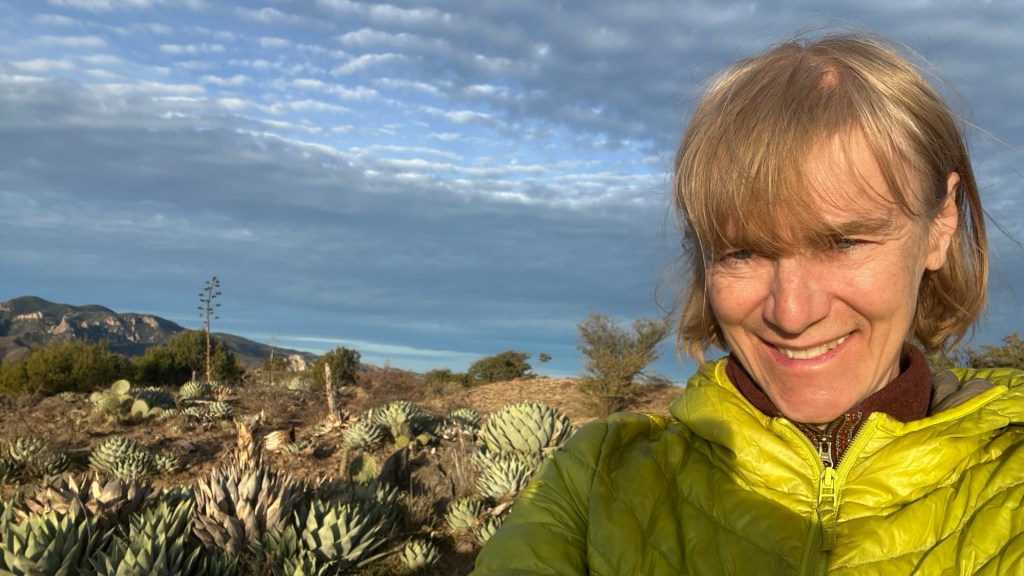
Then we drove onto the connecting road between Santa Bárbara and San Francisco del Oro. Our first order of business was finding a place for the night.

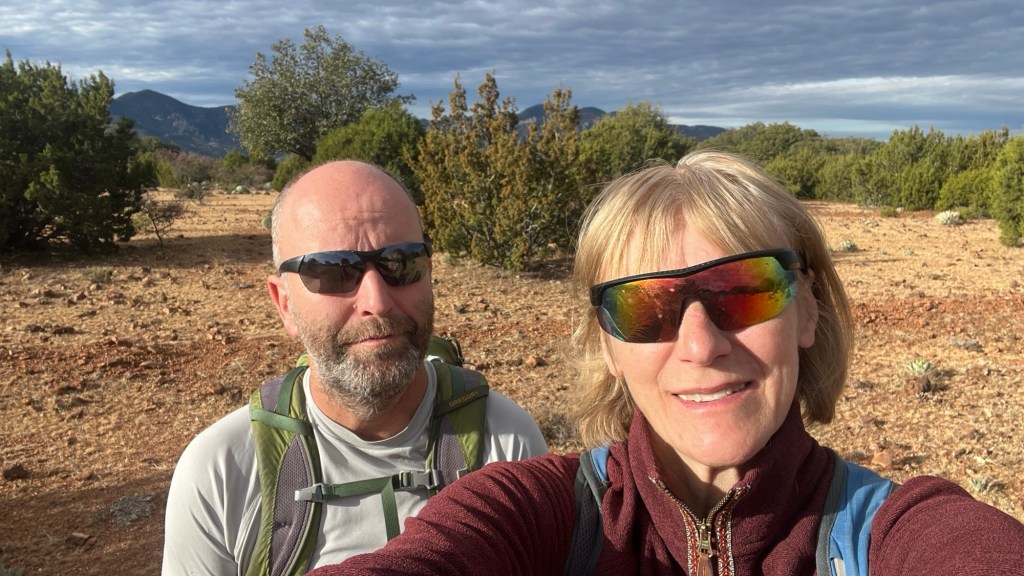
Now mines or mining holes were everywhere.
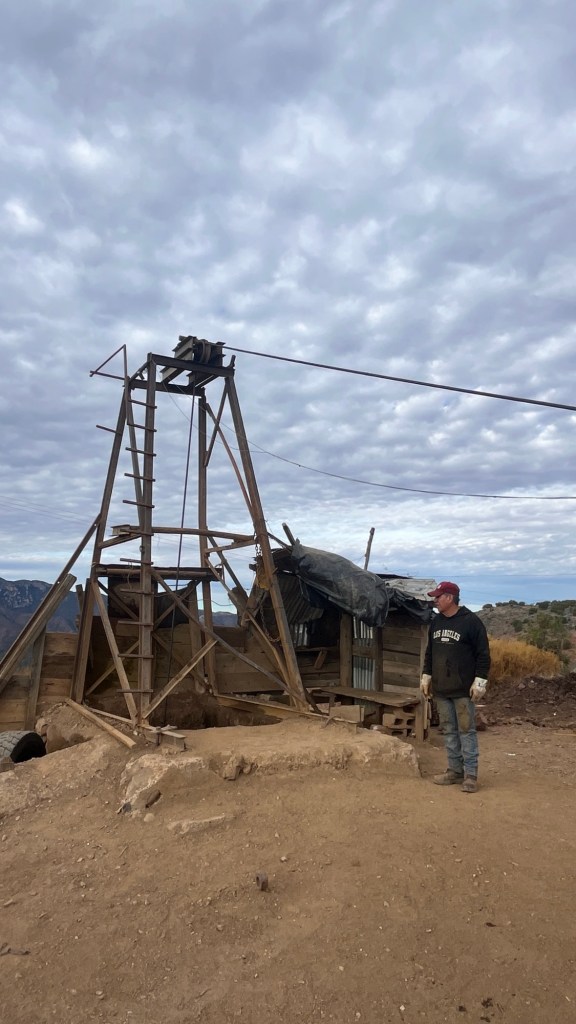
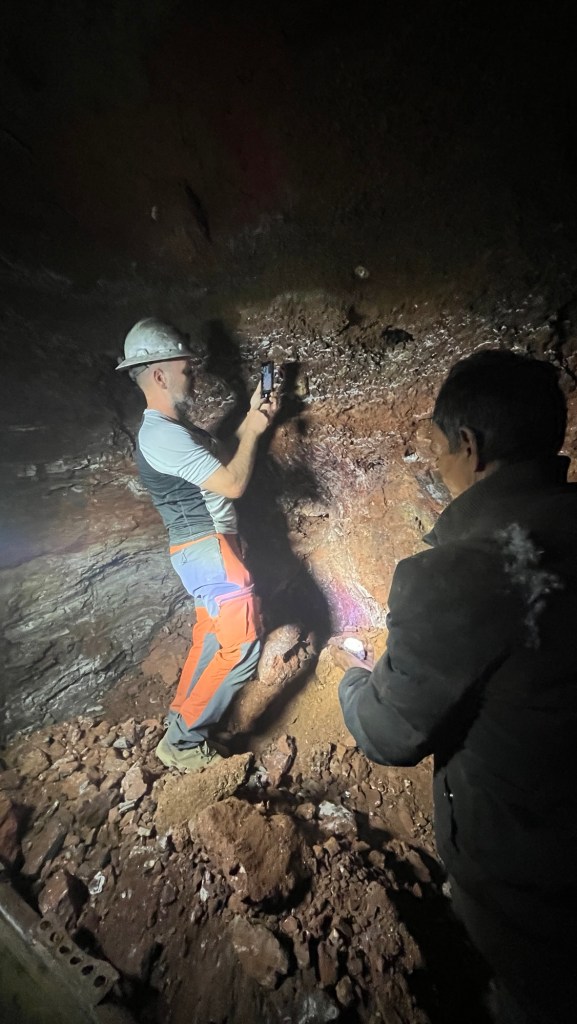
Chester described mines perfectly in his post.
Many people are troubled by the mining industry. The reality is that the world would be very different without it.
For instance why do we need silver mines? Because we use silver in smartphones, computers, circuit boards, cars, solar panels, wind turbines, and electric grids.
Can silver be substituted? Sometimes no, sometimes yes—but even then, substitutes are usually other mined metals, and there are always trade-offs.
Why do we need copper? Because it is used in power lines, cables, wiring, electric motors, generators, and transformers. We use it in trains, subways, aircraft, ships, and manufacturing.
I think it is obvious that each and every one of us benefits enormously from mining industries, even if we do not think about it every day. Those who are not convinced sign up to compete in Alone series, and see how long you would last. This would be our reality without mines.
Another thing became apparent here: this region gained its prosperity from mining. There was exploitation, many suffered —but the same has been true in agriculture, farming, and other various industries.
Our next mining destination was Hidalgo del Parral, usually called Parral, once known as the “Silver Capital of the World.”
We strolled through the city in the morning, impressed by its churches, plazas, pleasant historic core, and interesting shops selling leather boots.
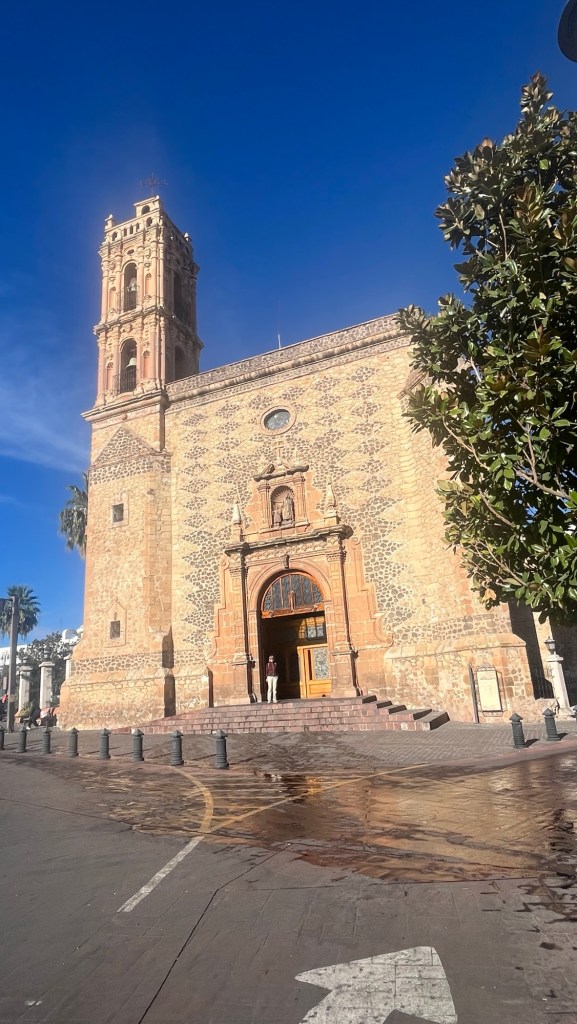
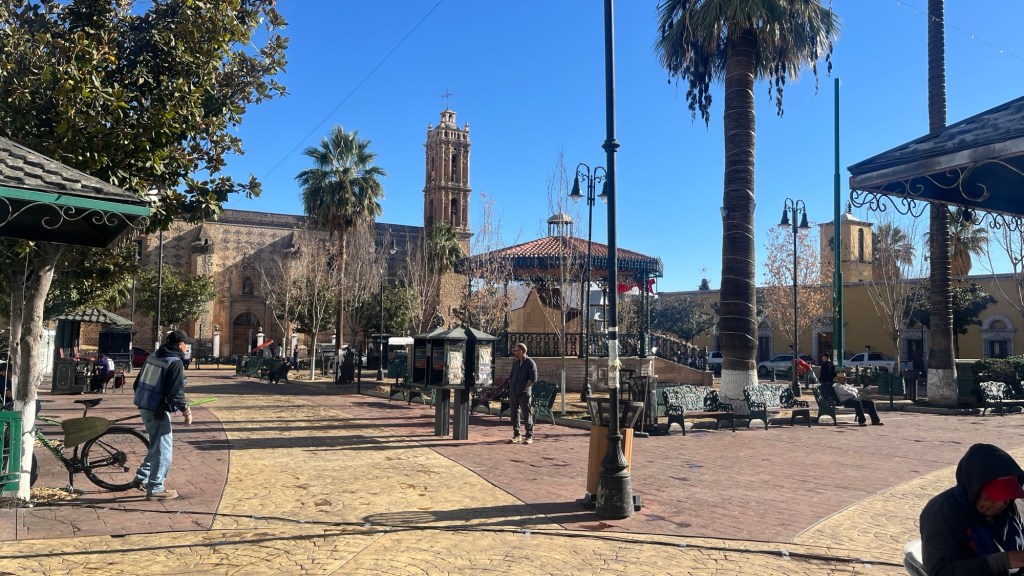
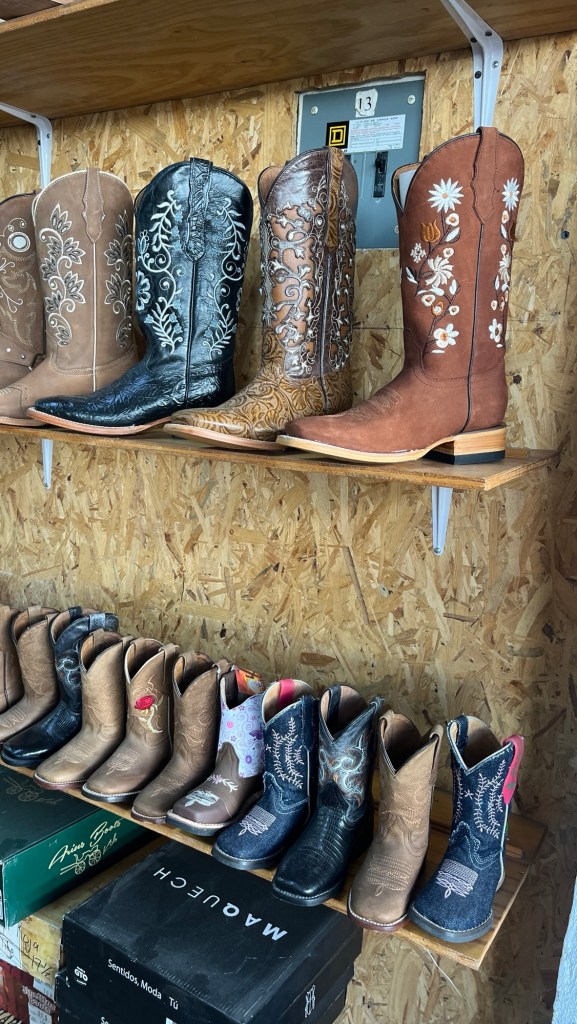
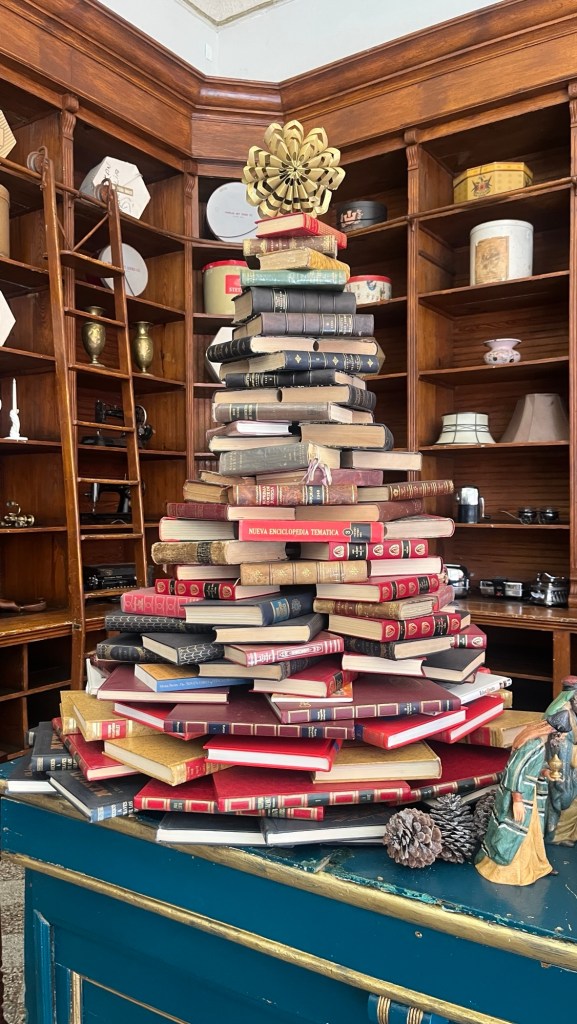
It was here, in 1923, that Mexican revolutionary Pancho Villa was assassinated. Mexico has a tough history.
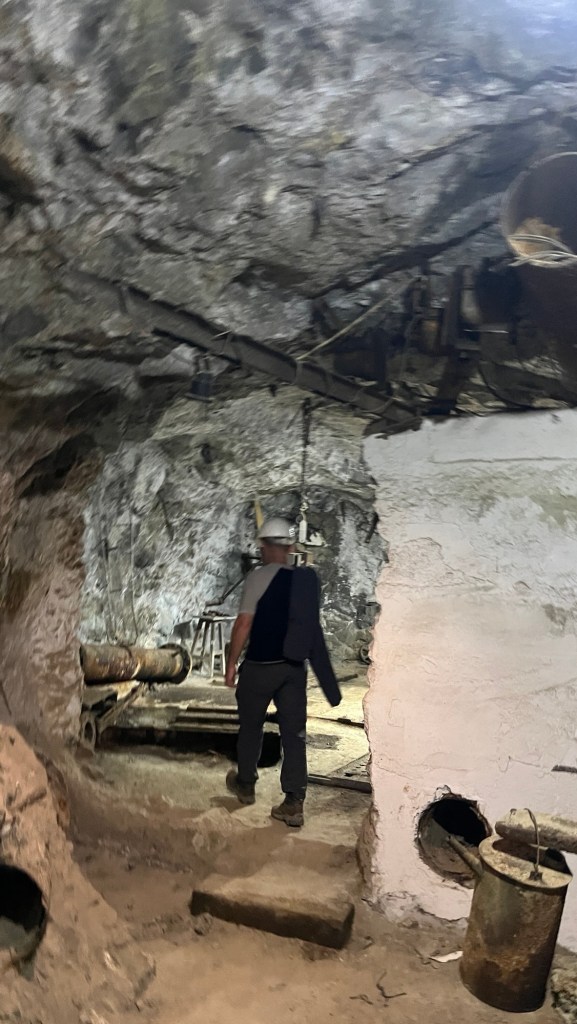
In the afternoon, we visited the La Prieta (Parrita) Mine. My Spanish is still too limited to fully benefit from guided tours, but it was interesting nonetheless—and once again I promised myself to make Spanish a priority.

Soon, however, we had our fill of town life. We are not very good at towns; they tire us quickly. We were happy to be back on the road and find a small peak to climb.
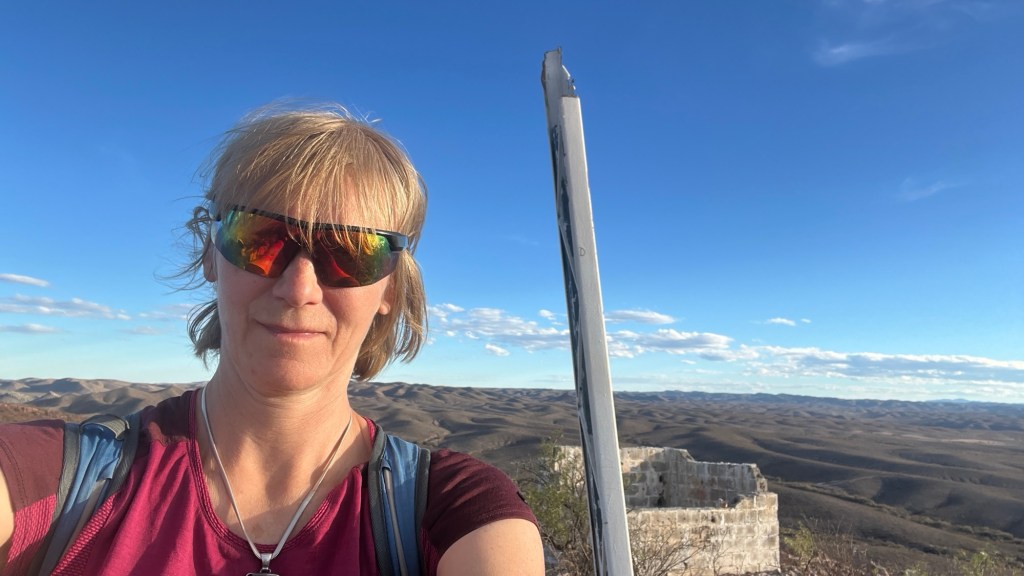
The next day, we tried to hike some peaks.
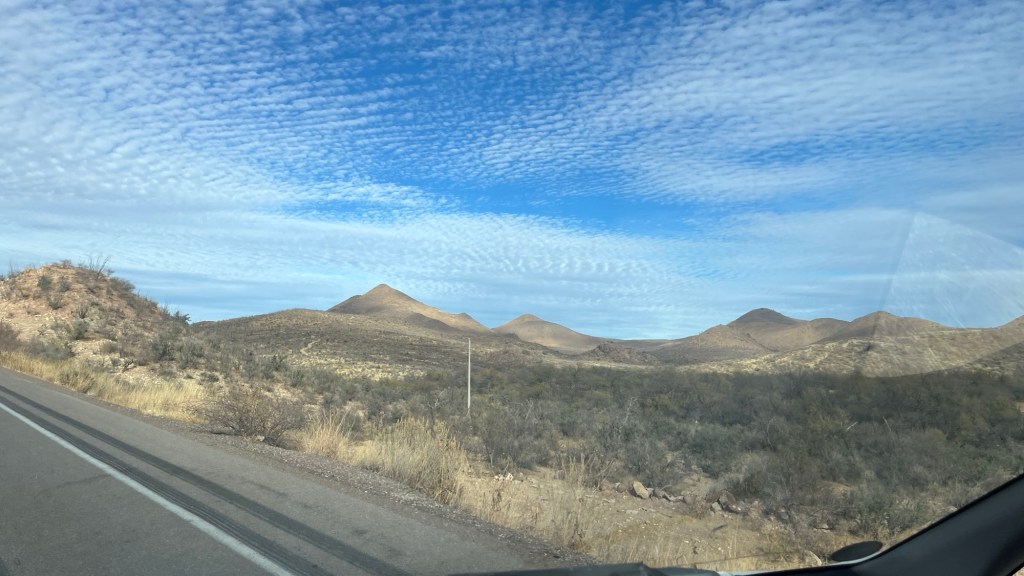
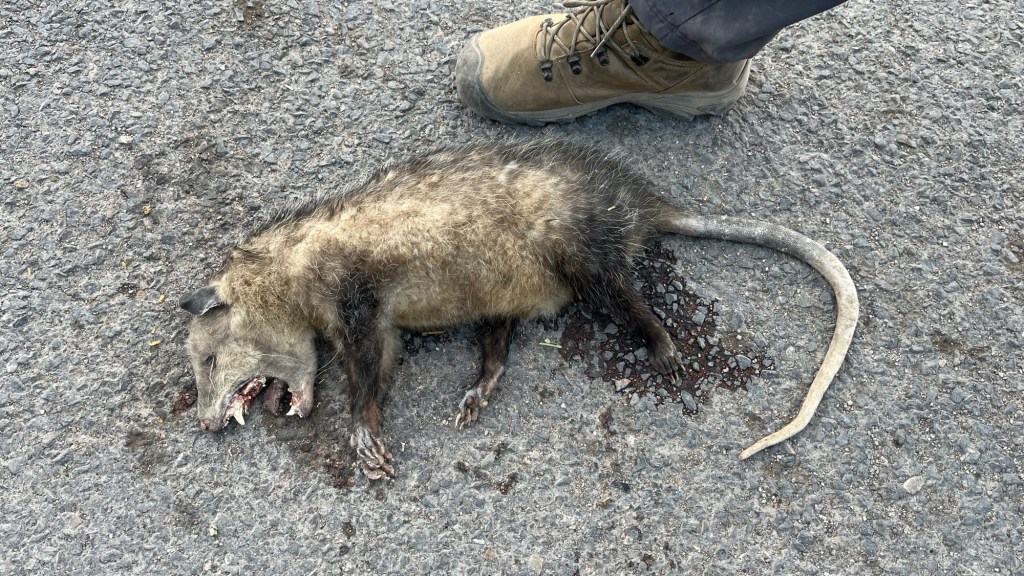
We failed to even reach the trailhead. It was not for the dead opossums guarding the access.
Instead we headed to the capital of the state, Chihuahua, also called Chihuahua. Towns can be tricky when it comes to finding a safe place to spend the night. We drove to a location marked on the map as an RV park, but it turned out not to be one. We were lucky—the family living there offered us a place to stay in their yard. They also invited us for coffee, sweets, and showers. We love Mexicans; they are incredibly kind.

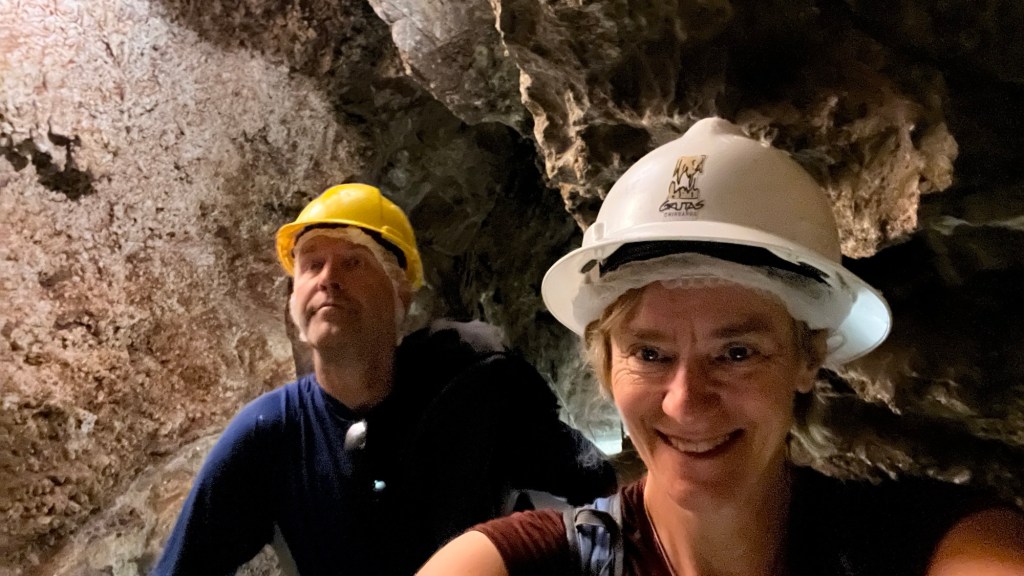
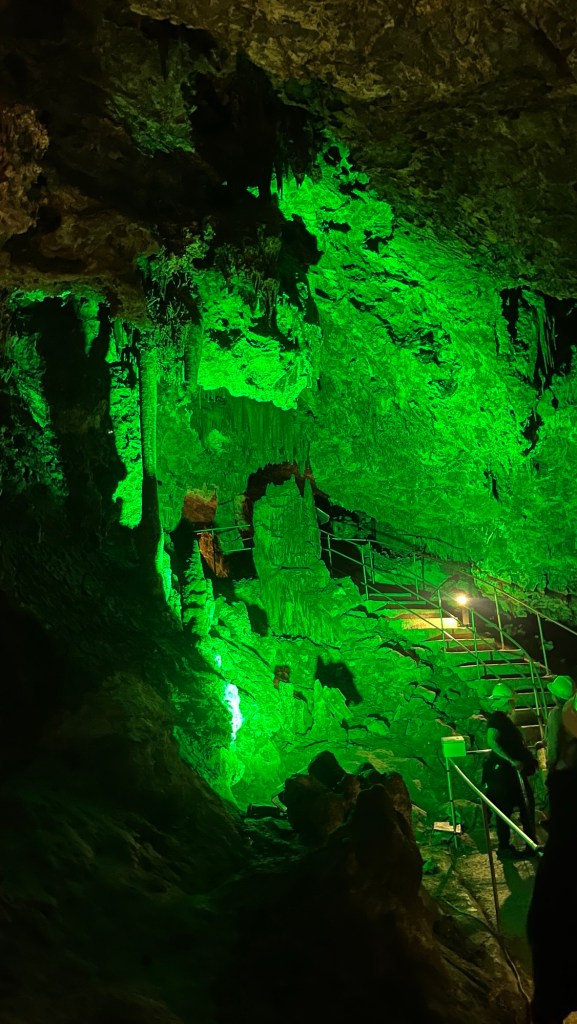
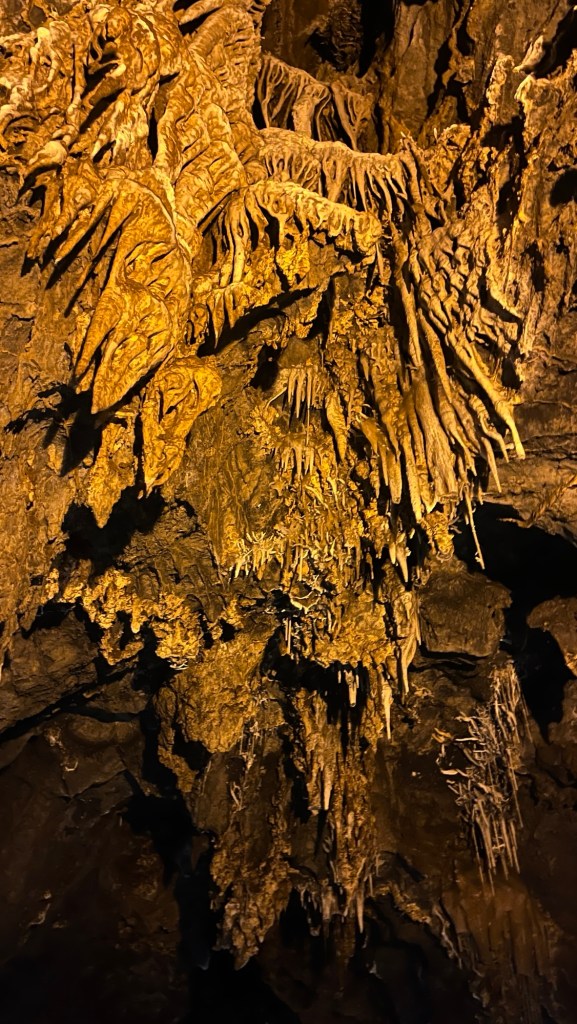
One day in Chihuahua was enough for us. We spent about four hours in the morning strolling through the beautiful city, visiting a museum and exploring the cave.
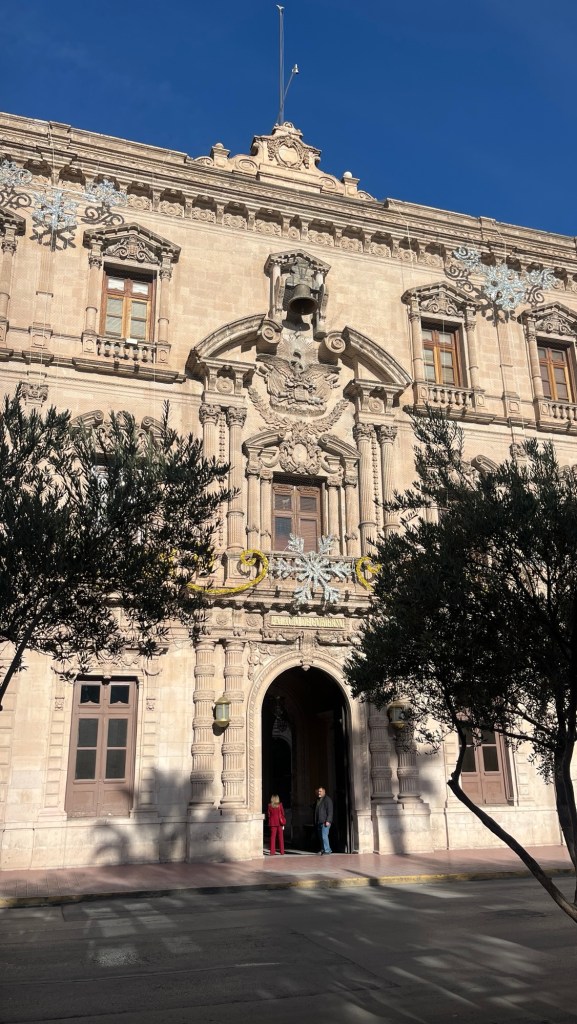
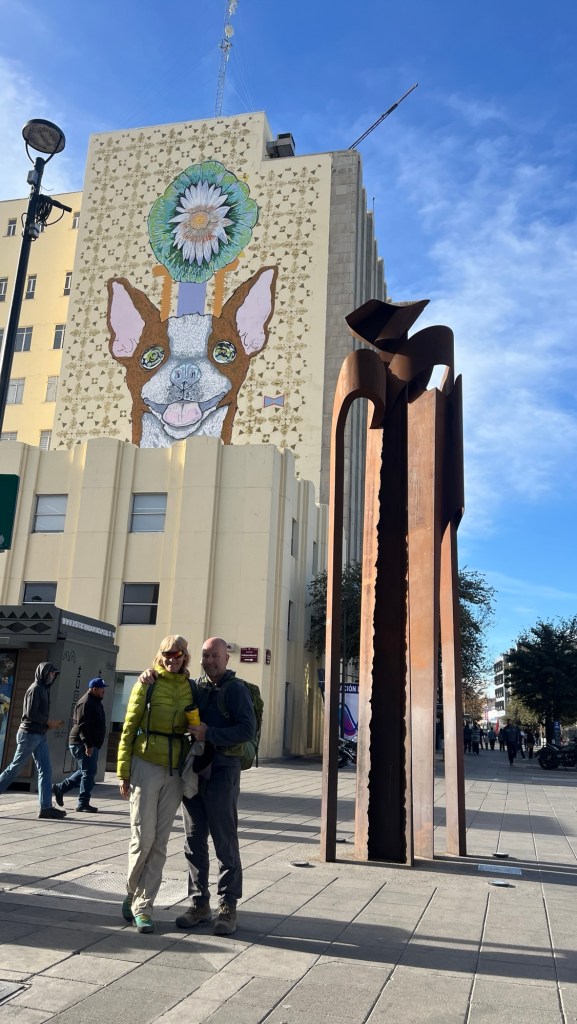
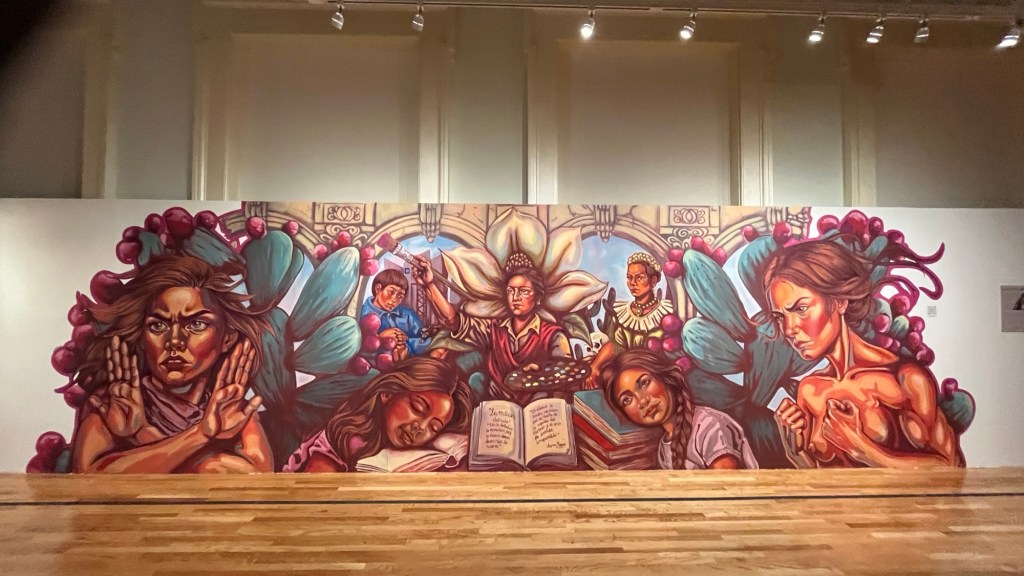

On our way back, we even managed to tag a small peak. It was a day packed with activities—and no mines in sight, even though we spent a kilometer underground.
Our next plan was to visit the Mennonites and a national park near the capital, but Chester felt like moving on and changing scenery, so he suggested the desert. And that is a different story.
 Marta and Chester's Maleficent Adventures