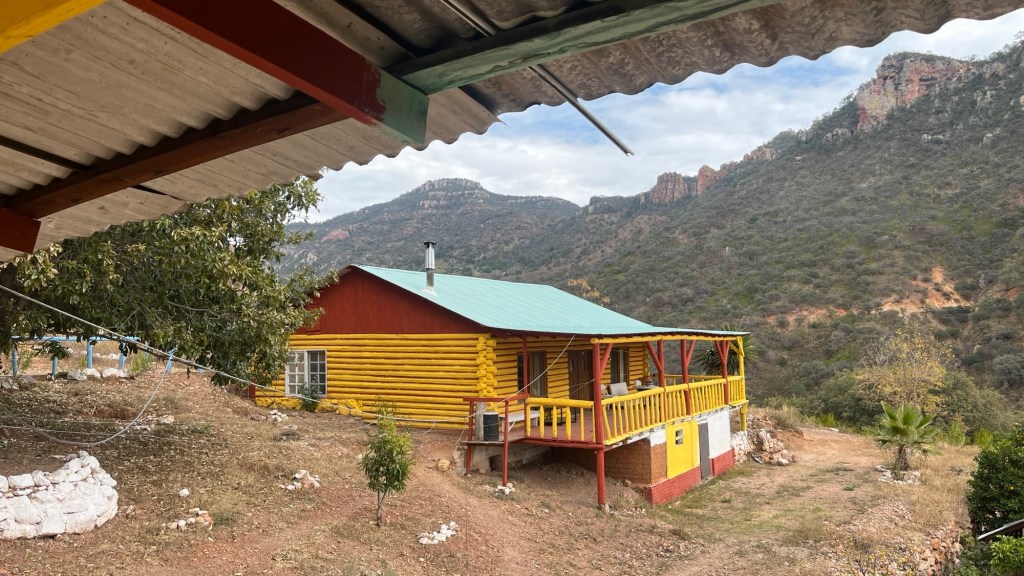
The Cascadas de Basaseachi National Park marked the end of Week 2 of our journey.
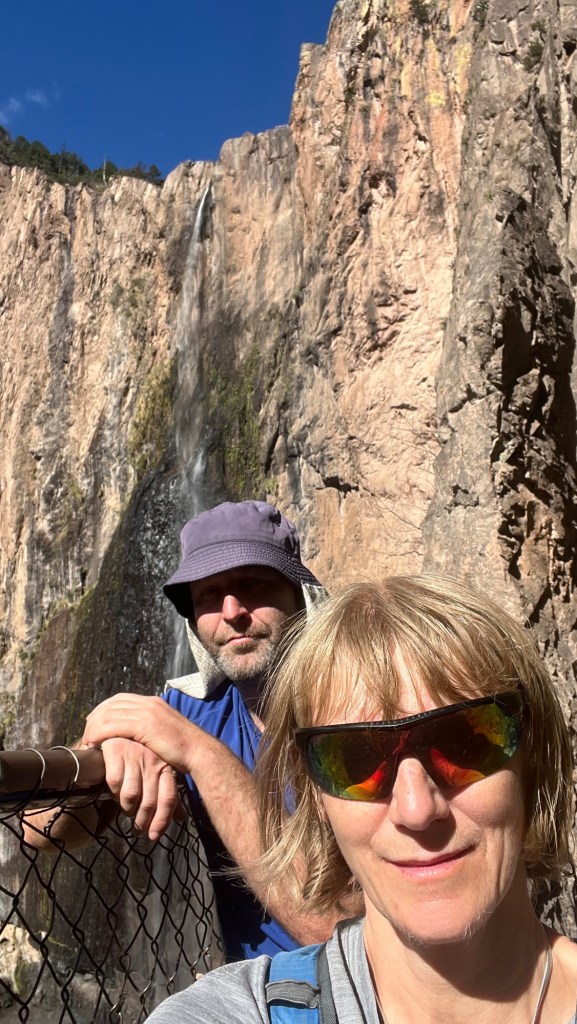
Given the spectacular beauty of the area, we decided to travel through the mountains of the Sierra Monteverde toward Agua Verde. Chester spotted a connecting road on the Mapy.cz app, but that didn’t mean the road was passable. We wouldn’t know until we tried.
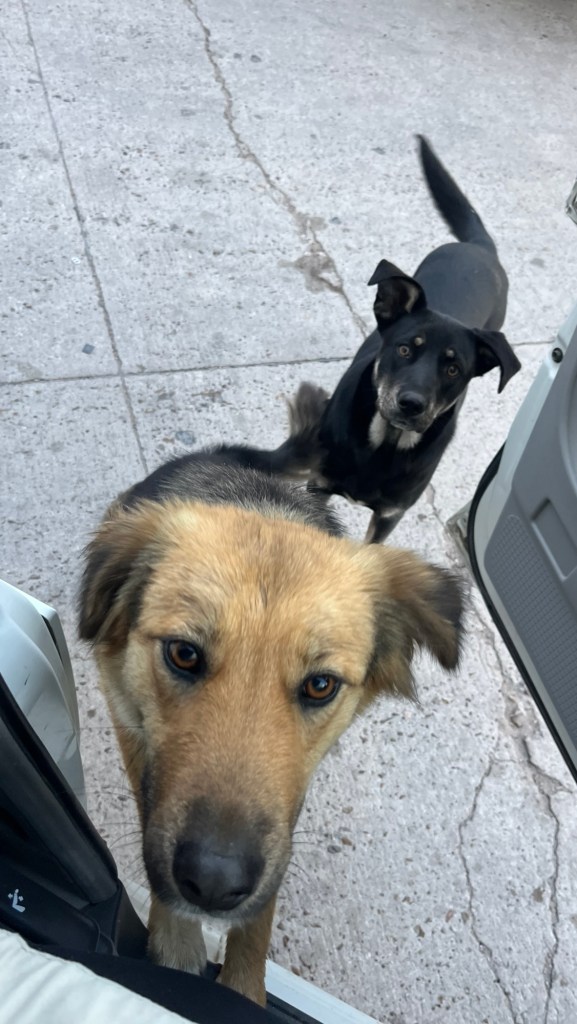
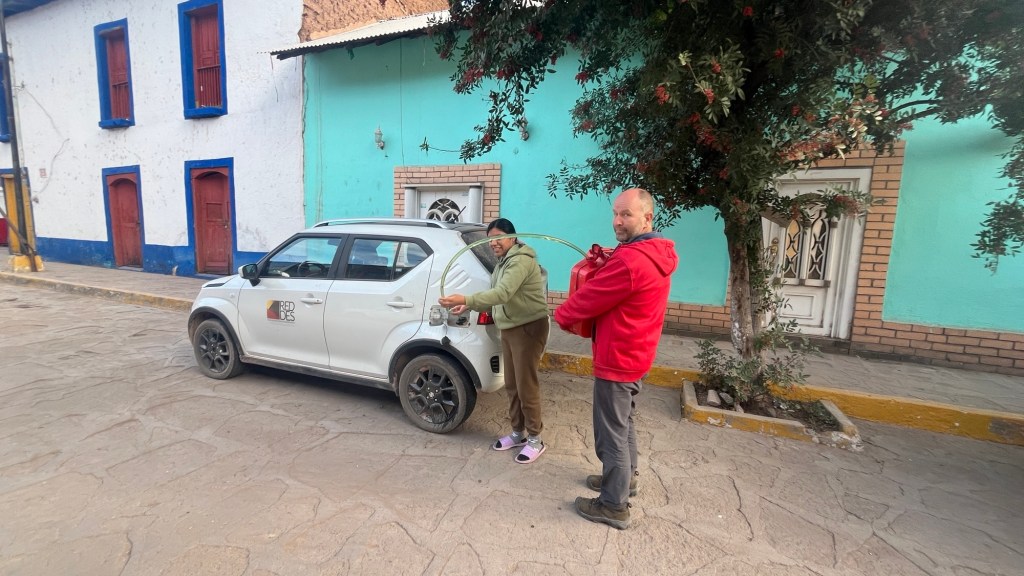
While filling up with gas, two curious dogs—friendly, as Mexican dogs always are—tried to climb into our car.
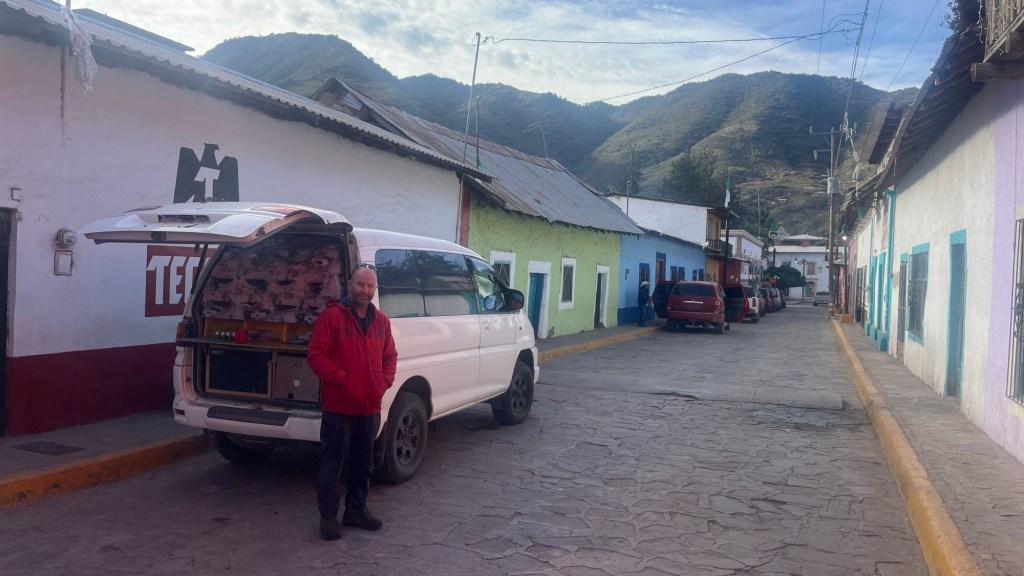
In Cajurichic, we turned toward the town of Uruachic and were pleasantly surprised. The road was asphalted, easy to drive, and picturesque. Uruachic itself was unexpectedly unique.
The town square was typical, but the houses were painted in vivid shades of orange, green, pink, violet, blue, and yellow—my kind of colours, the kind that make my soul happy. Everything was so clean, and everyone was incredibly friendly.
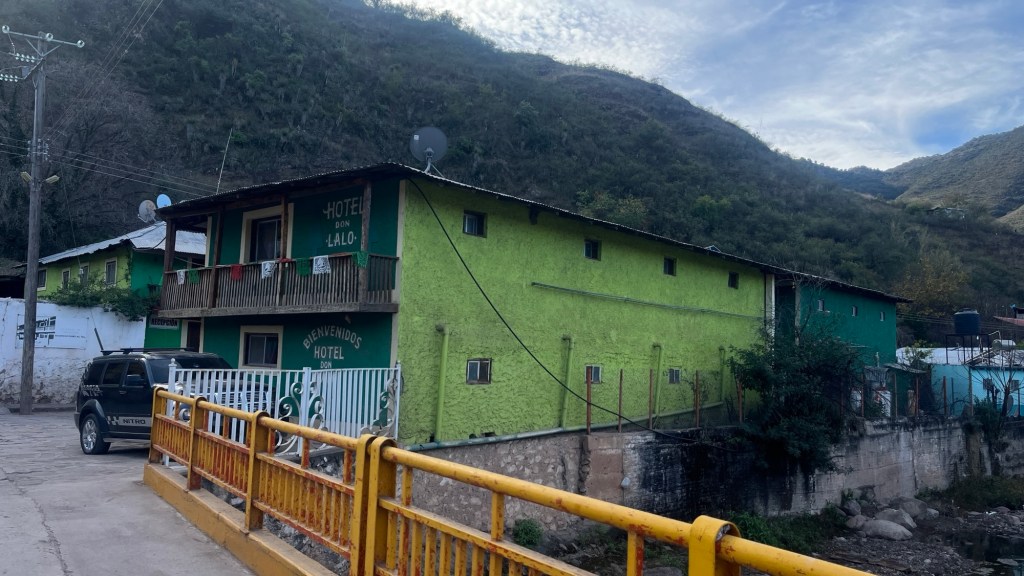
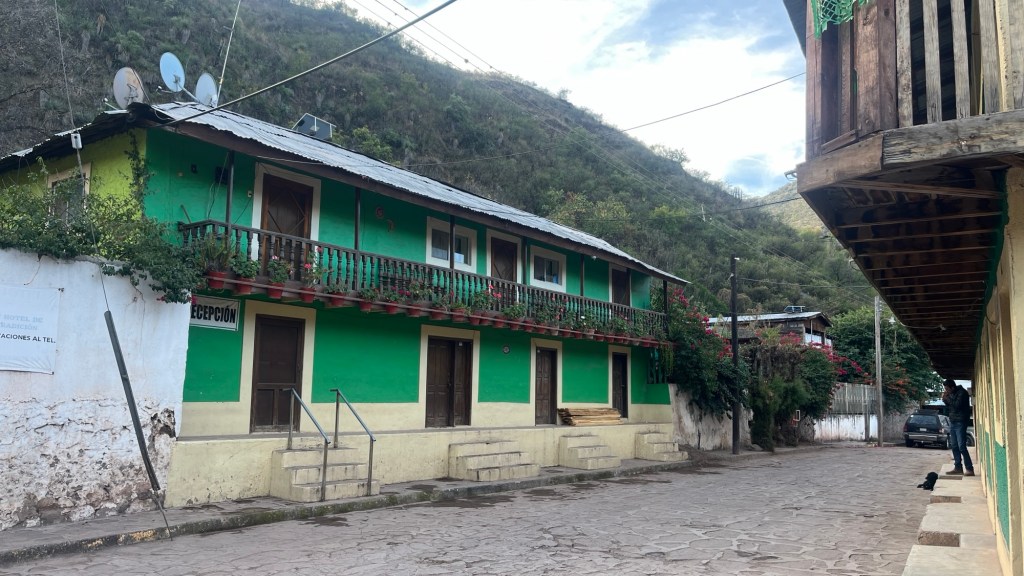
What we didn’t know at the time was that the town lies near a gold mine, which may explain its prosperity, although we didn’t notice a single gas station.
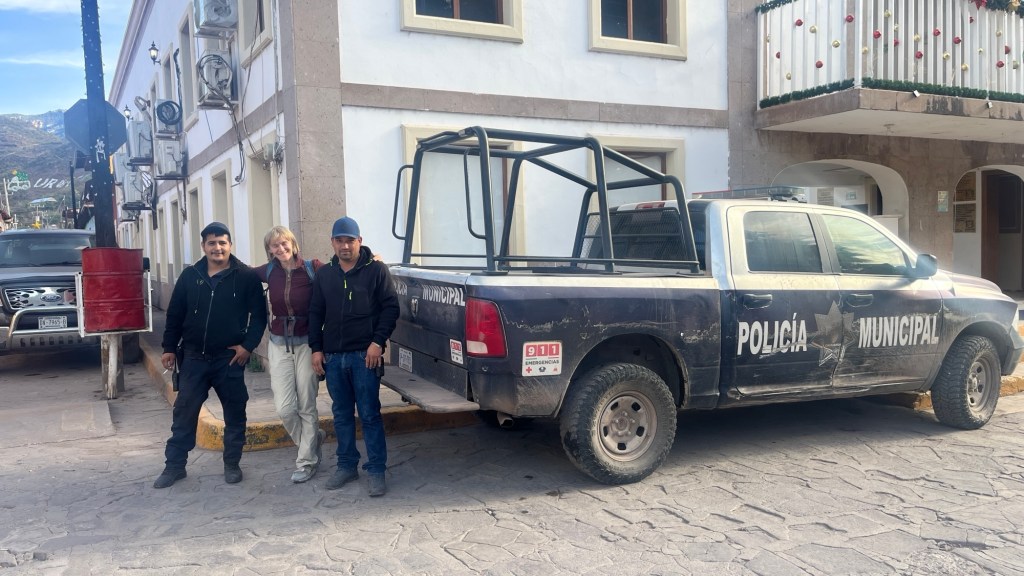
A friendly policeman stopped us and asked where we were headed. I explained that I love mountains and that we were aiming for Guichauchi Peak at 2,800 metres. Was it doable? It was too far for him to know, but my answer seemed to satisfy him.
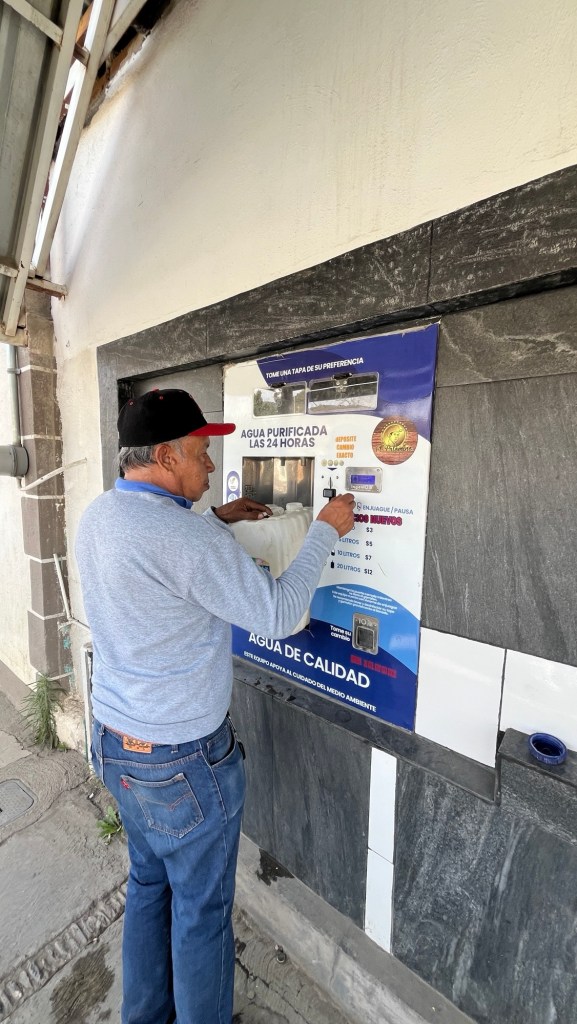
Chester refilled our drinking water at an automated purificadora. Unlike in Baja California, we hadn’t yet seen a single people-run purificadora on the mainland.
Grocery shopping was memorable. We bought a few items in a small store, paid 100 pesos—about $8 CAD—and walked out. On the way to the car, Chester remarked that this was the first time our groceries felt cheap. So we recalculated and realized the cashier had made a mistake. We had significantly underpaid. We returned to the store. The cashier was surprised, but grateful.
Then we set off on our mission. Getting out of town was already challenging—the road followed a river corridor and crossed it several times. Flooding had clearly occurred in the past, and things hadn’t fully returned to normal. But once we were out of town, the route became straightforward.
We were stopped by a man who spoke some English. He was clearly amused by us and our right-hand-drive vehicle. He told us he lived up in Mesa Seca and assured us there was no problem with the road ahead. That was reassuring. The road grew rougher and narrower, with a steep drop on the right-hand side. We took it slowly, enjoying the scenery.
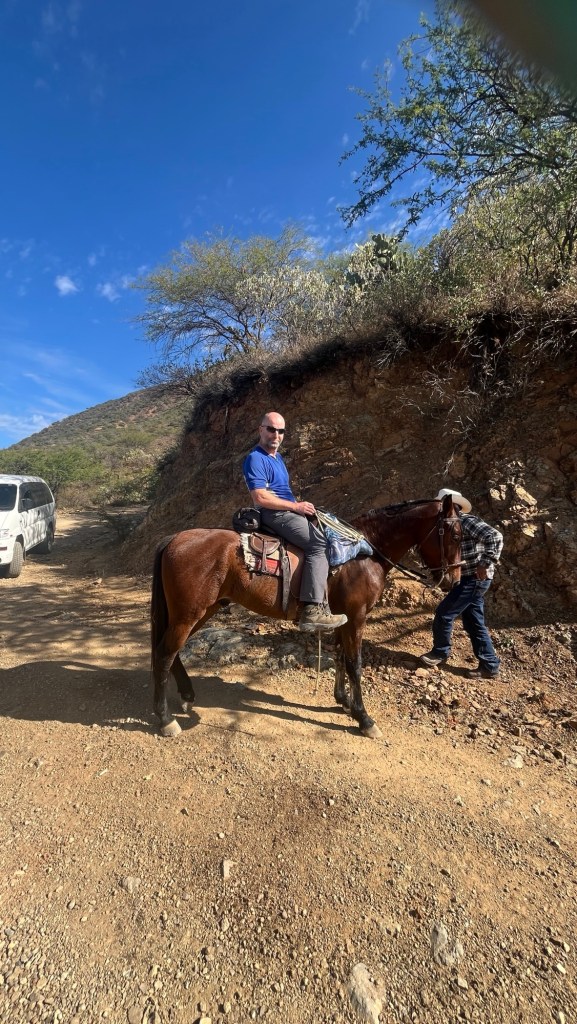
Then we met a man on horseback. He, too, seemed genuinely happy to see us. He even insisted we get on his horse! But he warned us that the road ahead was not passable. He mentioned something about the river, which I interpreted as meaning the bridge might no longer be there.
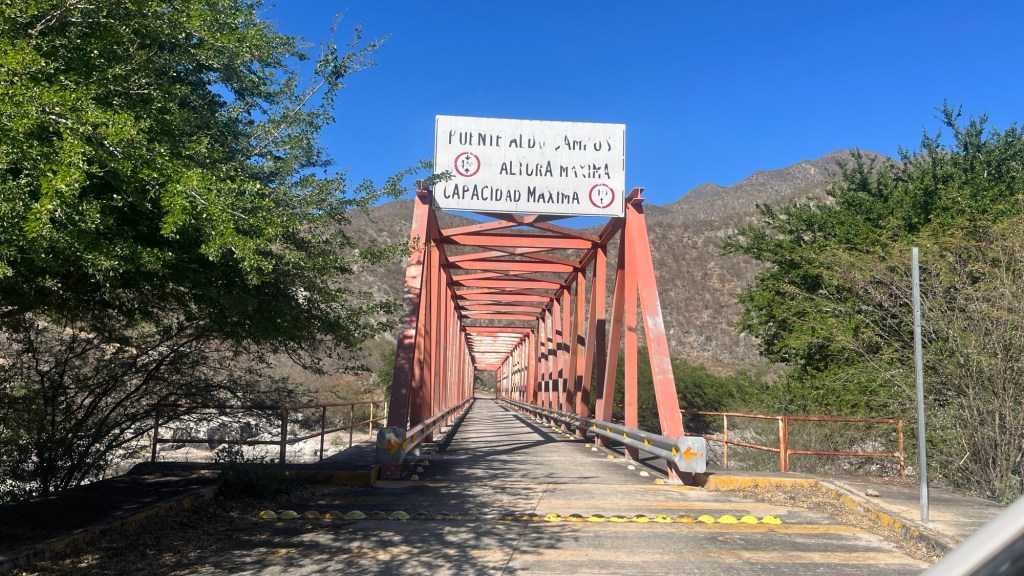
After he rode off, Chester pulled out Ikarus—the mighty drone—and flew nearly five kilometres ahead to scout the route. The bridge was definitely still there. We decided to continue.
It didn’t take long for the road to deteriorate, but the Delica handled it beautifully. The descent was slow and careful, with plenty of small drops and big rocks, but we made it. The bridge was in great condition, and we crossed without any worries. On the other side, the road deteriorated even further.
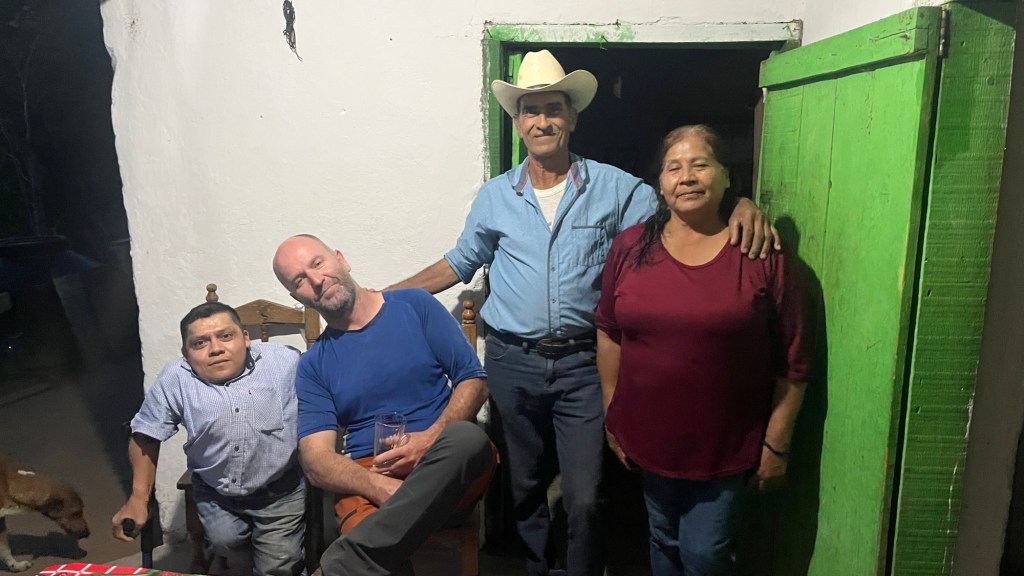
We stopped for lunch, and while we were eating, a man approached us. He and his wife lived nearby and invited us to visit. After a well-deserved bath in the Río Oteros, we did—and we didn’t leave until the next morning.
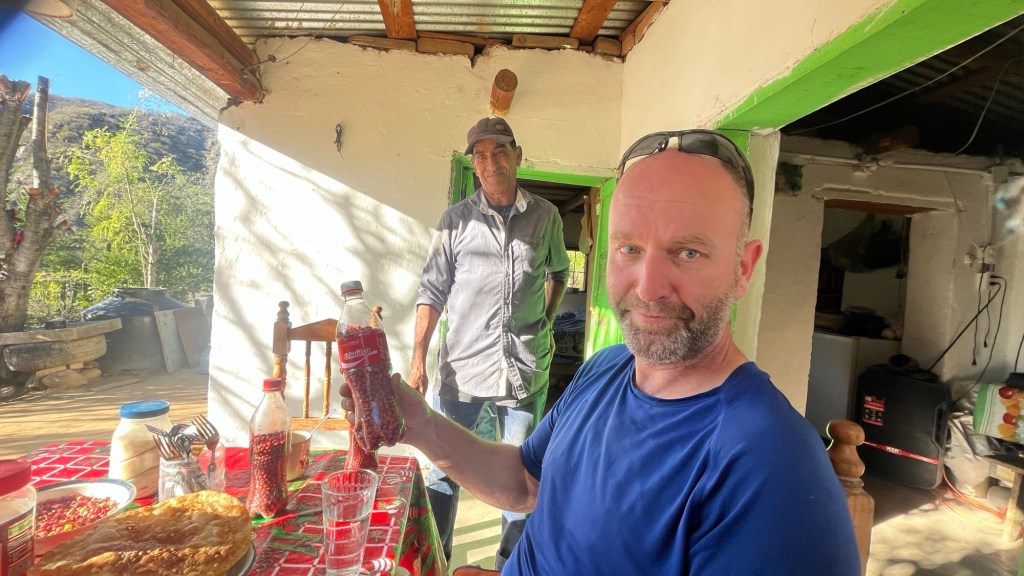
It was the warmest welcome imaginable. Riroberto and Rafaela treated us to sugarcane, oranges, limes, coffee, apple paste, mezcal, beer, and tamales—and in the morning, a hot breakfast of tortillas, beans, eggs, and ham spiced with salsa.
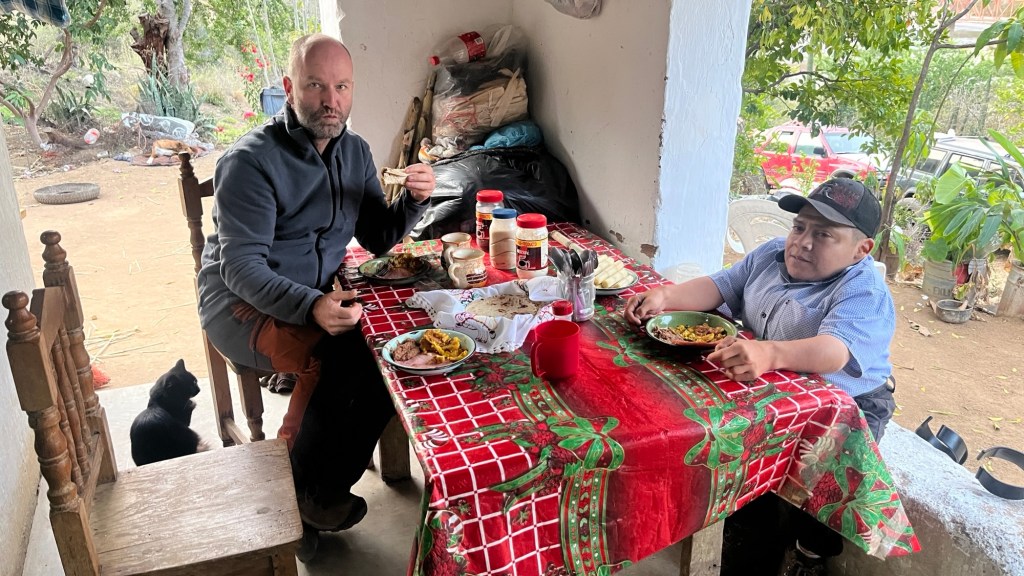
We were sent off with lunch and gently convinced that our original plan was not doable. The mountain road we had chosen was not drivable by vehicle.
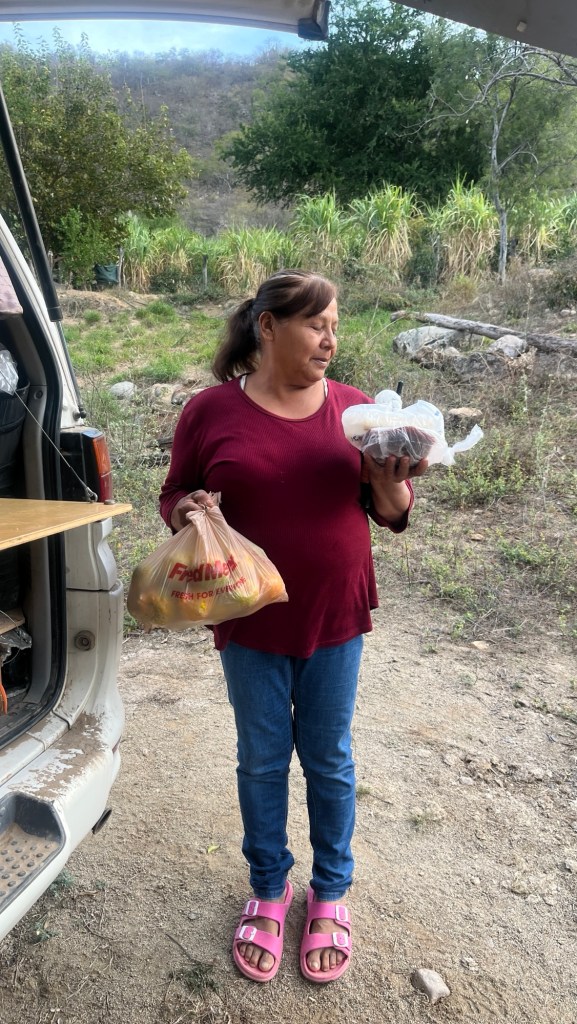
In fact, our wonderful hosts were concerned that we might not even be able to drive out from their place, so they decided to escort us back to Uruachic. And they did. Riroberto’s father and son grabbed their radios and jumped into the junior 4×4, curious to see how nicely Desigual-Delica would handle the terrain. For us, convoying through the mountains was fun and comforting—it gives a strong sense of security.
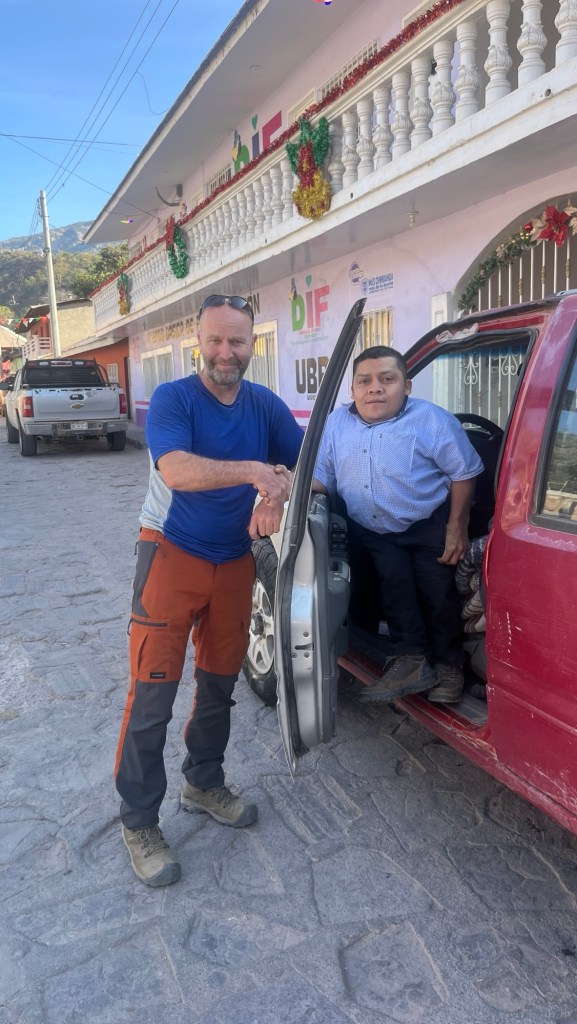
And just like that, we were back in Uruachic.
We said goodbye to our hosts.
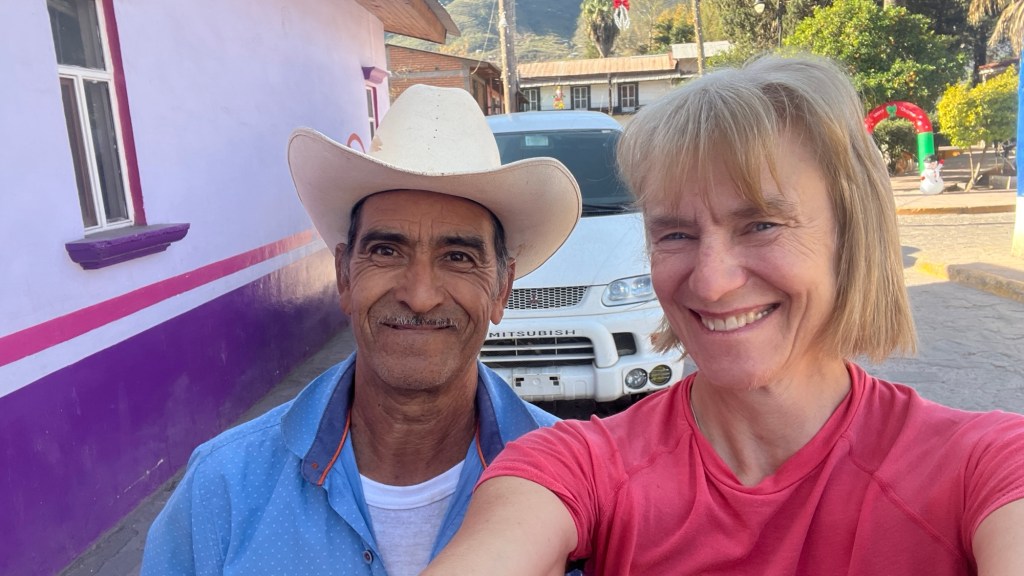
On maps, you’ll see two spellings: Uruachic and Uruachi. Both are pronounced the same way, but the suffix “-c” signifies an Indigenous ending meaning “place of.” Urua means vulture, so Uruachic translates to Place of Vultures. For the Tarahumara people, vultures hold special significance—they symbolize rebirth and recycling.
From Uruachic, we took the recommended route to Maguarichic, the Place of Mountain Lions. And yes—there are pumas and even leopards here. Wow. What a road. A solid 10 out of 10.
It was nothing like the road to Uruachic. This one wasn’t paved; it wound through the mountains, climbing and descending constantly. At one point, we dropped more than a thousand meters into a deep canyon to cross a river, only to climb over 600 meters back up again. The scenery was spectacular, yet the driving was not exhausting—slow, narrow, interesting, but manageable. We didn’t make it to Maguarichic in one push; instead, we stopped for the night to enjoy the symphony of Mexican crickets.
Maguarichic exists because of mining—gold, silver, lead, and zinc. The town is carved into a steep mountainside. Chester wanted a tour of the mine. Was that even possible? We had to ask. Surprisingly, Fernando, a mining engineer, offered us one.
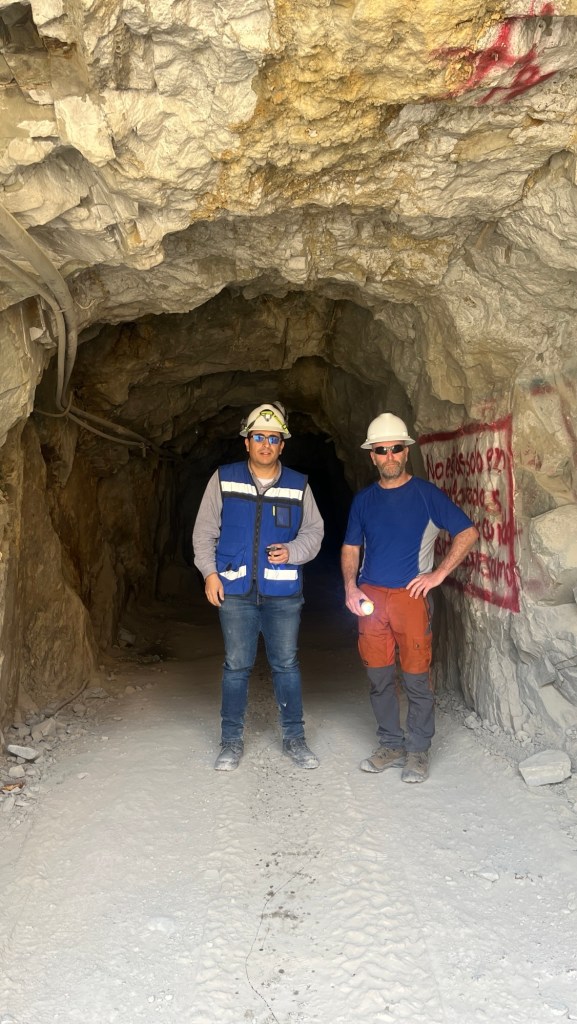
Check Chester’s blog for the details.
Maguarichic also has geysers. High up in the mountains, water close to 100°C bursts out under pressure. Vivid green algae—unlike any colour I’ve seen in nature—line the stream.
Four small ovens have been built where meat is cooked for over 12 hours in boiling mountain water. There’s even a geyser spa.
We also drove up a mountain road overlooking the town. It was steep—4×4 with high clearance is a must.
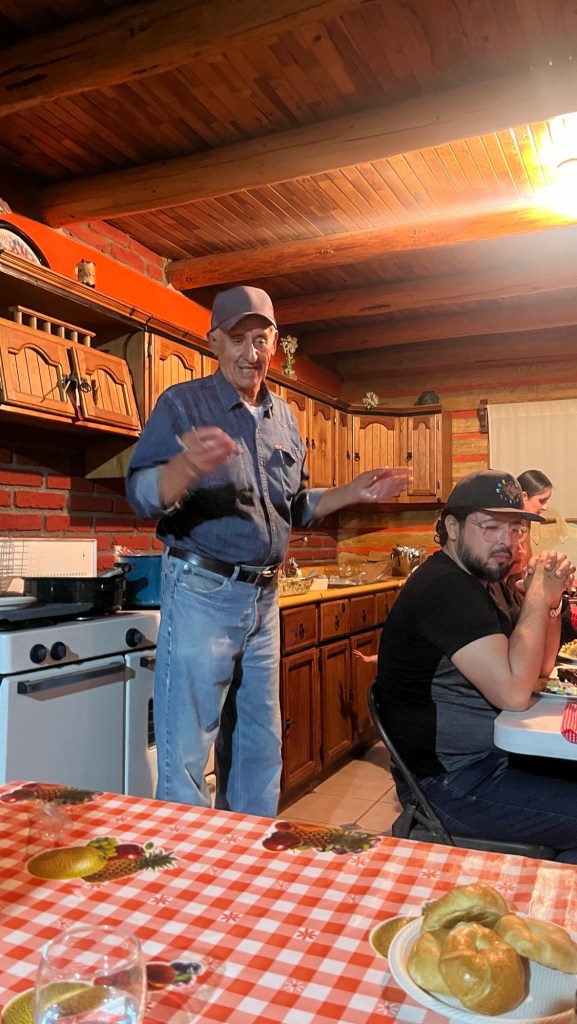
This was the last day of the year, and Fernando invited us to New Year’s Eve dinner with his family. Completely unexpected. Before that, however, we experimented with what it means to be goat herders. We certainly lacked the skills.
At dinner, we met his sister, two brothers, his father—who had been a miner for over 50 years—and his mother. It was a truly memorable New Year’s Eve.
 Marta and Chester's Maleficent Adventures