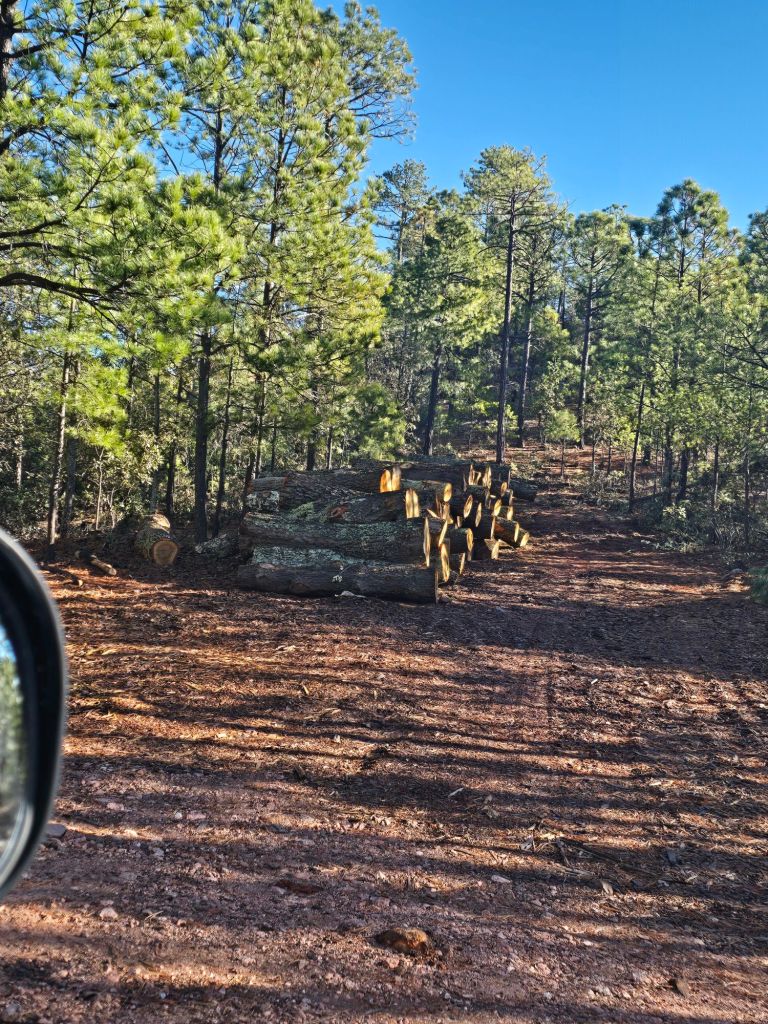
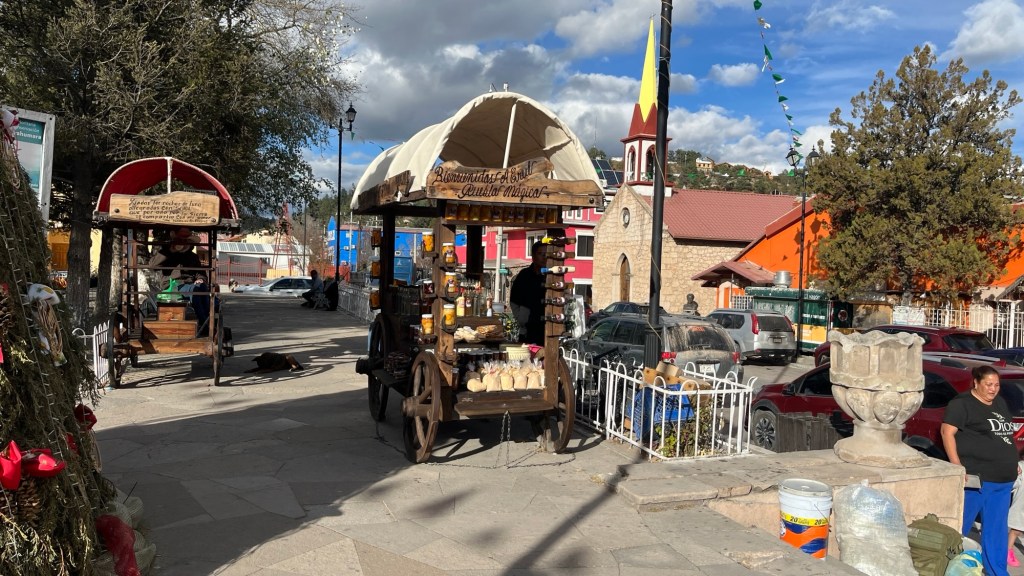
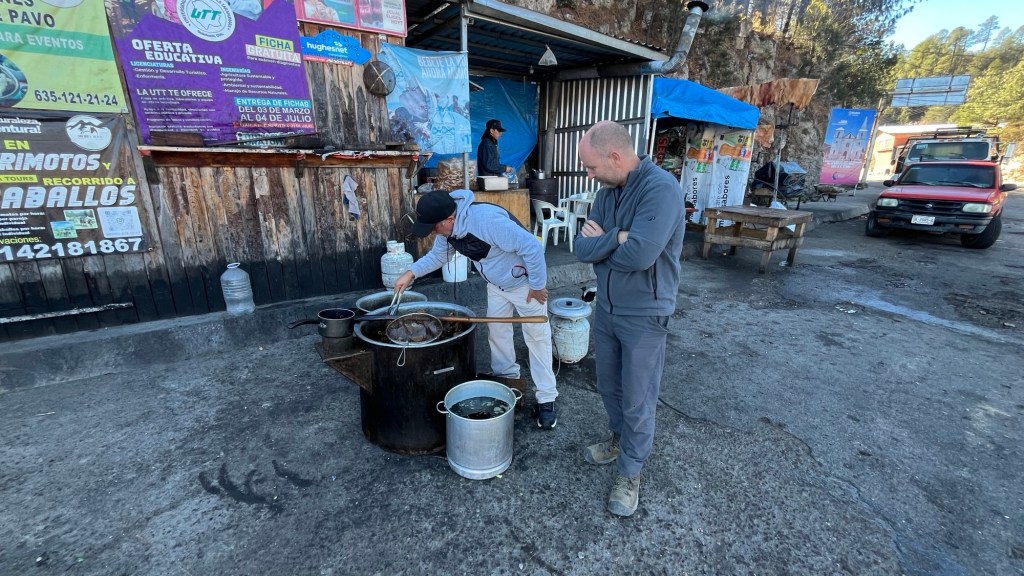
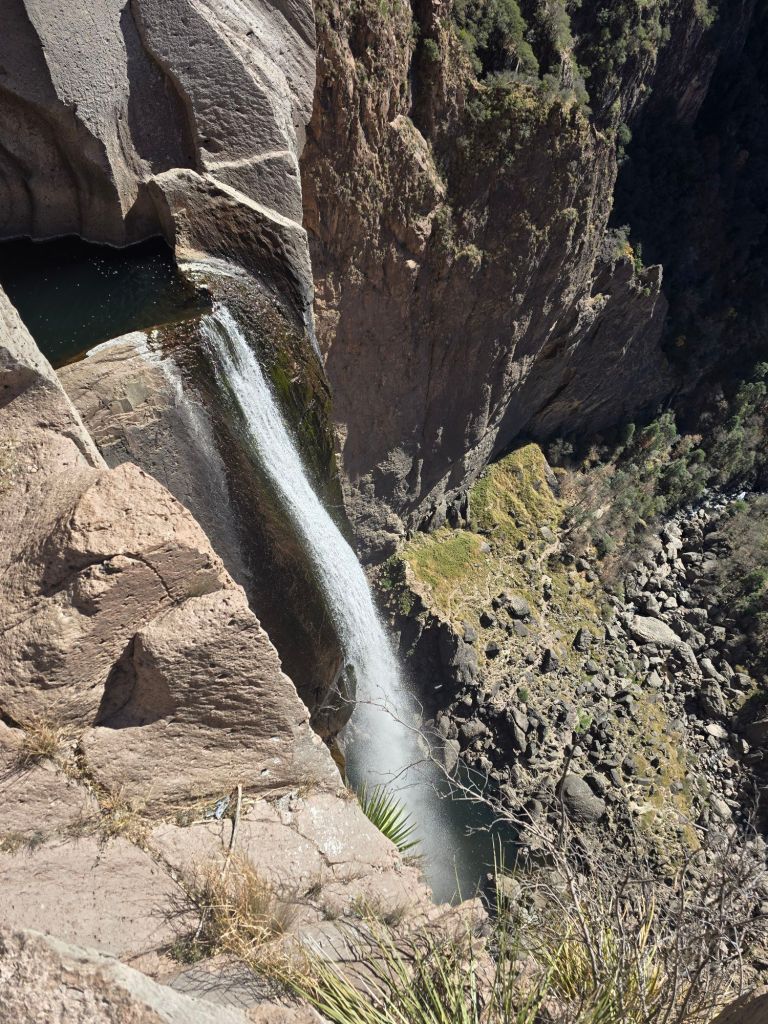
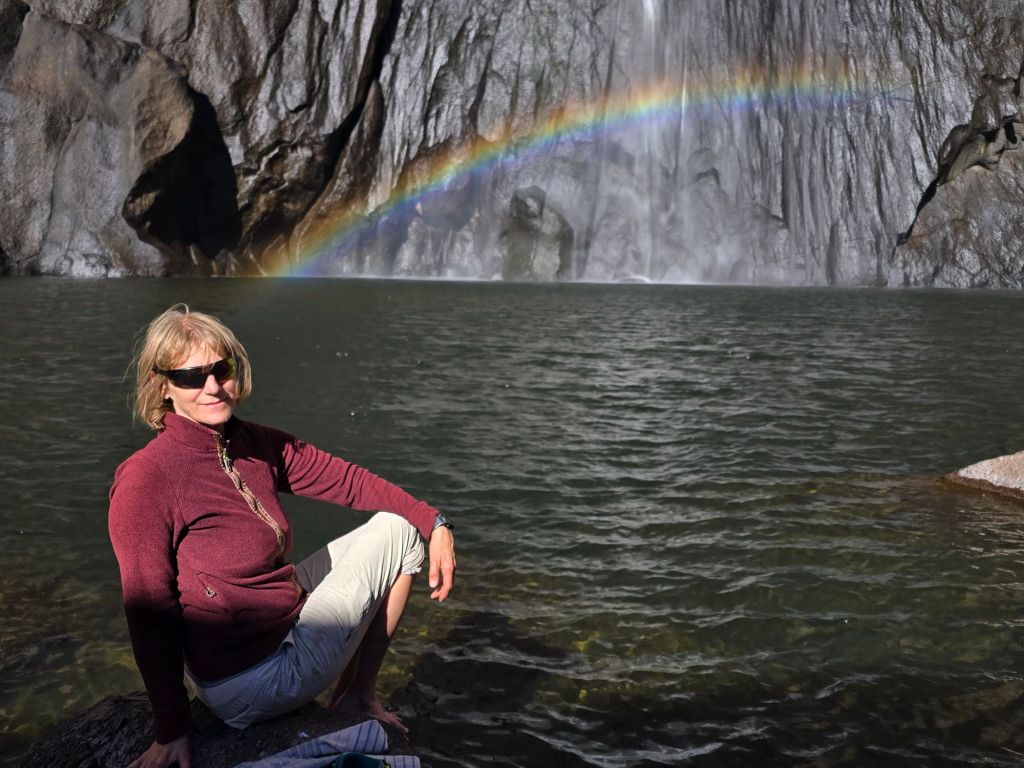
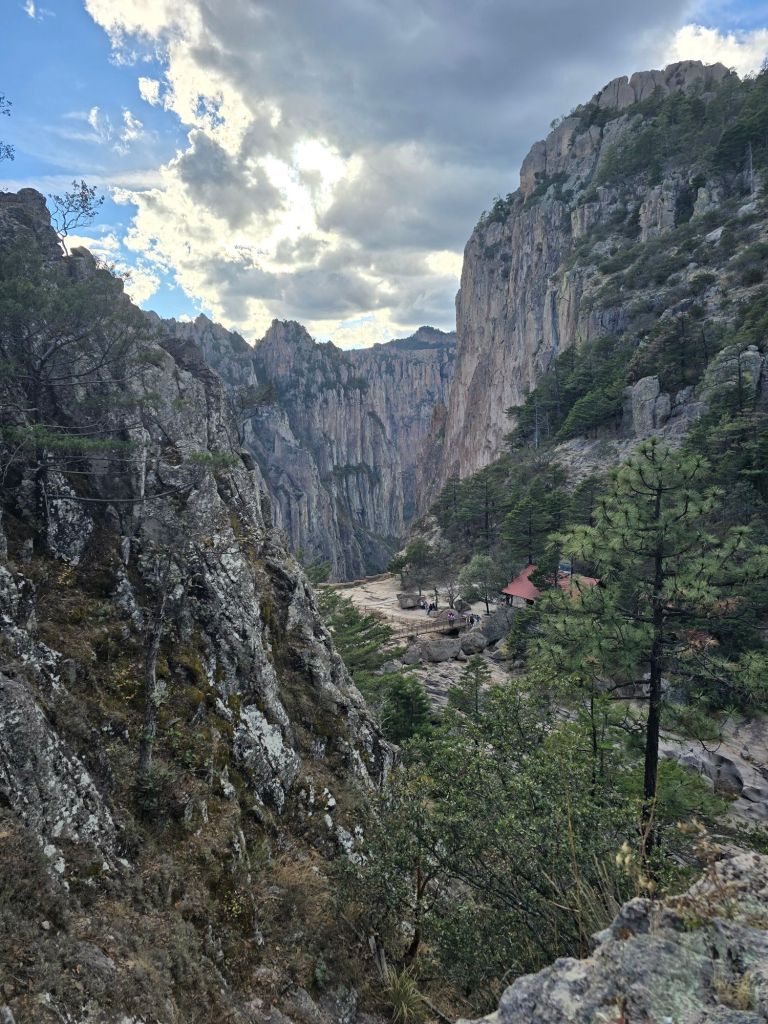
The higher slopes and plateaus of the Sierra Madre mountains are dominated by big pine trees. Lots of lumber being taken out, but it all seems to be selectively logged. For the last couple years, I’ve wondered how we got sold on clear cutting in Canada. Is it actually better – or just cheaper to execute?Creel is the Banff of the Sierra Madre. I found it interesting watching Tarahumara, the local indigenous tribe come into town to enjoy modern high fructose corn syrup treats. Sigh – the march of civilization…On our way to our next destination, we stopped at a road side stand for Carnitas. Boil pig skin into Chicharron. Cube up the rest of the pig, cook the chunks in the remaining oil. Delicious, and a belly of this makes it hard to hike up a mountain as we learn shortly.After Creel, we enjoyed a lovely drive on pavement to Basaseachi waterfall, decently tall at >200 meters. We hiked down to the bottom of the falls, a new post-berry best for Marta of 430 meters elevation change. Great place until some yahoos started throwing rocks down.Top of the falls on the way back to the parking lot. Gorgeous and so few people.
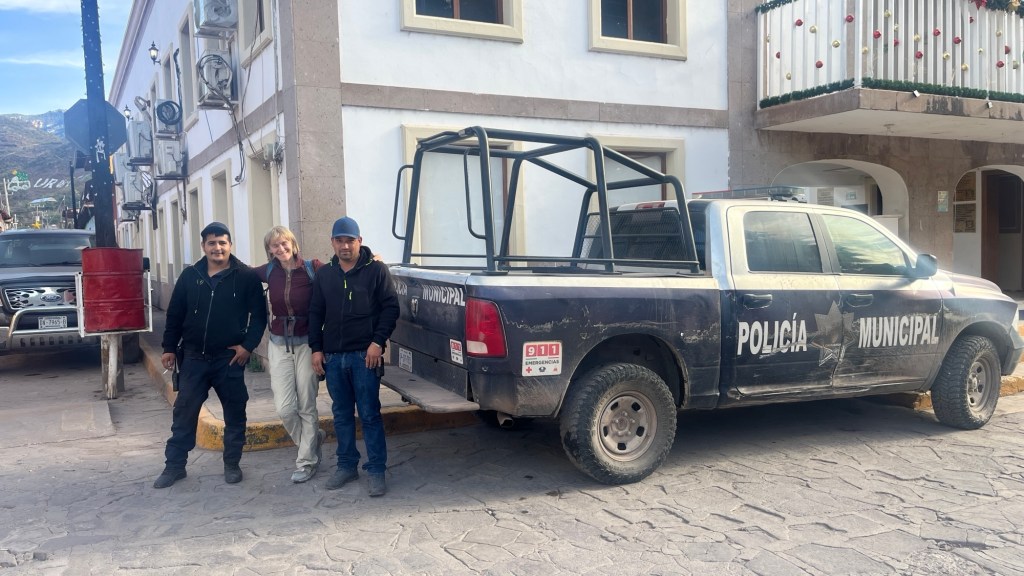
Had to be done.After the falls, our plan was to head south through Uruachi, hopefully popping out along the railway 150km of dirt roads later. The road started fantastic, asphalt is like pizza. Even when it’s bad, it’s still pretty good.As we approached Uruachi, we meet a local checkpoint, and get quizzed where we are going. Some Youtubers believe these checkpoints are cartel run. We don’t think so, but who knows? The cops in town are unusually chilled out, happily posing for a photograph.
My first instinct when we see something we don’t understand is to assume it’s organized crime. When I see a teenager on a motorbike with a mask, my first thought is that he’s a narco. Mexico’s crime problem is definitely real, but for this tourist it’s not obvious.
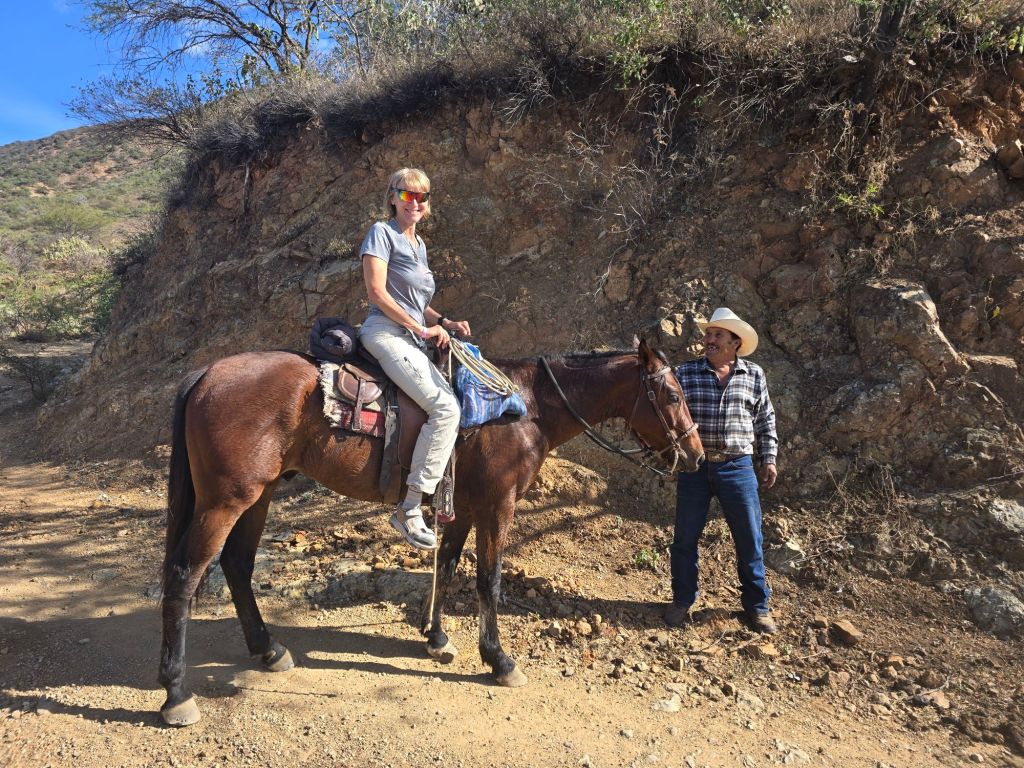
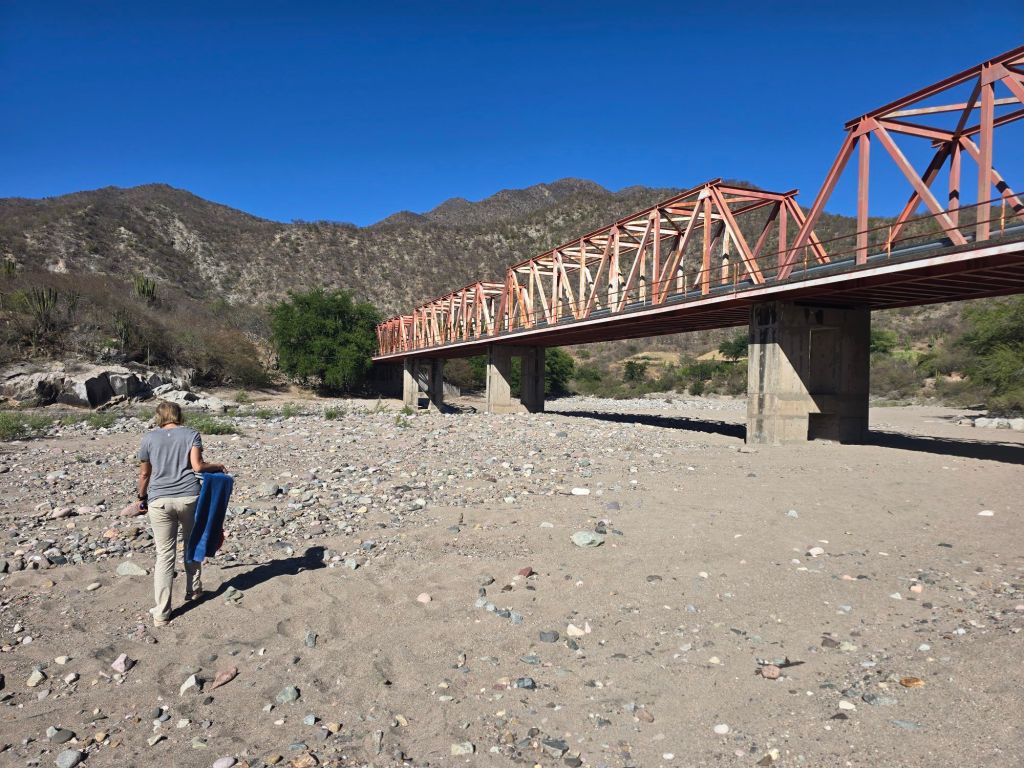
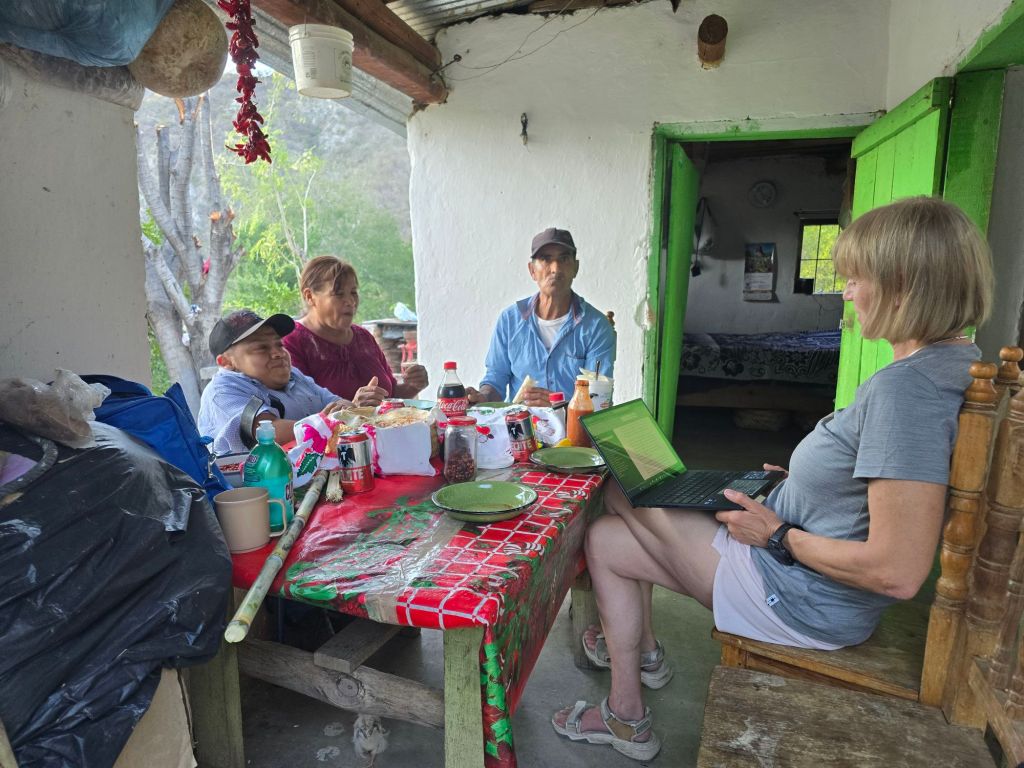
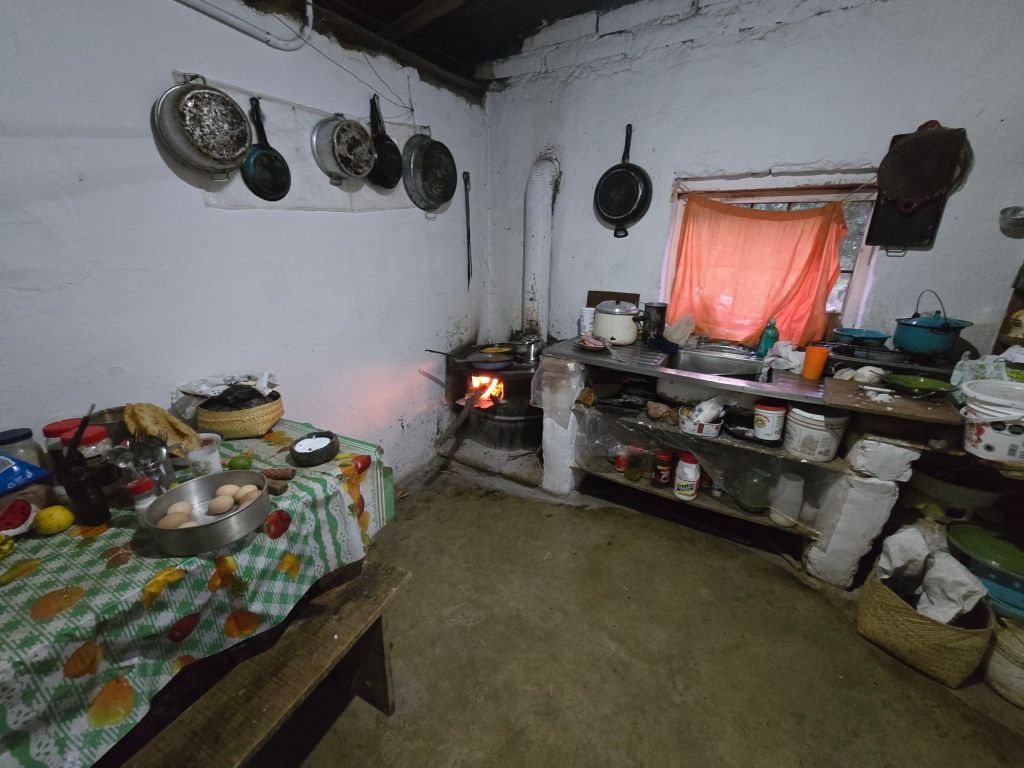
On our way south of Uruachi, we run into this cowboy. For some reason, we jump on his horse for a photo-op.We think our cowboy said the bridge is out, but something was lost in translation. It should be out, last year there was a flood over the handrail along the bridge. We meet our Cowboy’s cousin…Rigoberto Sr, Raffala (wife), and Rigoberto Jr who’s visiting for the holidays.And we get treated to a feast. Corn tamales, fresh sugar caneRaffala’s kitchen is clean, bright and organized. All the better to fatten us up. This is not their main house, I believe they move here in the winter when it’s colder higher in the mountains.
We made a quick drone video of the area for our rancher friends. Marta is concerned when I bring out the drone around Mexicans – they might realize that I’m a nerd
A fun highlight of the evening was turning on Starlink. Our hosts jumped on wifi and started calling family that they haven’t talked to in months.
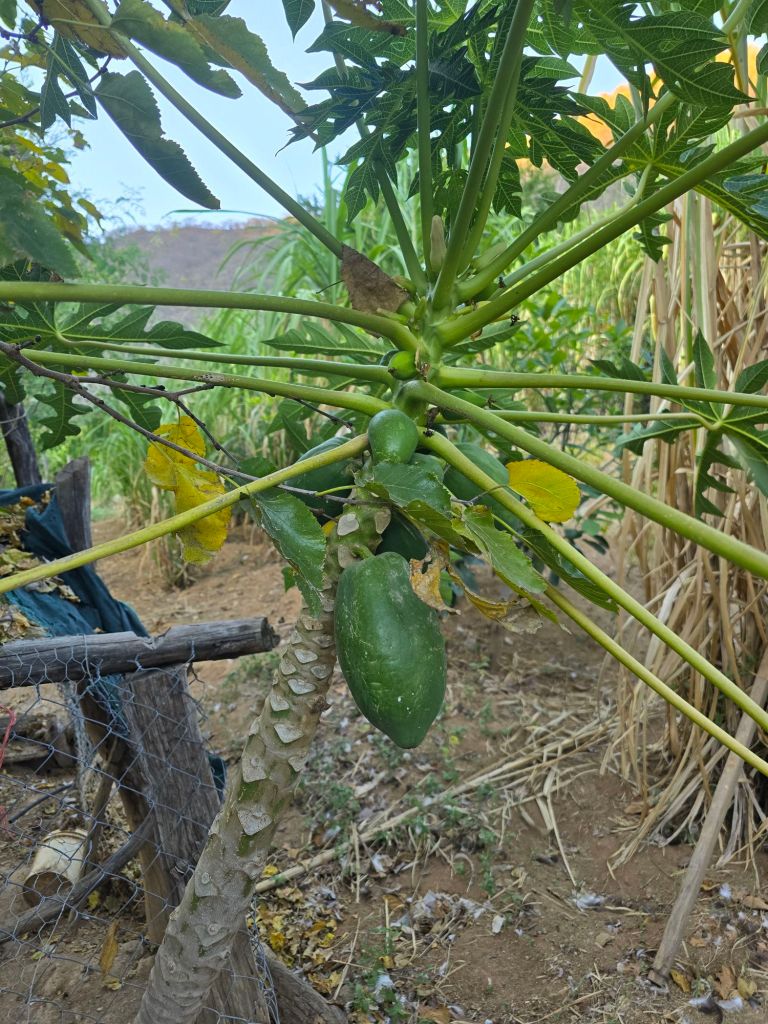
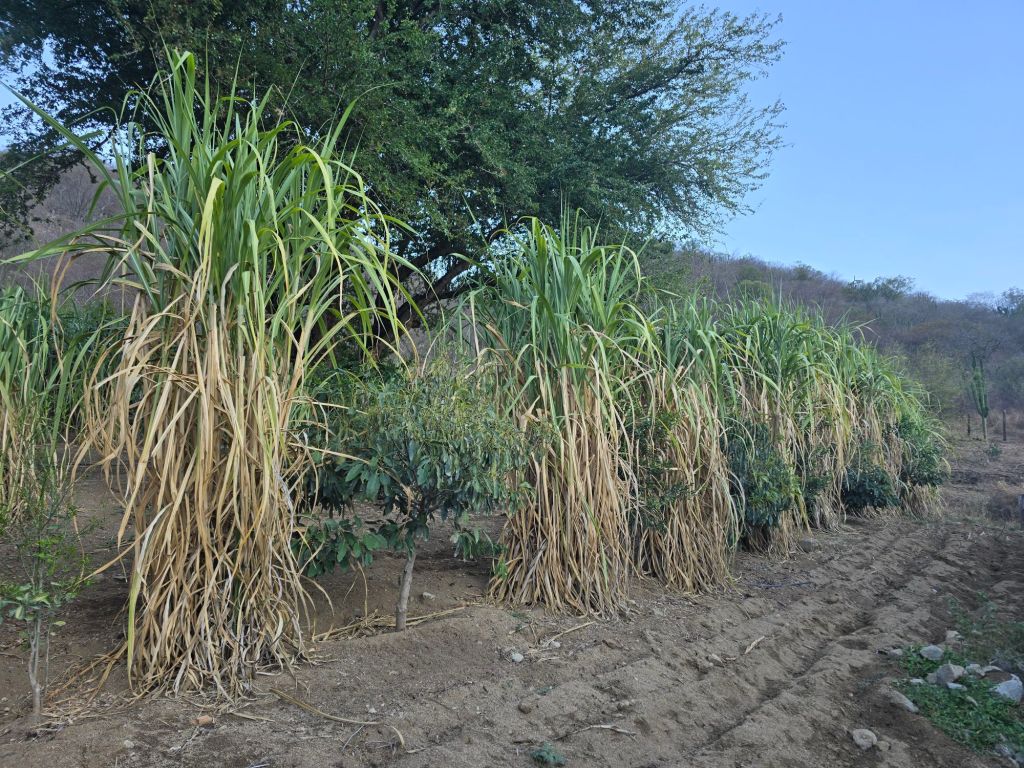
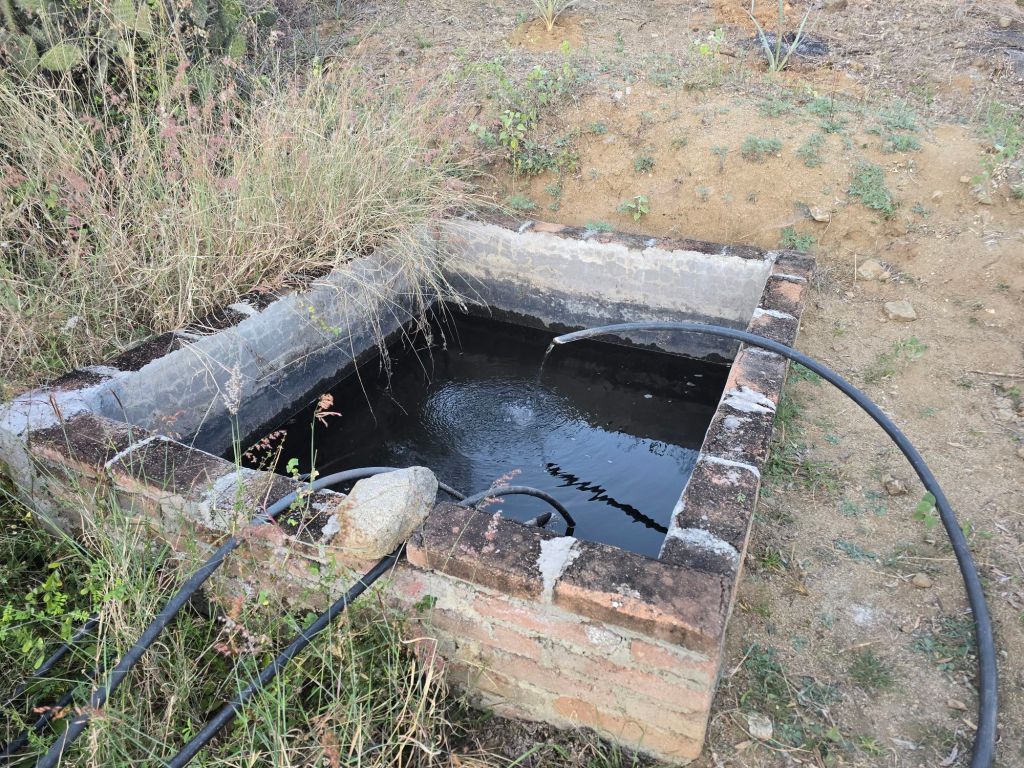
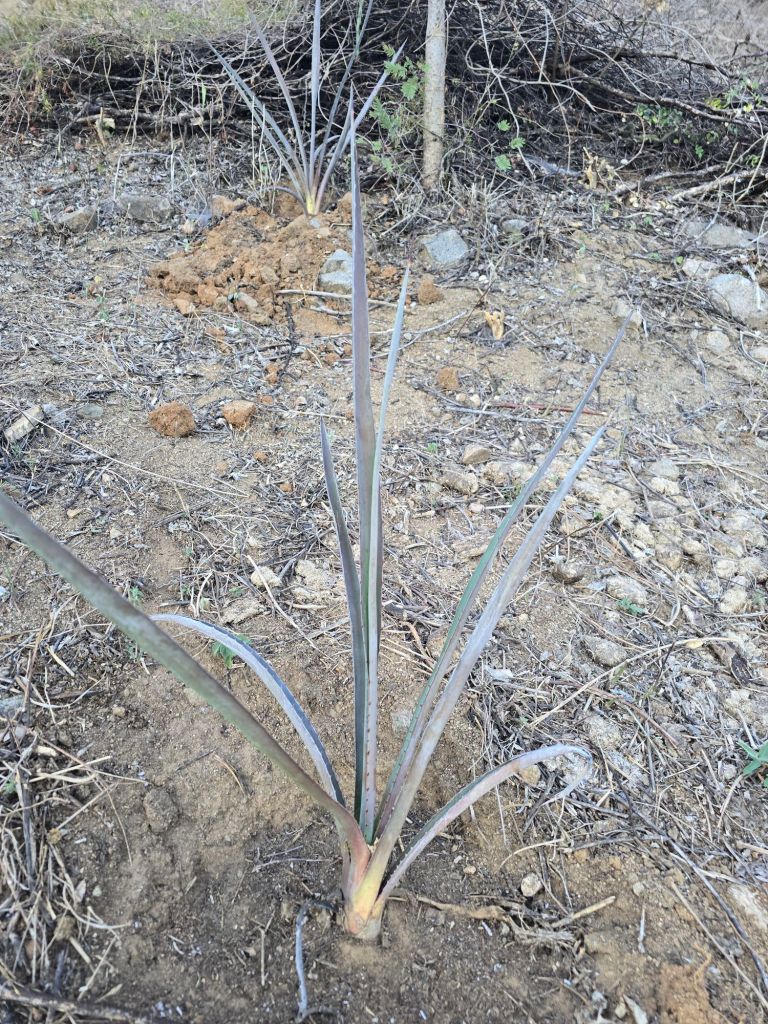
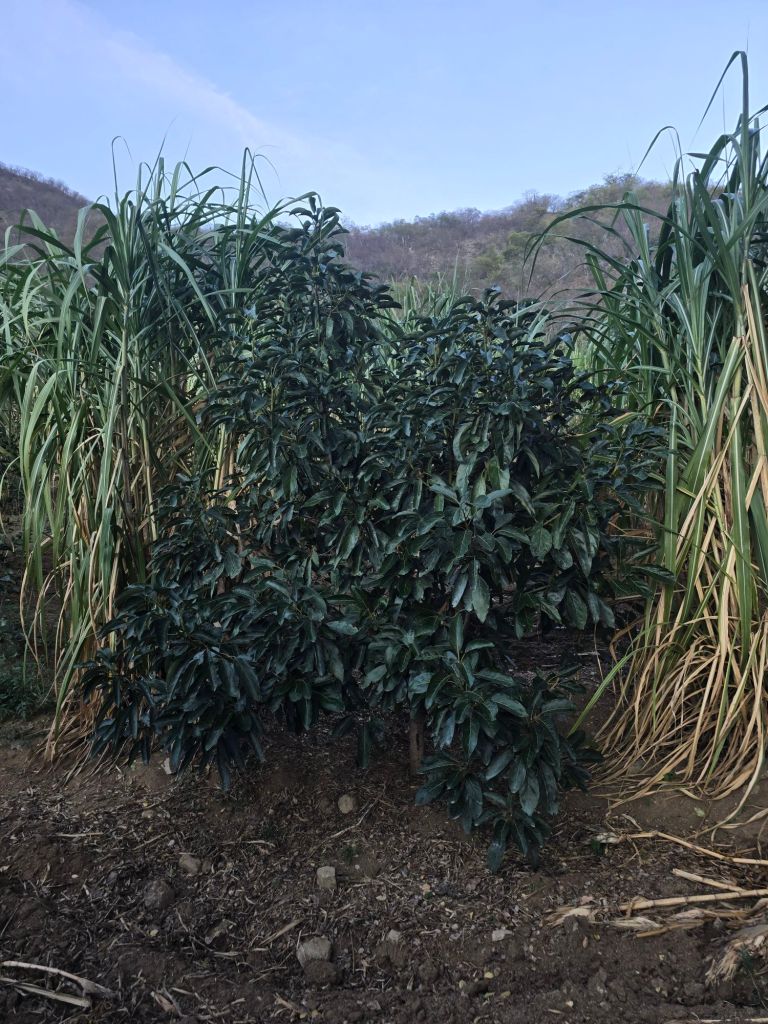
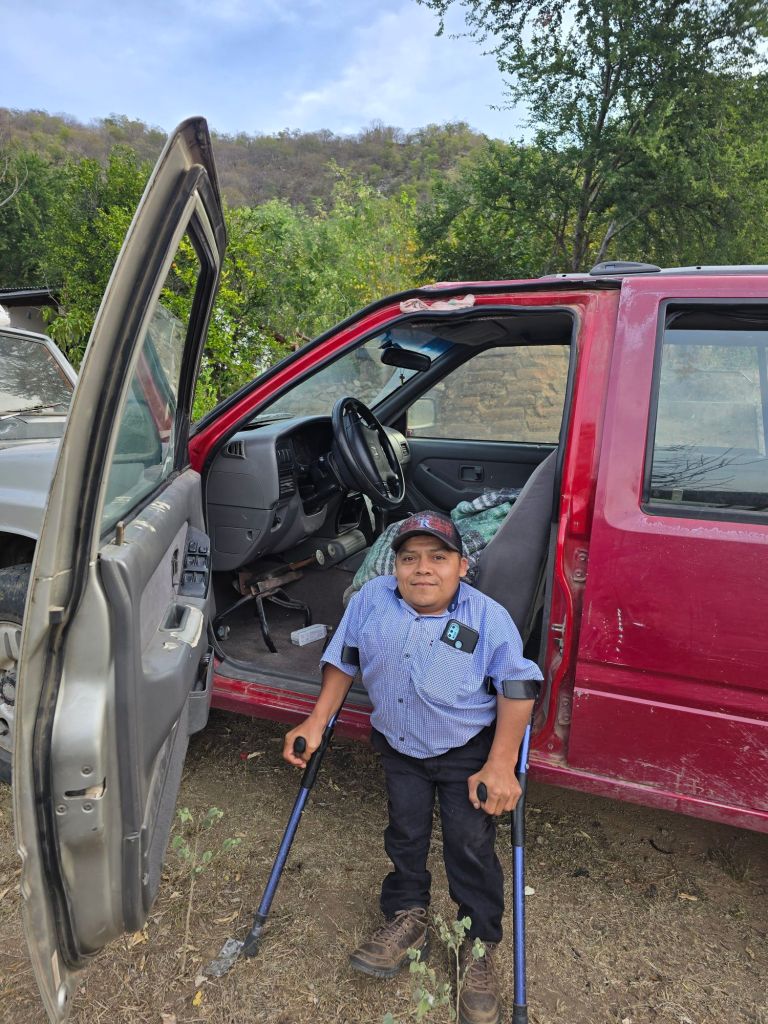
PapayaSugar cane – they process this here and sell crude sugar for cashPitaya (cactus fruit)Water cistern, flows down from up highYoung agave plantings for making tequilaAvocado trees mixed into the sugar caneAt least two of three children have a genetic problem. Rigoberto Jr. stays busy anyway, getting around in his modified SUV
We stay the night on their ranch, and they convince us that our plan won’t work – the road south through the mountains is washed out, or closed because foreigners were driving it too much, or who knows? We decide to take their advice – we don’t enjoy rough roads that much…
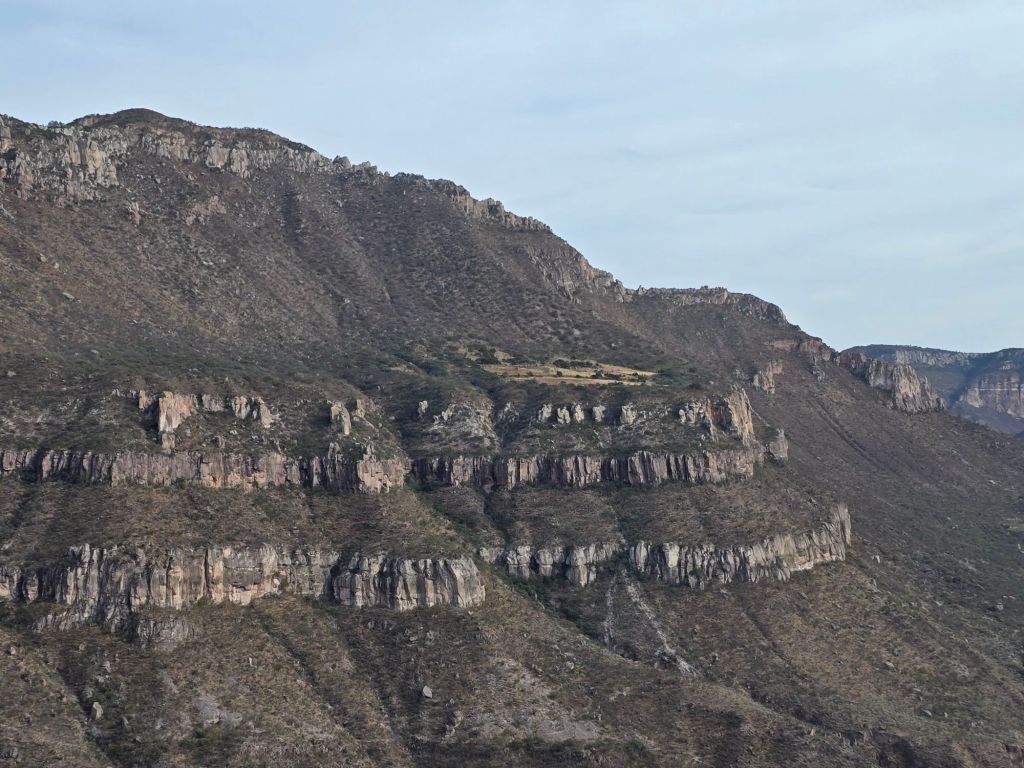
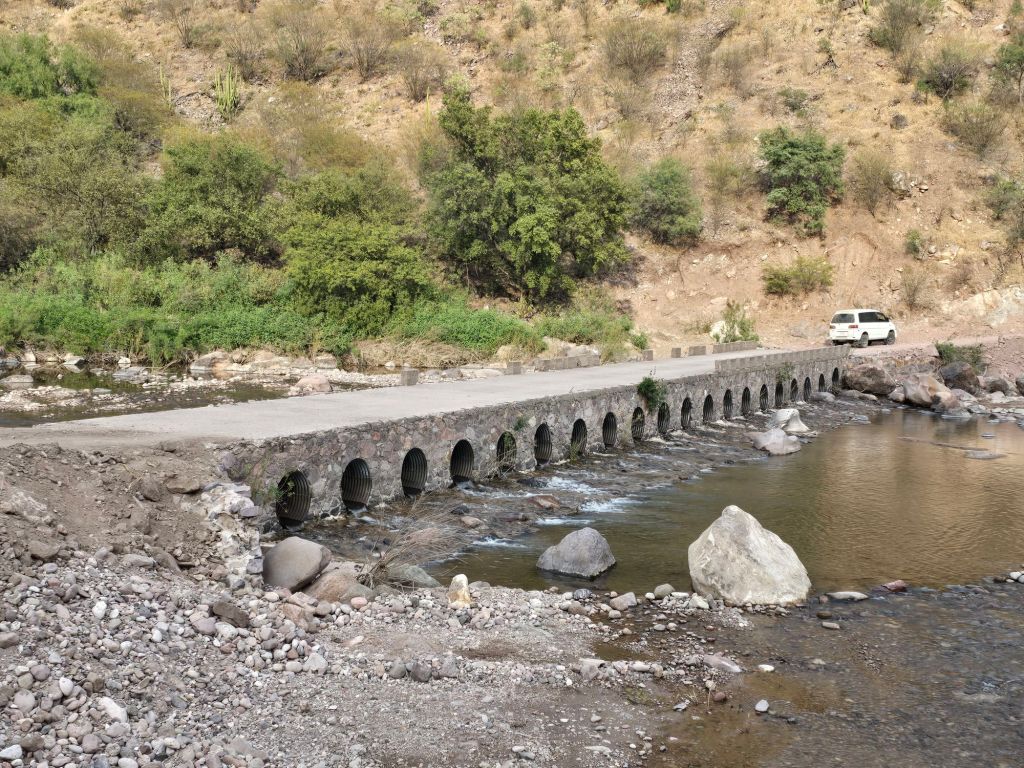
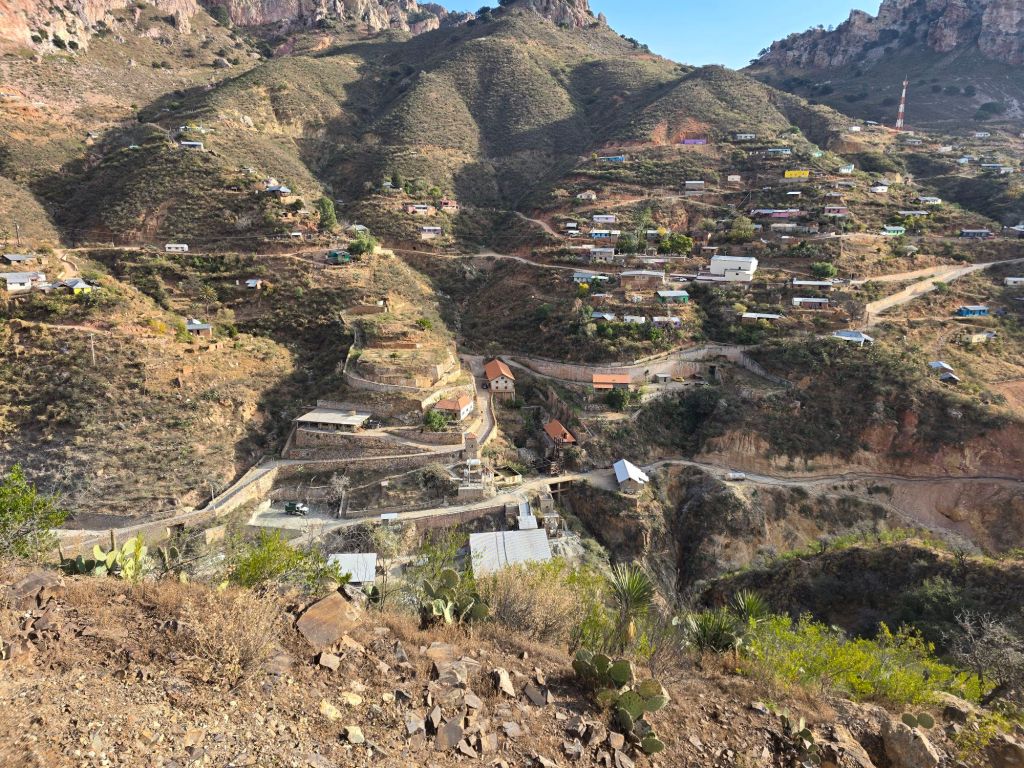
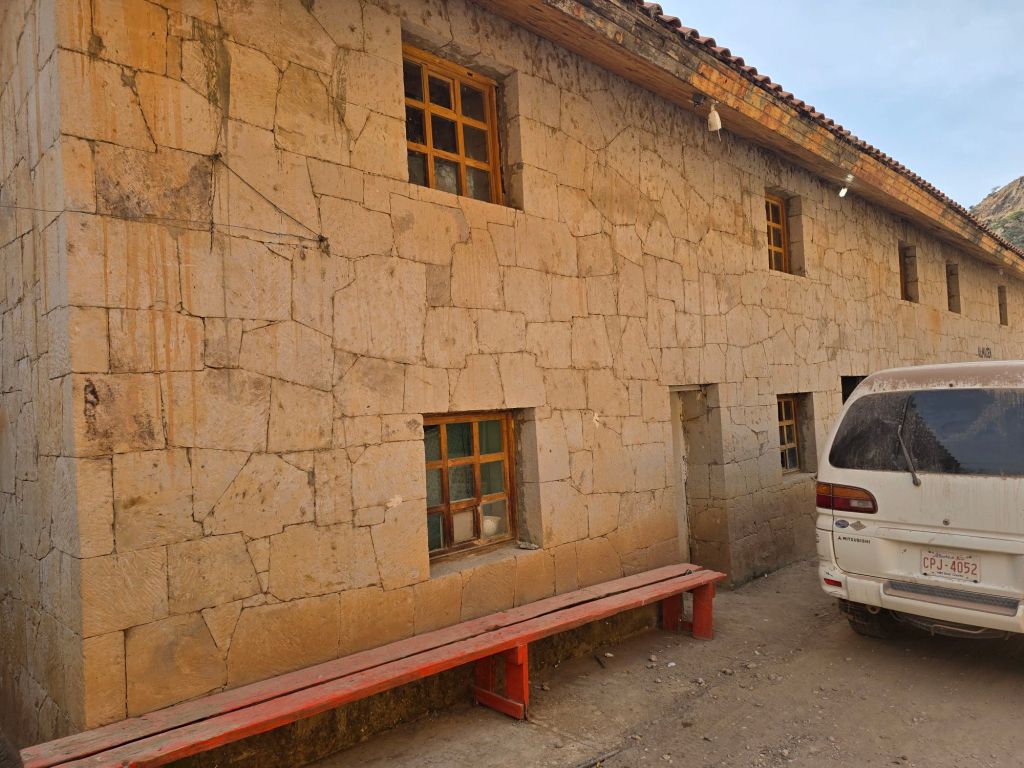
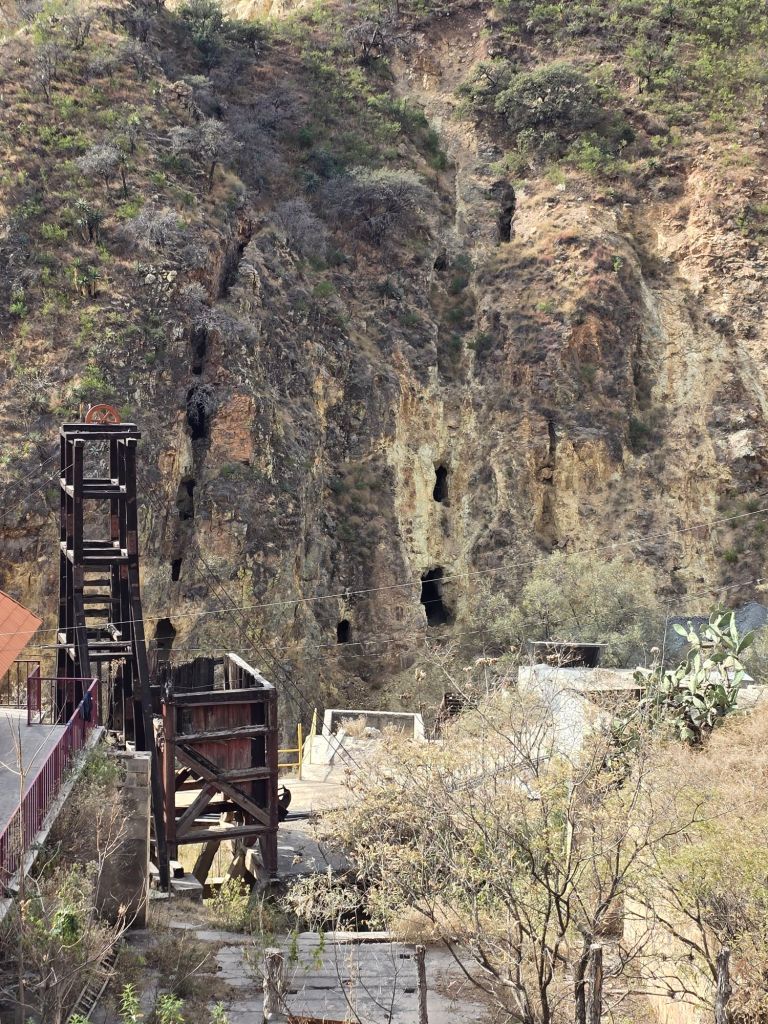
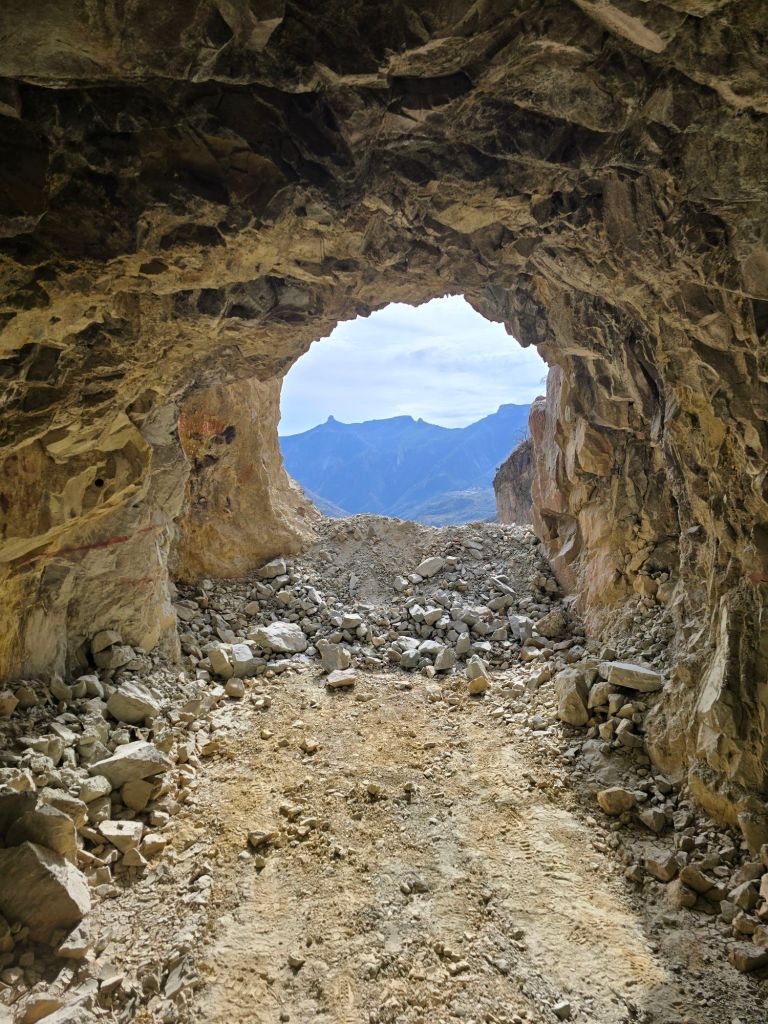
I don’t understand how farmers make a living on such dry, steep plots of land in these mountains. There is a family living on the small clearing in the center of this picture. Where would they even get water from?Water does terrible damage in Mexico – a hurricane must wreck thousands of kilometers of roads. This bridge is holding up well, even though the water is ripping off the concrete guardrails when it over tops the bridge.Mexico is big. We are going to need at least a couple more weeks to see it all. (Sarcasm)Our route from Uruachi to civilization takes us through Maguirichi, known for hot springs and a mine. This town is hanging on steep cliffs, and the canyon below goes sheer vertical.The mine is small – we stop at the main adminstration building. Look at these walls – hand carved and fitted blocks, no cement. Built like a European castle This mine is old. 250-275 years. We can see old shafts in the cliff walls just below the road we drove into town.
The mine’s engineer (Fernando) makes time to give us the best industrial tour I’ve ever got! I’ll present in the order of the mining process, not how we seen it.
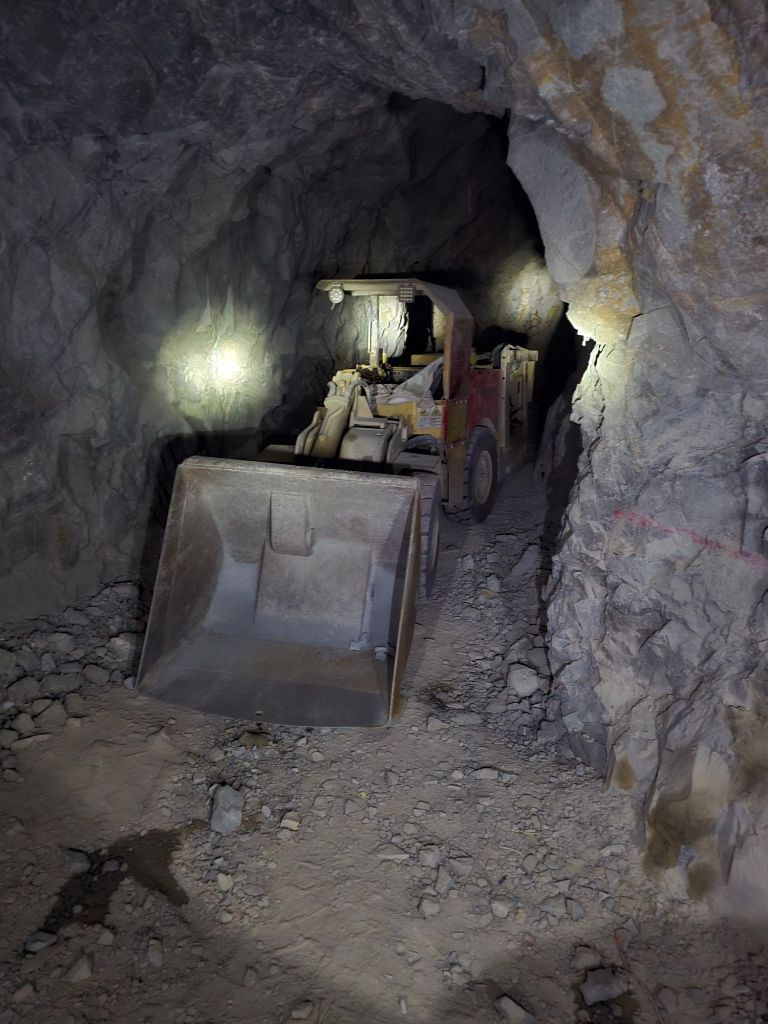
This mine is a Galena mine – primarily silver, lead, and zinc with a bit of gold. Silver pays the bills. The veins are maximum 30cm wide – a foot.A little loader hauls out the ore after each blast. They try not to mix the valuable ore from the rock that just has to be removed to make tunnels wider.The mine is passively ventilated – this shaft finishes on a steep cliff wall above the canyon
This is the same type of mine that you see in the west Kootenays in BC.
Crush plant. I love how this mine is small enough to run on loader scoops of ore.
Ball mill – the gravel sized ore is rolled with steel balls to reduce it to powder
Flotation tanks – I don’t really understand this process. Somehow the minerals of interest float up as froth and the rock powder sinks to the bottom. Perhaps this is just a way of sorting by density?
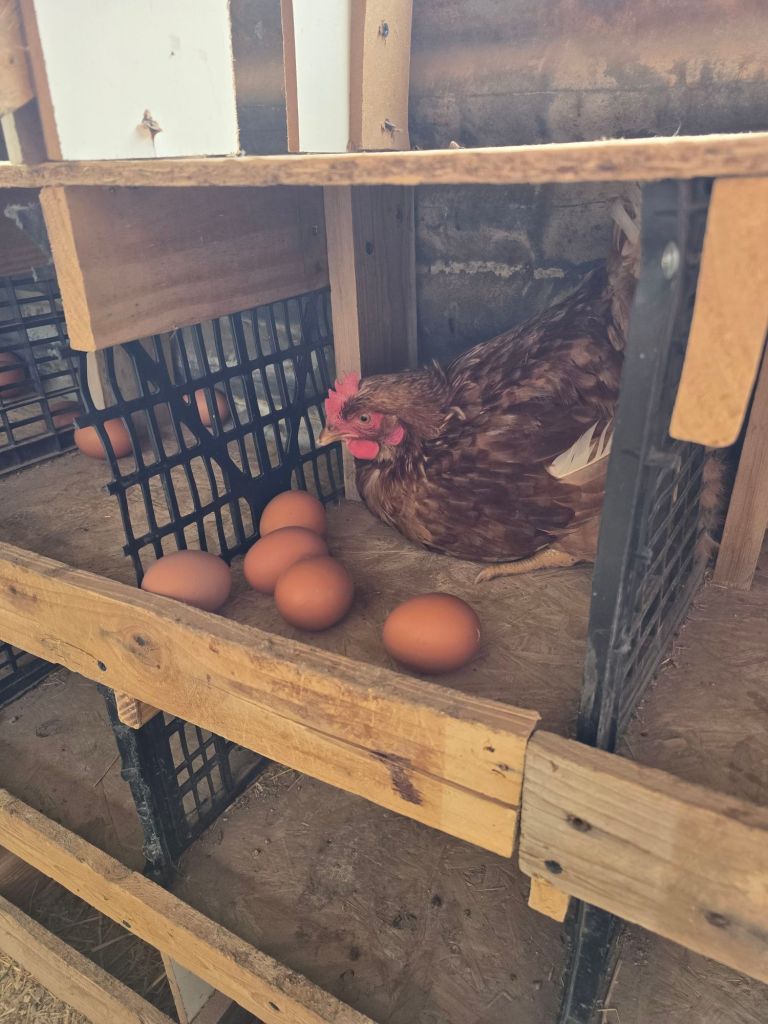
Drying concentrate for shipping. I thought the sparkles were gold, but now I think they are lead-silver-zinc crystals.After the tour, Fernando finished work for the year – it was New Years Eve. We helped him collect eggs from his hundred chickens. Entrepreneurial guy.
After lunch, he took us to see the hot springs of Maguirichi. They are more than a bit hot – boiling steam and water blast out of the mountain side.




 Marta and Chester's Maleficent Adventures