Since 2024, Loreto (LTO) in Baja California has been our gateway to Mexico, with a direct flight from Calgary and our Delica safely stored at Loreto Storage—a place we highly recommend.
The Jesuits made it their gateway slightly earlier, in 1697, when they established their first successful mission in Loreto.
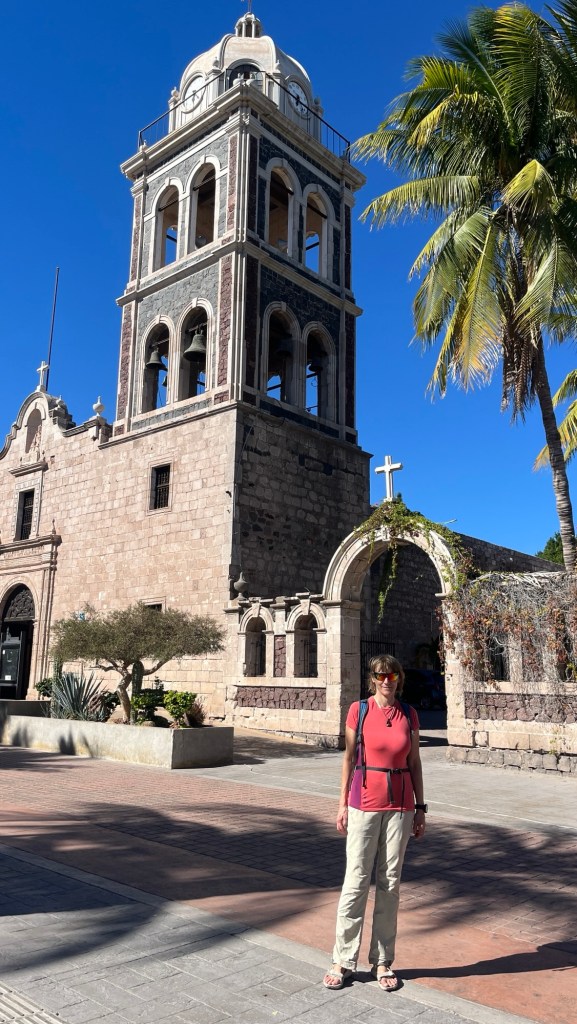
If you enjoy history, the Museum of the Missions, located right next to the church, is well worth a visit. There is no entrance fee (as of 2025), unless you plan to take photographs. We didn’t. I left the museum somewhat perplexed. One exhibit stated it was Father Kino who confirmed that Baja California was not an island. But what about Francisco de Ulloa, mentioned in other sources? As it turns out, both statements are true.
Five hundred years ago, Europeans believed the Baja Peninsula to be an island—and not just any island. It was imagined as a paradise, inhabited by Black women and ruled by Queen Califia. Their weapons were said to be made of gold. There were no men on the island; if a boy was born, or a man was captured, the women would feed him to griffins who were abundant. This fantastical vision comes from a 16th-century Spanish writer, Garci Ordóñez de Montalvo, who coined the name “Island of California.” And there was more: the legendary Seven Cities of Cíbola, overflowing with gold and immense wealth—somewhere, but where?
In 1539, on the orders of Hernán Cortés, Francisco de Ulloa sailed north from Acapulco, exploring the coastline. When he reached the northern end of the Sea of Cortés, he concluded that there was no passage connecting it to another sea and sailed south. No passage meant no island. Father Kino was not even born until 1645, so the myth of the Island of California had already been challenged long before his time.
Yet copying earlier maps was safer than challenging them. As a result, California as an island remained standard on European maps. More than sixty years after Ulloa’s voyage, Father Kino, between 1698 and 1706, led overland expeditions and once again proved that Baja was connected to the mainland. Still, the island myth persisted. Some maps cautiously labeled it “California, sometimes an island.”
Finally, in 1747, Spain officially declared Baja California a peninsula and banned maps depicting it as an island. What a fascinating cartographic conundrum.
Loreto offers more than history.
Its seaside promenade, the malecón, is a pleasure to stroll—excellent for birdwatching and a gateway to whale watching (covered in our Search of Whales blog). In fact, it overlooks Parque Nacional Bahía de Loreto (Loreto Bay National Park).
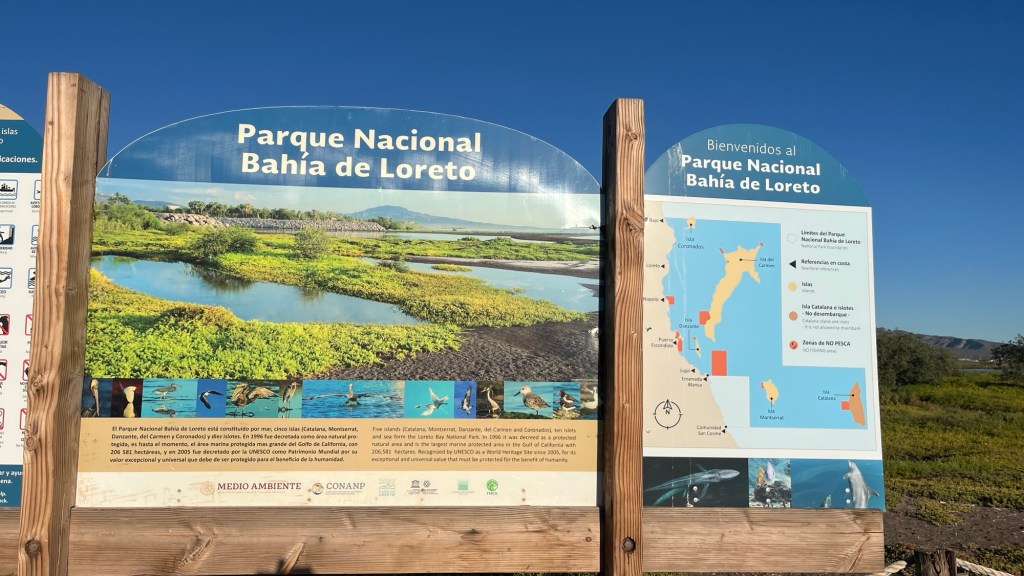
The small downtown is charming.


If you have access to a car, about 35 km southwest of Loreto, in the Sierra de la Giganta, and reached by a winding mountain road, lies another Jesuit mission: San Javier (covered in our Loreto to Ciudad Insurgentes blog). It is considered one of the best-preserved missions in all of Baja California.
And then there are the stunning canyons of the Sierra de la Giganta.
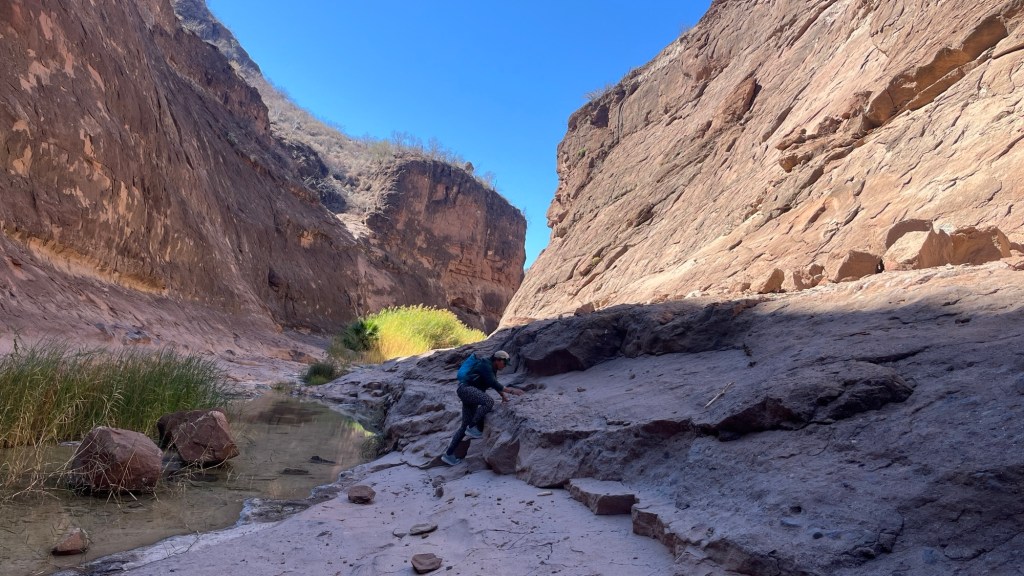
All of this makes Loreto an excellent gateway for exploring Baja. But Chester is ready for a new challenge. This time, we plan to move to mainland Mexico.
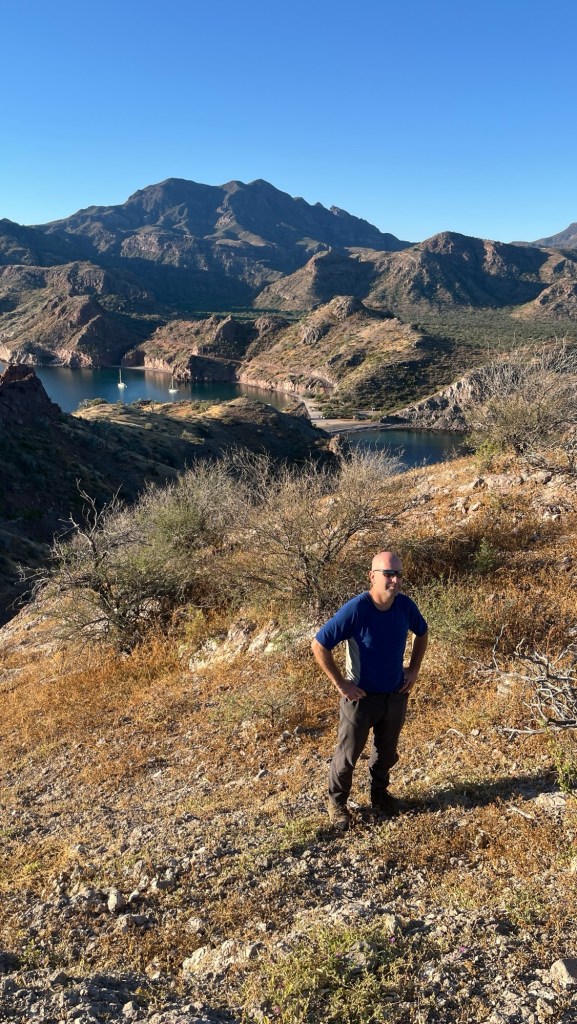
Before we do, however, there was one place left on our list: Agua Verde. We had heard from other overlanders that the drive could be difficult. It’s always good to test assumptions—how would our reading of the terrain and our driving compare? It turned out to be easy for us. Perhaps the final ten meters toward the beach might have been challenging, but not for a 4×4. In any case, the trip was absolutely worth it.

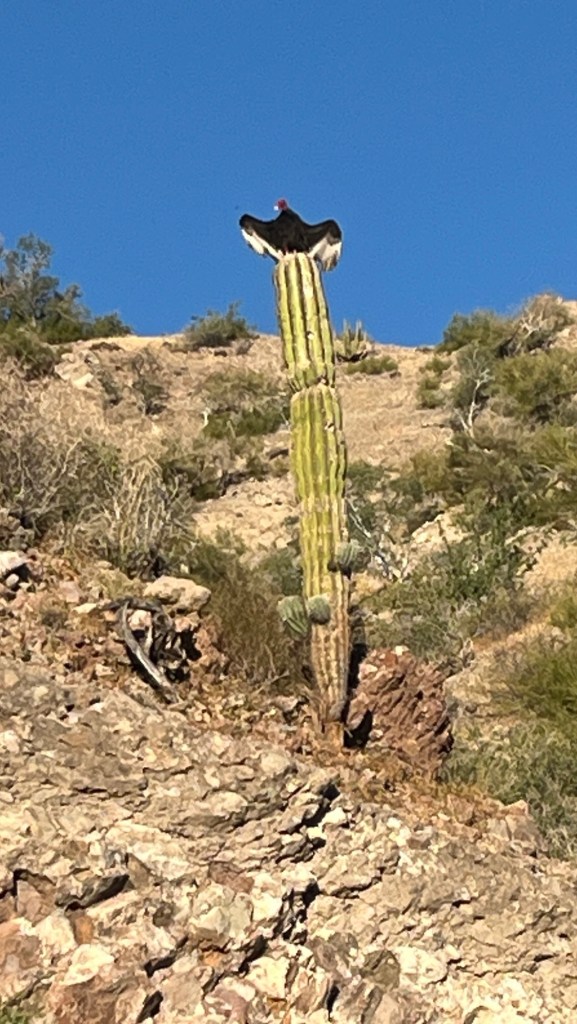
I watched vultures drying their wings, swam in the Sea of Cortez, walked on the sand and hiked my first 100 meters uphill. What a great feeling to be alive!
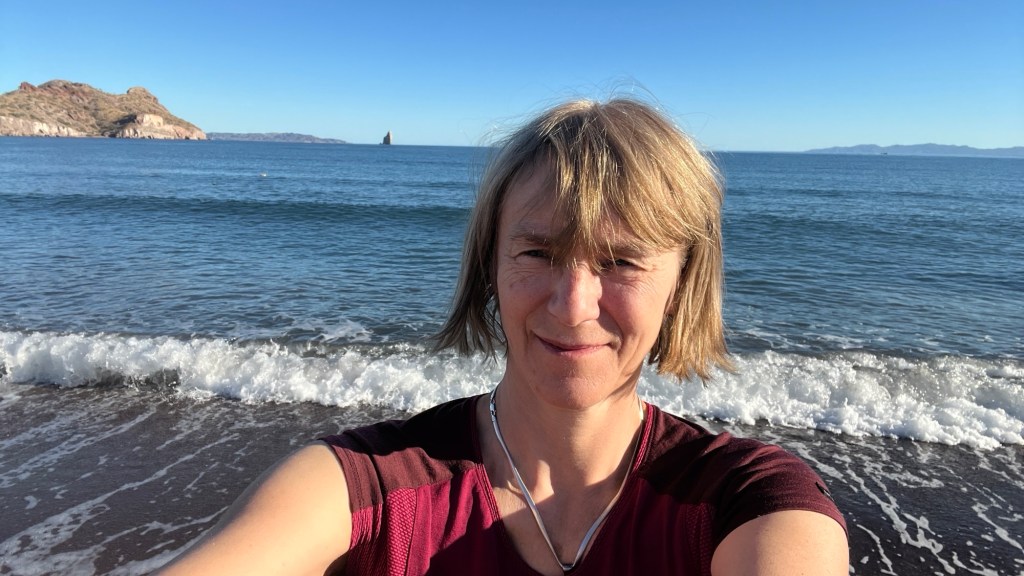
Finally, La Paz, the capital of Baja California Sur, is a gateway to mainland Mexico, with ferries departing for Topolobampo and Mazatlán. It is a charming city with much to offer. We were lucky enough to catch a Christmas parade, and a police day.

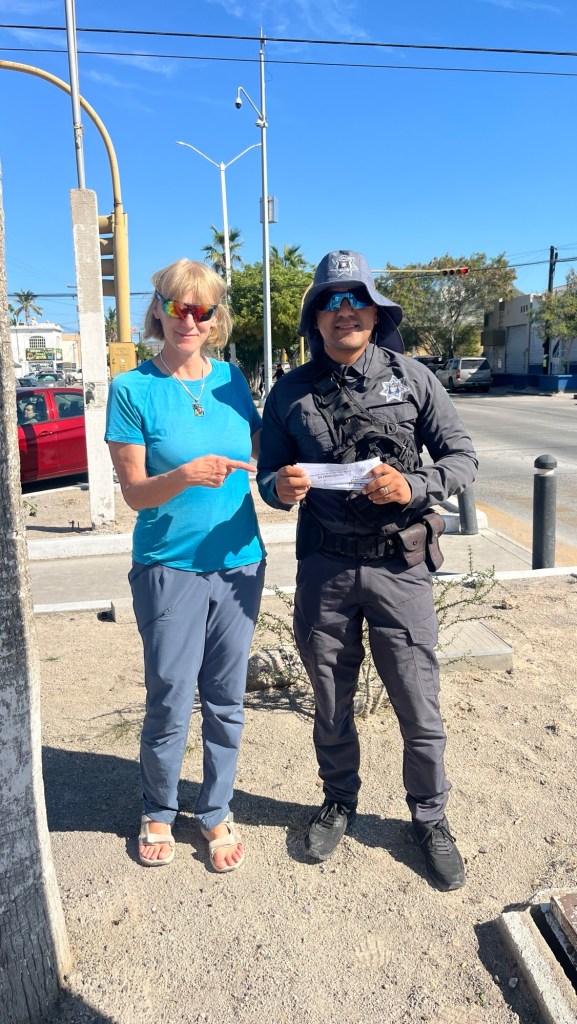
After meeting with our friends from Calgary, organizing our ferry crossing, we prepare to move into unknown territory.
 Marta and Chester's Maleficent Adventures