While in La Paz, we wanted to see a little more of the ocean. One google review of a local tour was written by a lady whose husband got bitten by a sea lion, so obviously we need to try swimming with them.
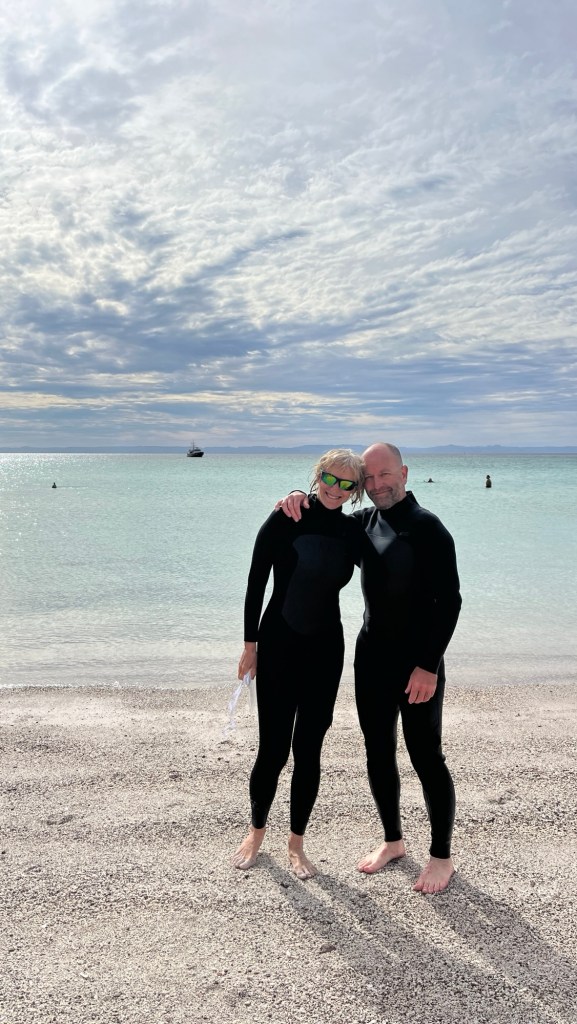
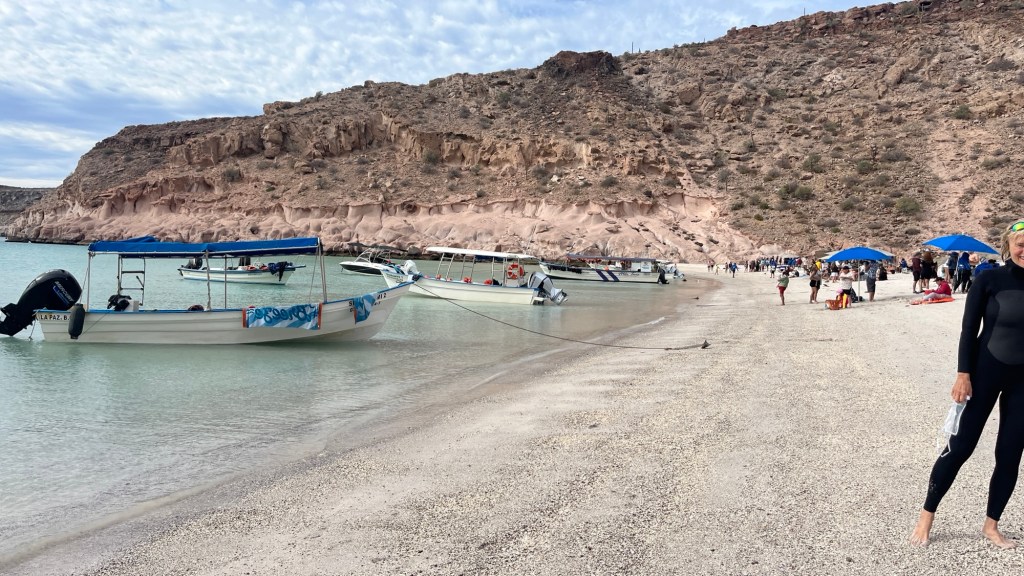
Last year we took canoeing wetsuits. The ocean was too cold in winter, so we came better prepared for snorkeling this time. Our boat took us to an isolated beach for lunch. An hour later there was 160 tourists and a harbour full of boats. Excellent snorkeling.
Swimming with sea lions went awesome – next trip we are bringing a GoPro.
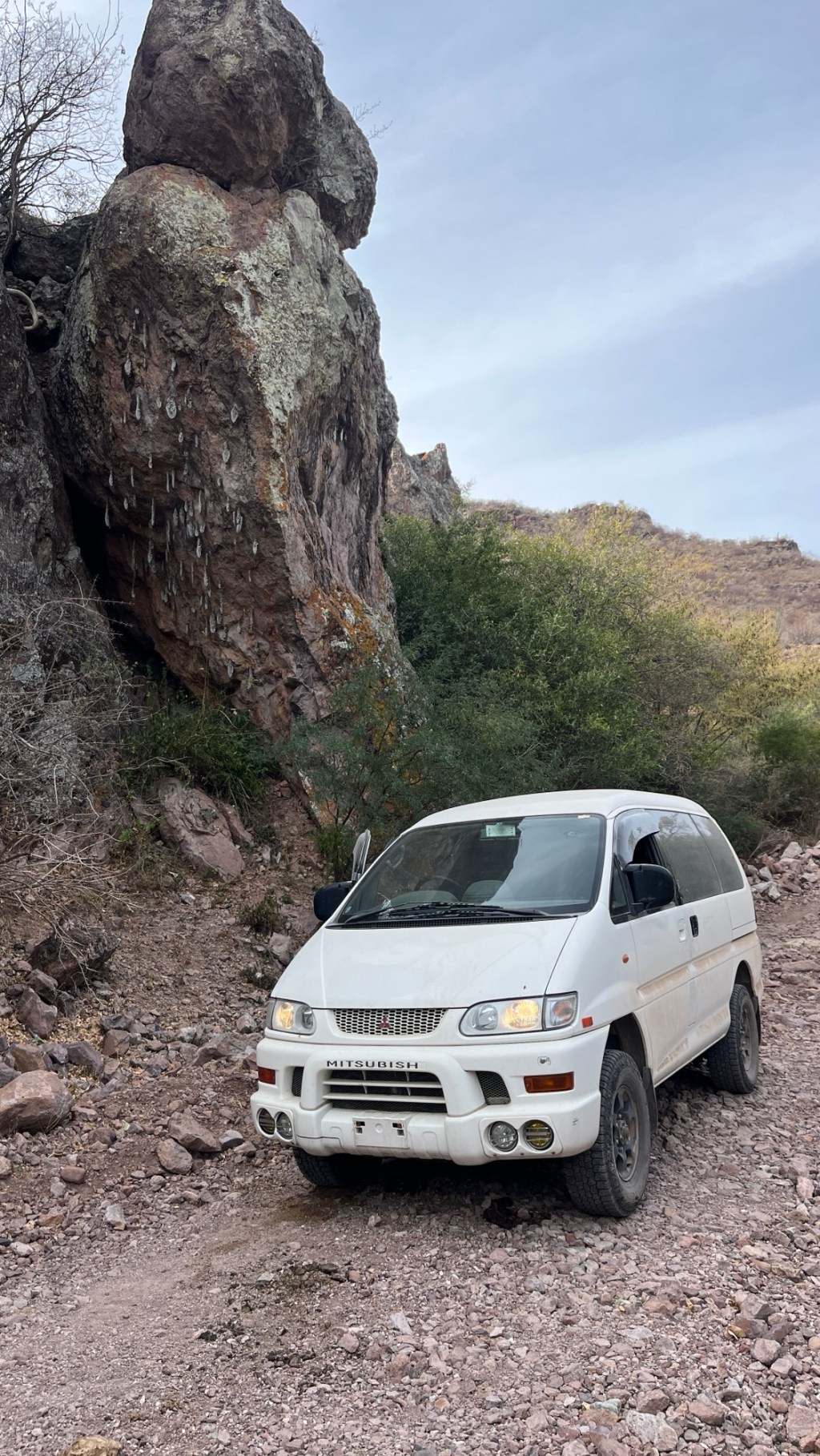
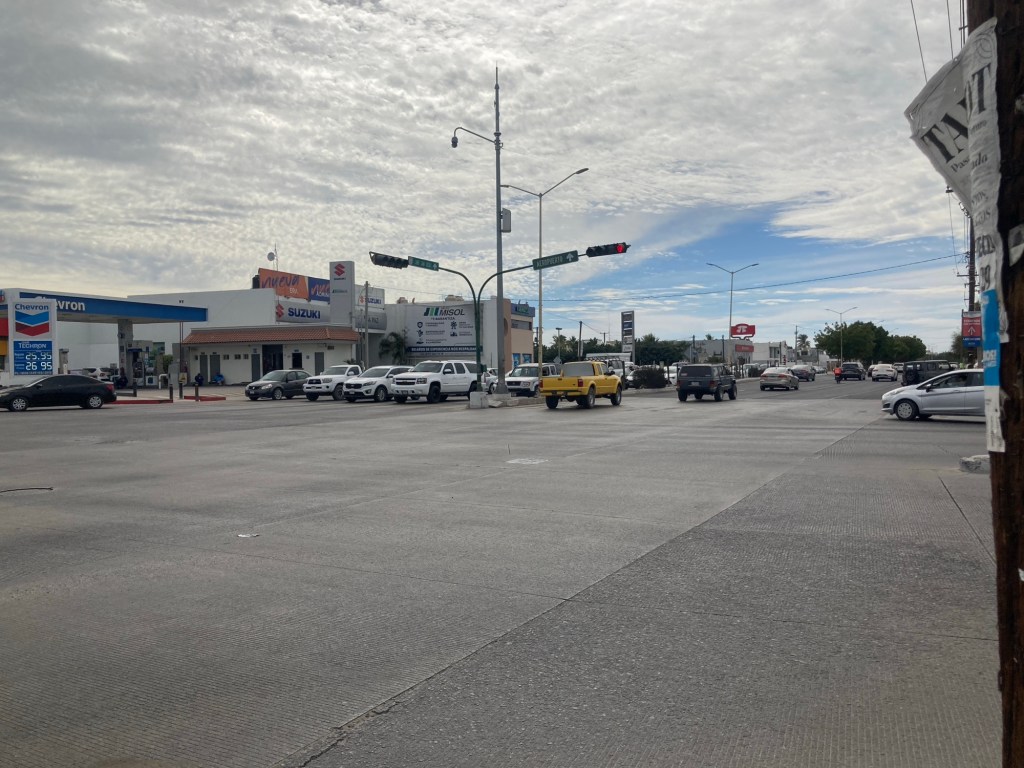
This rock is a major attraction. I joked that if we look close, we’ll see rebar in the base. On inspection, this is actually on a rusty piece of 8” square tubing. Driving Mexico’s roads is totally do-able. If you didn’t grow up in India, you could never drive India. Driving Mexico is similar to USA and Canada. No pedestrian crossing lights anywhere – look at traffic and figure out when to make a run for it.Larger cities are laid out in a straightforward grid controlled by billions of stops signs and huge speed bumps. Many stop signs are obscured by vegetation or just missing.
Fortunately everyone is polite, chilled out, and sceptical that they actually have the right of way.
If you want to be 100% legal, speed limits are stressful and unrealistically low. If you aren’t too worried about making a donation once in a while, it’s much easier to just go with the flow.
Lots of potholes. It’s Saskatchewan without shoulders.
We are now done in southern Baja, and start rolling north, with a few more boxes to check off before flying home from Loreto.
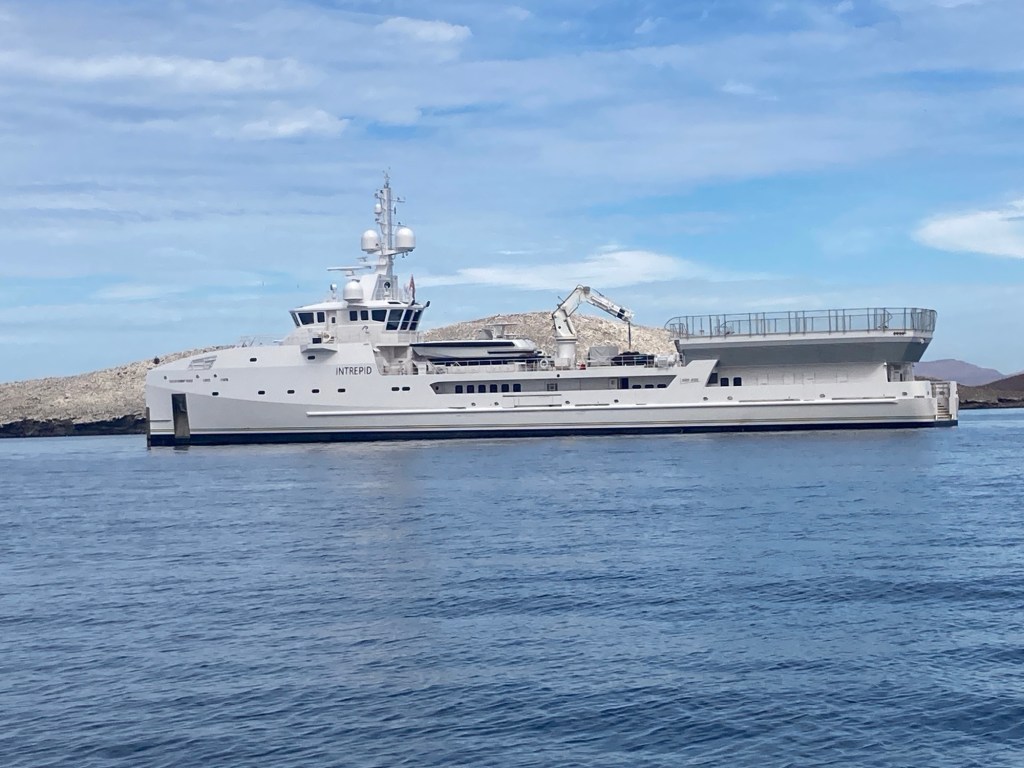
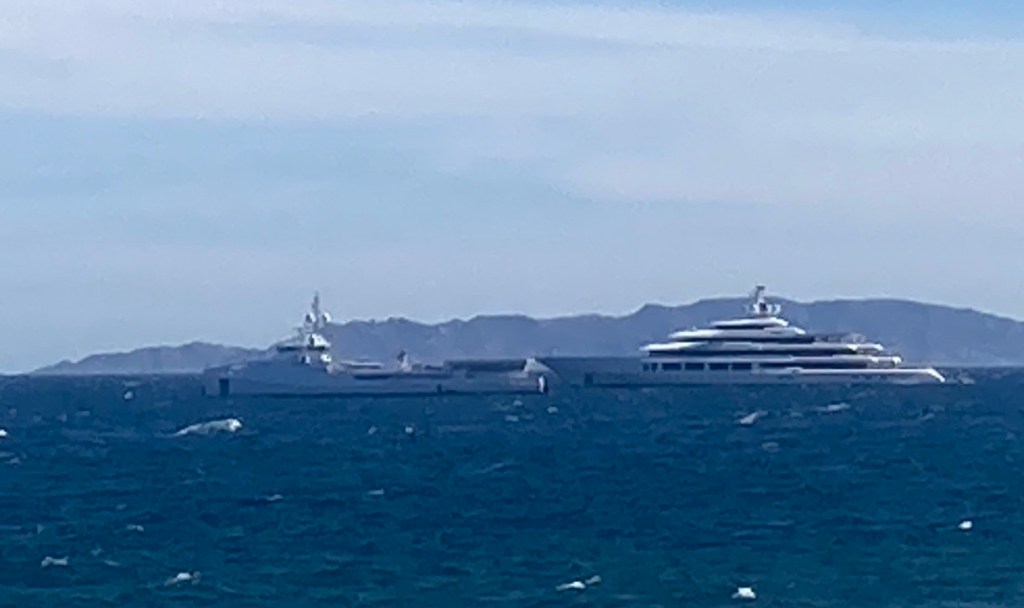
We kept seeing this boat on our travels. Clearly a luxury boat, but looks a bit like an icebreaker. 69m long, 1200 tons.We googled the boat, which turned out to be owned by a founder of google. It’s a support boat for the 5000 ton boat on the right, and of course, it has its own boats.Santa Rosalia is a mining town, with an active modern copper mine. The Rothschild’s built a copper smelter in 1885. Opened in two years. We are so soft and slow compared to old-timey people.A massive wooden structure in the harbour collapsed last month. The artificial harbour is made from blocks of slag.
After climbing Three Virgins, our next destination was the world famous cave paintings by the San Francisco Mission.
Put link to San Francisco cave paintings trip here
Whales… Baja has spectacular sea life. We can’t finish our time without having a close as possible encounter with the world’s biggest animals. San Ignacio Laguna is one of several sheltered spots where Gray whales overwinter to deliver calves and breed. We are a bit early for the really special experience, where mothers introduce their 5-ton toddlers to boats full of tourists.
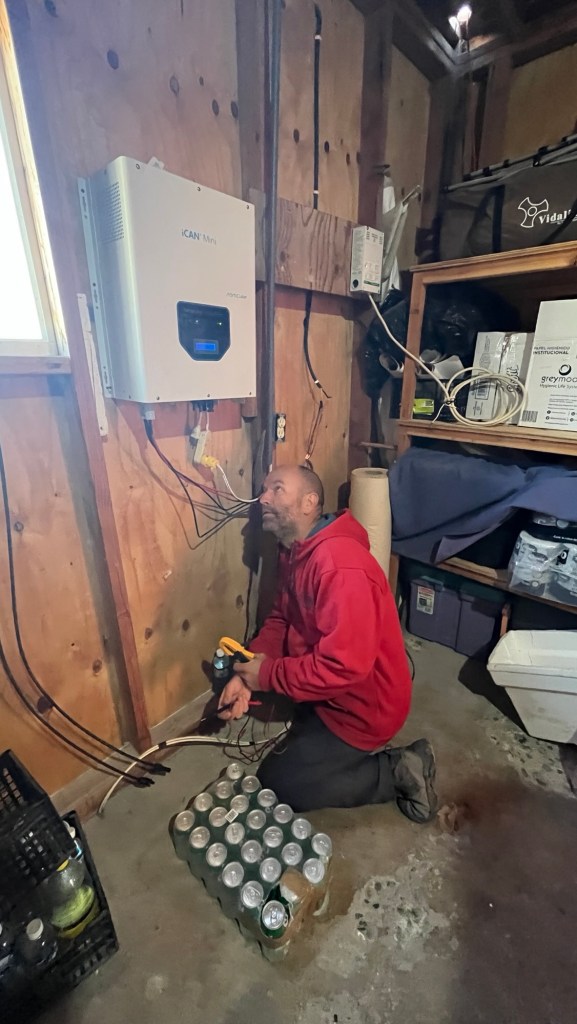
We had our first hot shower in since leaving Canada at a nice campground on the Laguna. We are way too early – only 6 whales in the Laguna. A generator was running at the campground, so I offered to figure out what was wrong with the solar system.
Too late, the menfolk already have a diagnosis. Likely wrong, but nothing to be done when your help isn’t wanted.
We decide to head back through the mountains and see Blue Whales in Loreto. The plan is to drive south, keeping an eye out for interesting roads that might cross the mountains to the east. If this sounds well researched to you, you are mistaken.
I would hate to shovel out a vehicle stuck in powdered dust.
A local tells us he was born close to the Guadalupe mission, so we ask which roads go through the mountains in the area. Turn left at La Ballena, a road that is shown as a walking trail on our phones!
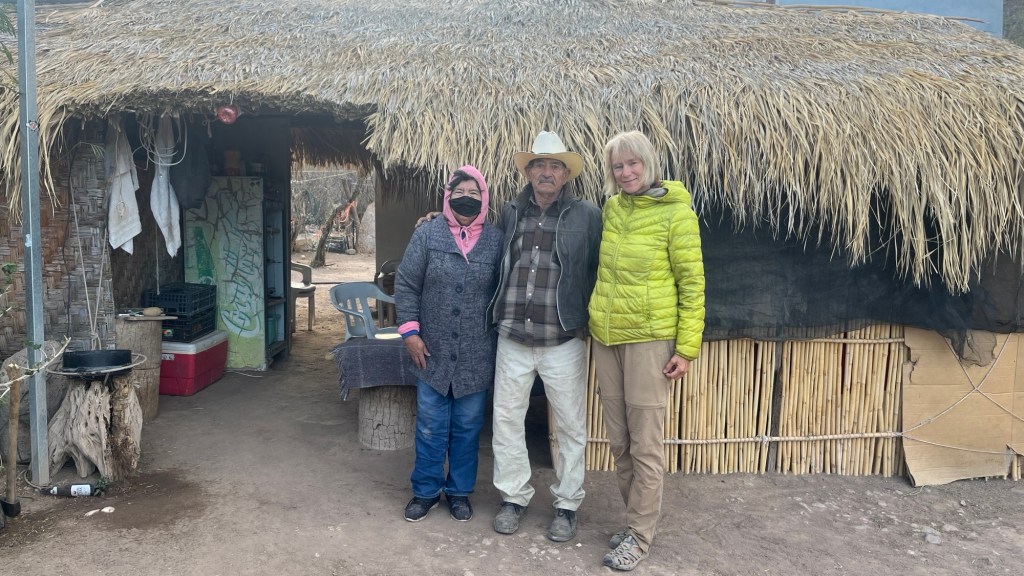
The road we take turns out to be a popular bicycle route, and enterprising ranches are thinking how to make a little extra cash. Ranchers are a safety net for us out here.
We have some amazing drone footage, but our software for editing video is so awful that we will wait and do this in Canada.
A major hurricane destroyed the road 3 years ago, and now the road is a bulldozed path through big river rock.
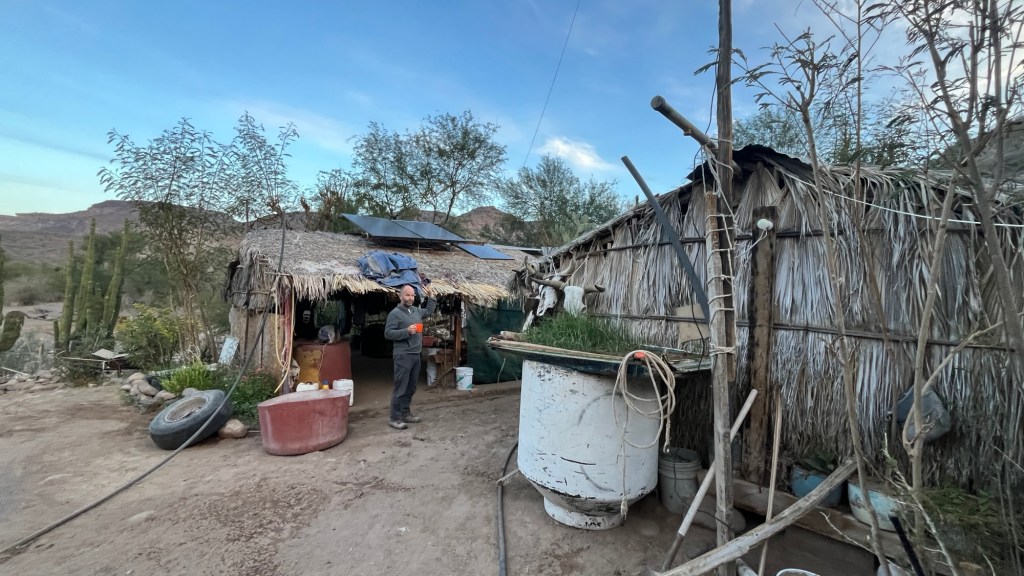
We stop at Rancho Rinconada for dinner. Solar is incredibly cheap and convenient for people living a simple life. They have a crazy wiring problem preventing lights from working properly in their kitchen, but they don’t let me fix. Piłes of dead cows.
A small cluster of named peaks to the north entices us to deviate from our ridiculously rough road through the mountains just when it looks like we’ll make it.
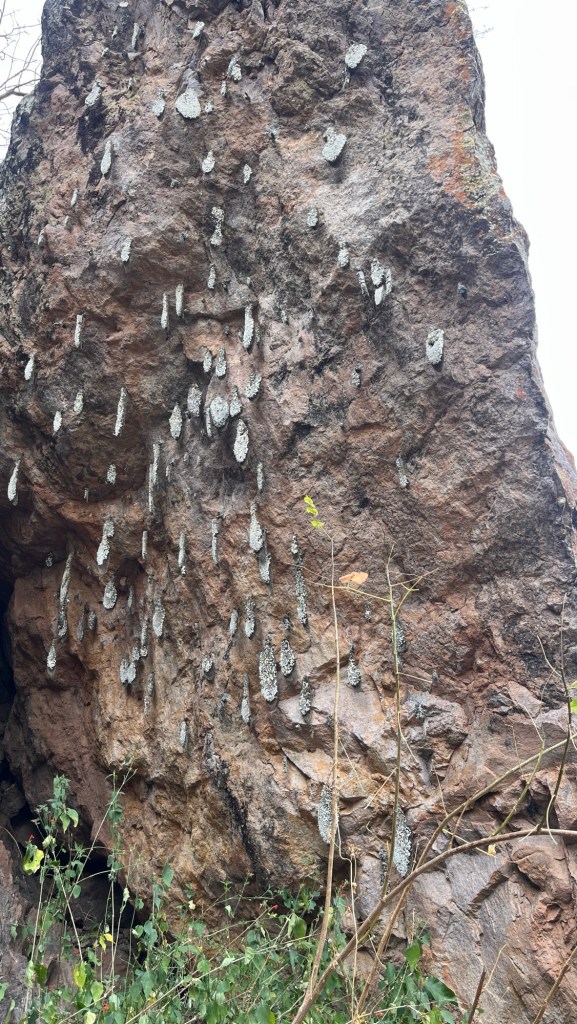
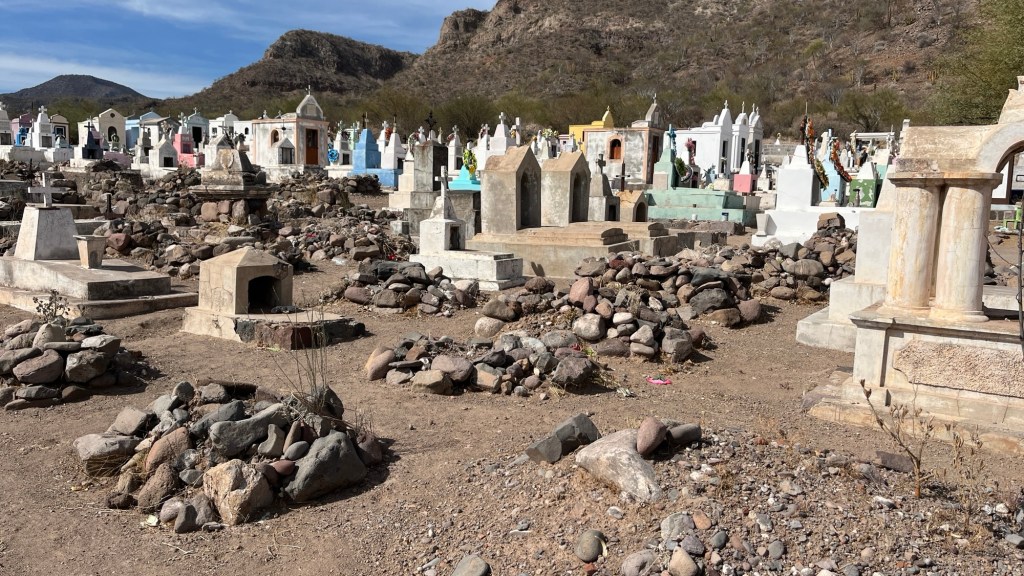
We drive north to the Guadalupe mission site, which we never find and then go over a pass to San Jose de Magdalena. Wasp nests?Cemetery in San Jose de Magdalena. Headstones going back to 1900 – lots of people lived to be 80-90 years old. That’s the problem with life expectancy statistics – if you made it to 5 years old, you could expect to live for a long time.
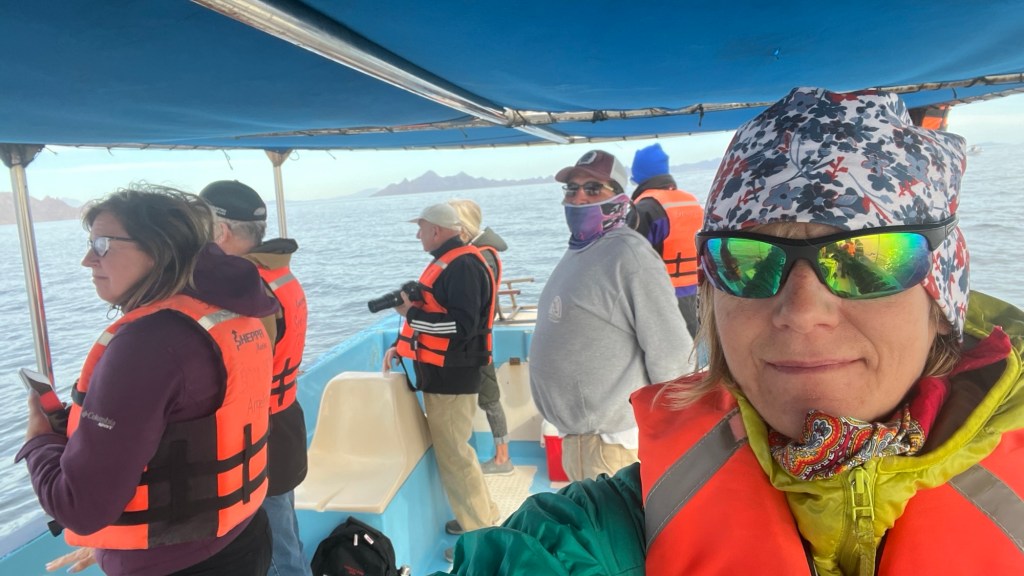
We book a whale sightseeing tour in Loreto.
Whale watching is a lot of waiting – whales can (and do) hold their breath for a long time before coming back up.
Humpbacks are very gregarious – splashing, breaching (jumping). Makes them seem personable.
Blue whales seem serious, and bizarre huge. It’s a shame we aren’t able to fly the drone. Each of these whales is over 100 tons.
We even seen a fin whale mother and calf. Video will take some editing, will add later.
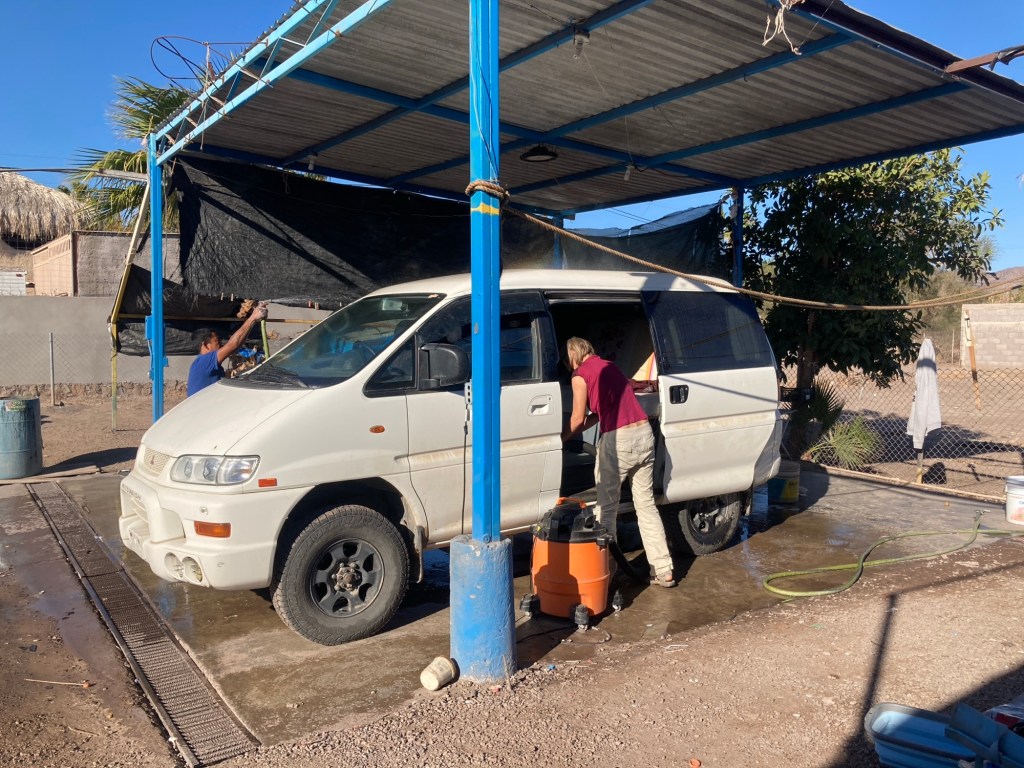
We know the trip is winding up when the van gets a cleaning. 7 weeks of dust coat the interior. We pay for a car wash to get access to their vacuum. Marta likes to leave her casa mobile spic and span. Final story. We carefully sample anything that looks edible. Marta really went for this berry – like a raisin dosed up with honey. And lots of scat around with the seeds in it, so other mammals enjoy it. What could go wrong?
While staying at a campground in Sierra de la Laguna, we seen the berries and asked our host if they were edible. The answer came as an order – “Don’t eat that!”. Locals believe they are responsible for killing cows! Foxes can be observed stumbling around, collapsing into a coma… Probably just superstition, right?
We have a name now – Cacachila, more commonly known as Coyotillo. Well studied by science. The bargain for plants that produce fruit is animals eat the pulp and distribute the seeds. This bush has upped the ante – crush the seeds and it will kill you.
Severe neuro toxin. You’d think Marta would stop eating them and you’d be wrong.
Update March 2025. Turns out neurotoxins are no joke. The fruit pulp had enough toxin that Marta is suffering from peripheral neuropathy. Difficulty walking, weakness, discomfort. Should eventually go away but a steep price to pay for a few berries. So learn from our mistakes…







 Marta and Chester's Maleficent Adventures