Our goal for the trip is to trek in Ladakh. The challenge is that the Valley bottoms are usually 3500 m and I didn’t do so well in Peru at altitude.
There is a 400 km highway from the capital Srinagar to Leh, and we plan to do some acclimatization stops along this road.
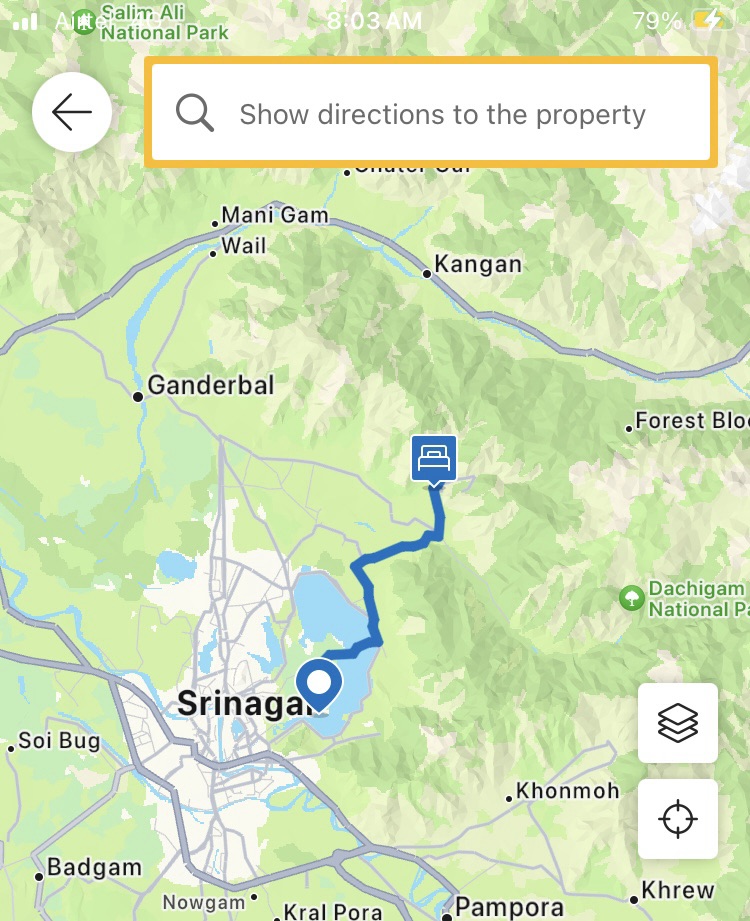
The plan changed a little when I found a homestay listed on Booking.com in the mountains above Srinagar
The booking is desperately short on details, but I’ve got a good feeling about this
We take a private car to a village a little bit lower in the valley. We’re breaking all the rules for tourists, but the Kashmiri seem very honest.
We immediately feel like we’re in a valley that tourism and time forgot. The Muslim locals stare, smile, wave shake our hands. 
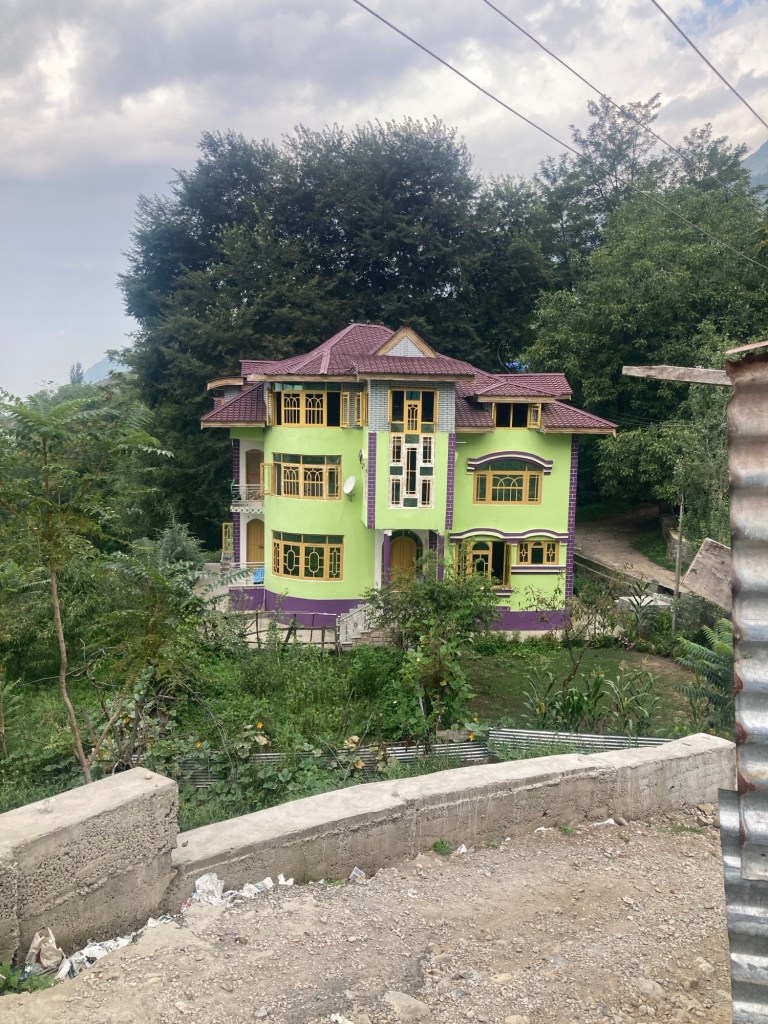
Some houses are quite new, older houses are in good condition. 
The directions on to our home stay were a little hazy – well, nonexistent. But, we had a point on the map. Seemed likely there would be a little sign? And, no.
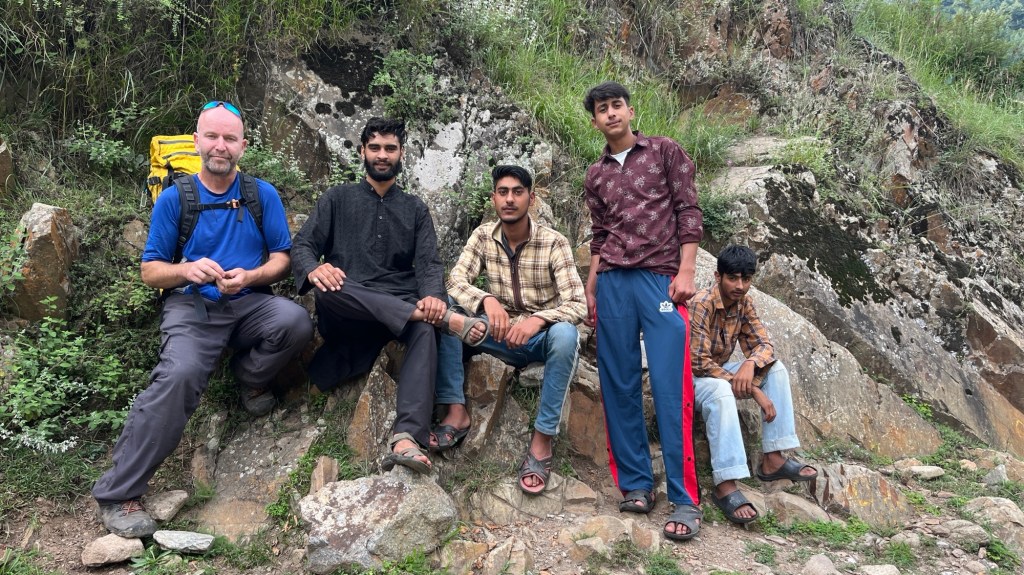
A pack of teenage boys smile and say hello, so we ask. Their best guess is 3km back down the valley. Hmm, we look sceptical. It’s a small village, so cars stop and more minds start to think about this. Finally, a young man joins, and he has the answer. It’s at his uncle’s house, two houses down!
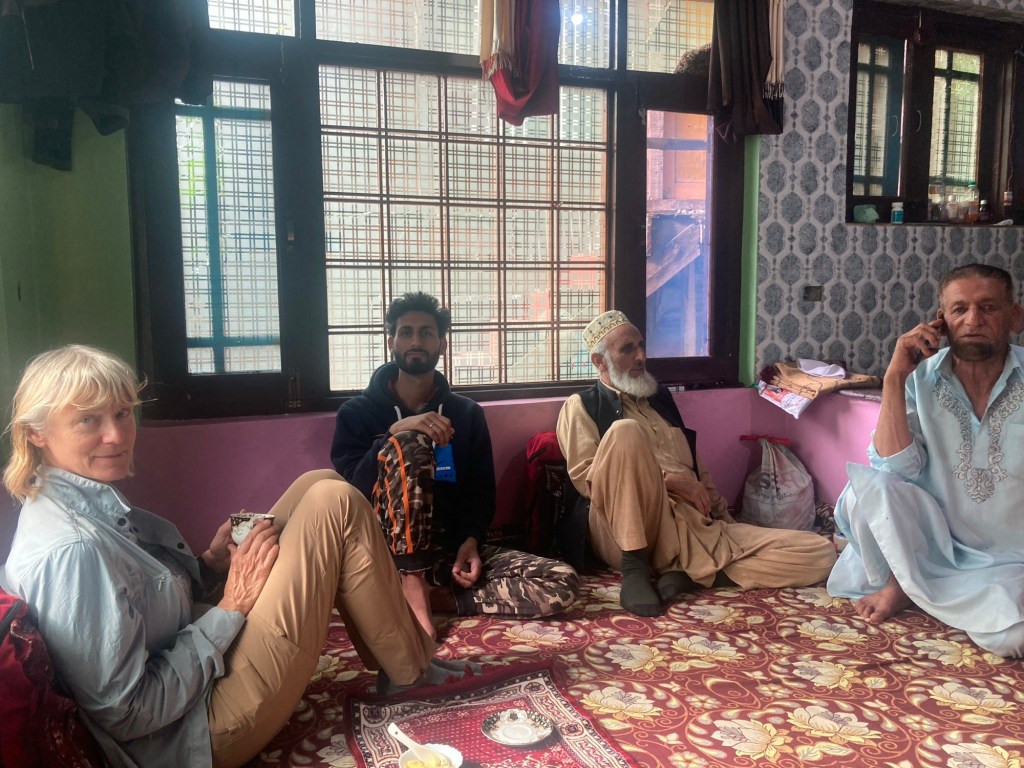
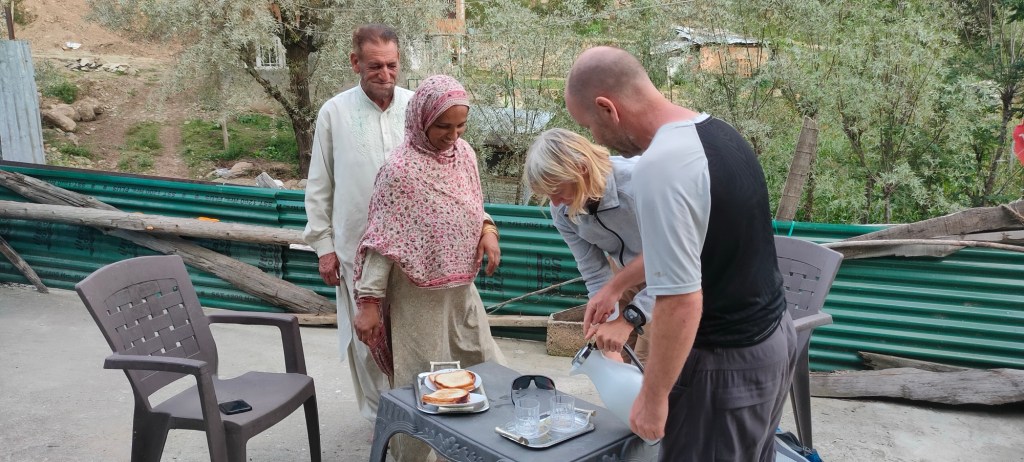
Our host (on the right). We are their first guests, ever! Which suits us, since we’ve never done a home stay either
We gather that a tourism agency (maybe government?) signed up some houses for a home stay program. Our hosts had no idea we were coming, but the bedroom was ready. They adjusted their plans quickly, and fortunately had plenty of relatives who spoke admirable English.
Which is interesting in its own right. Why is there so much English spoken in India?
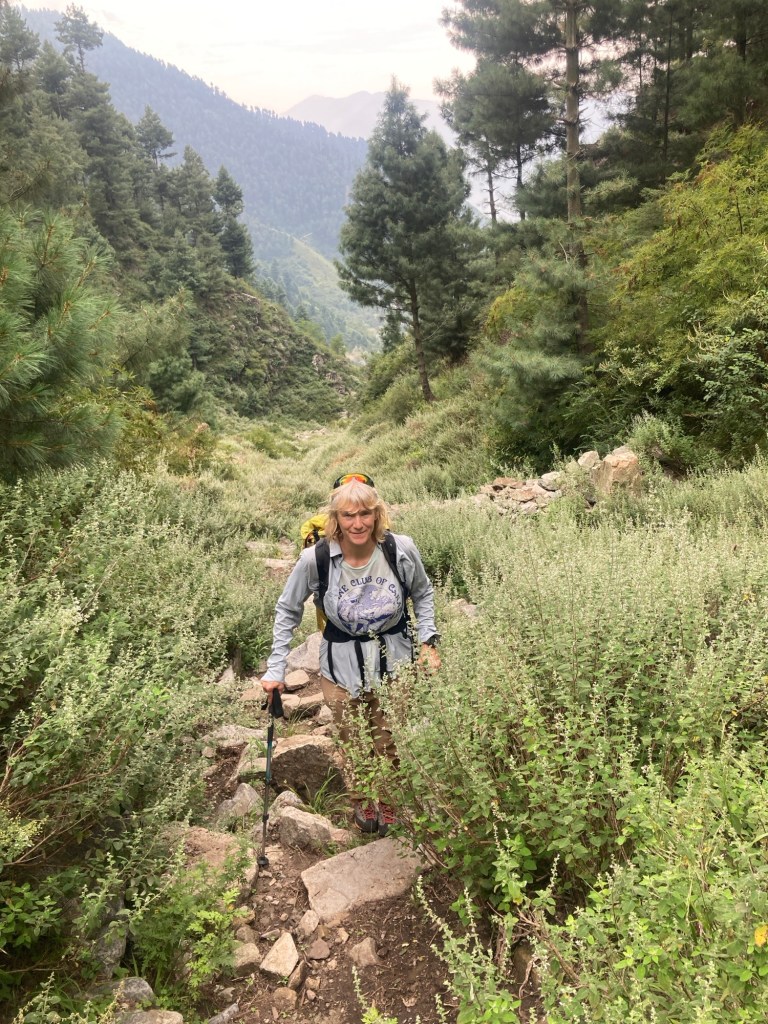
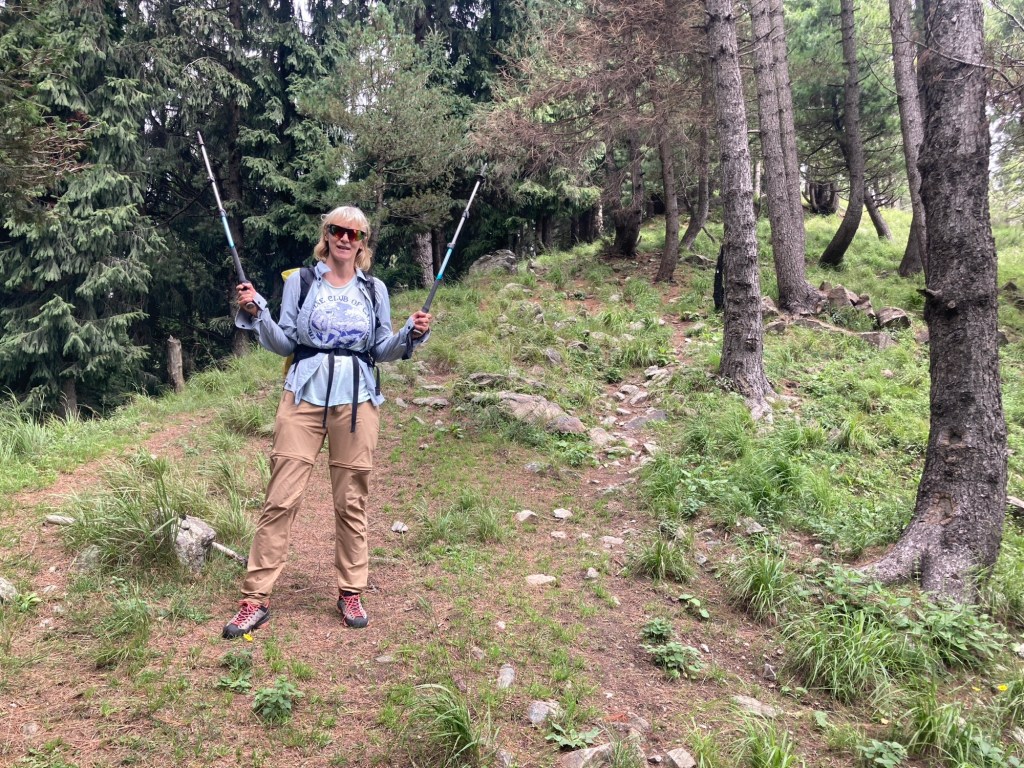
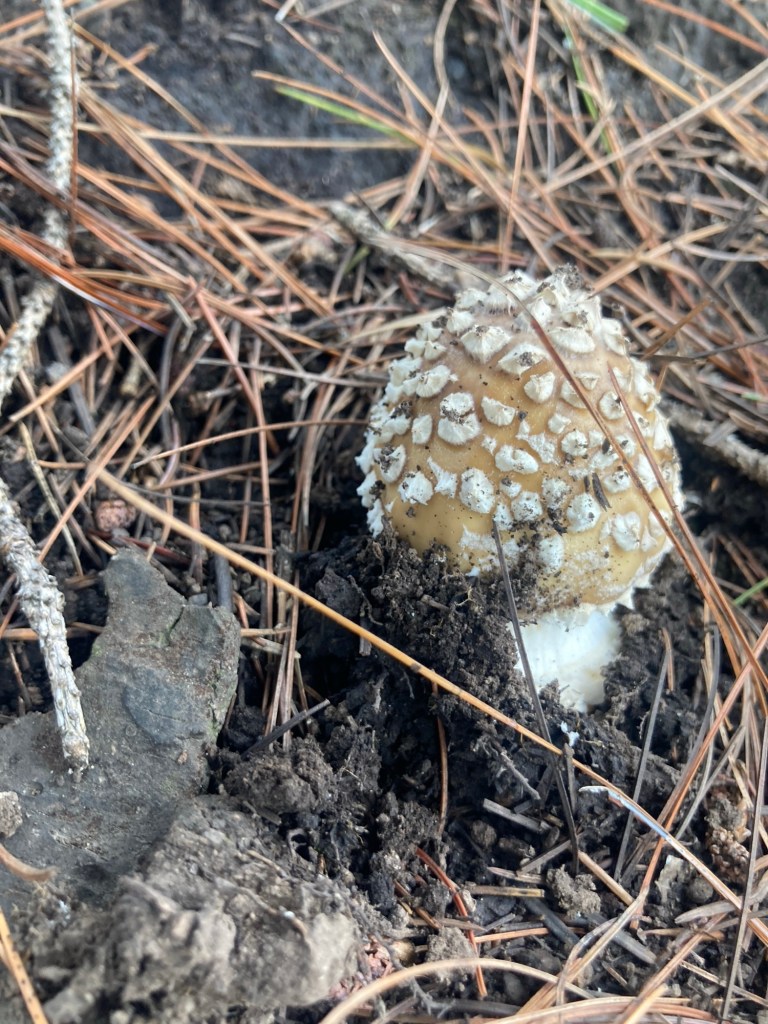
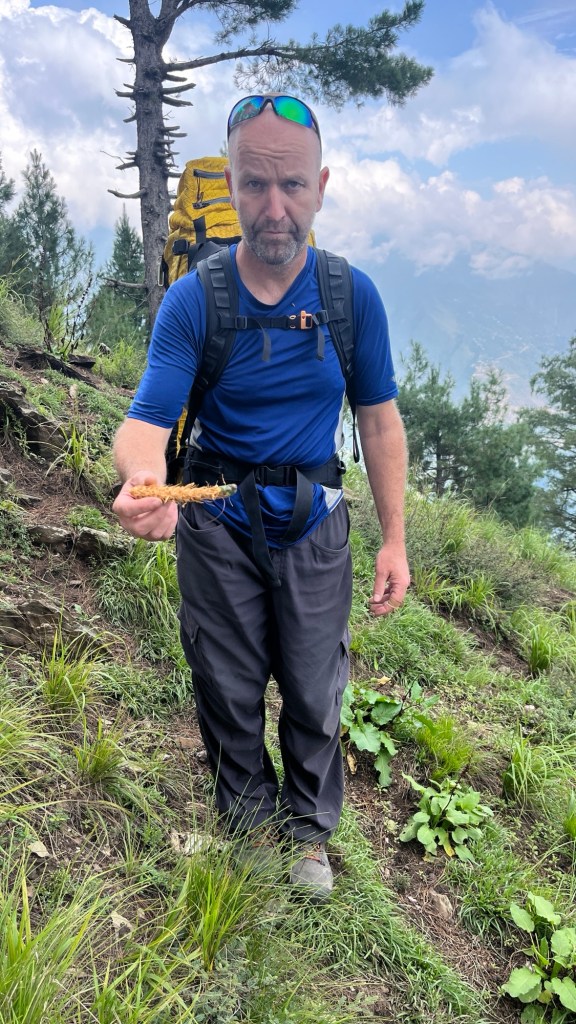
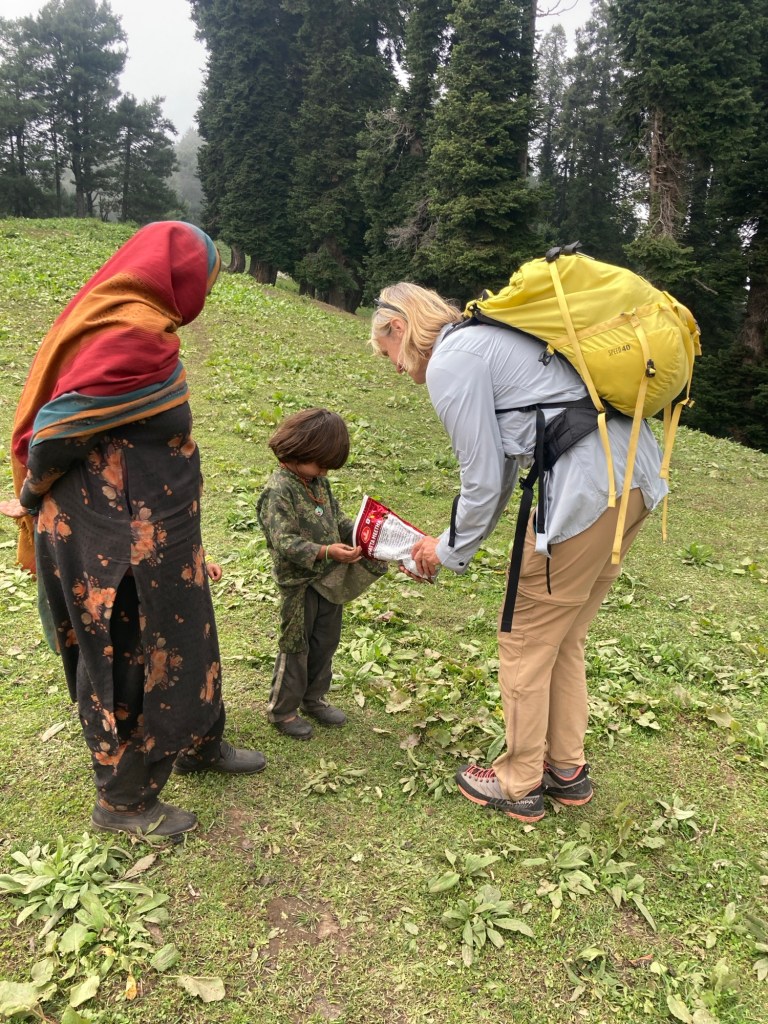
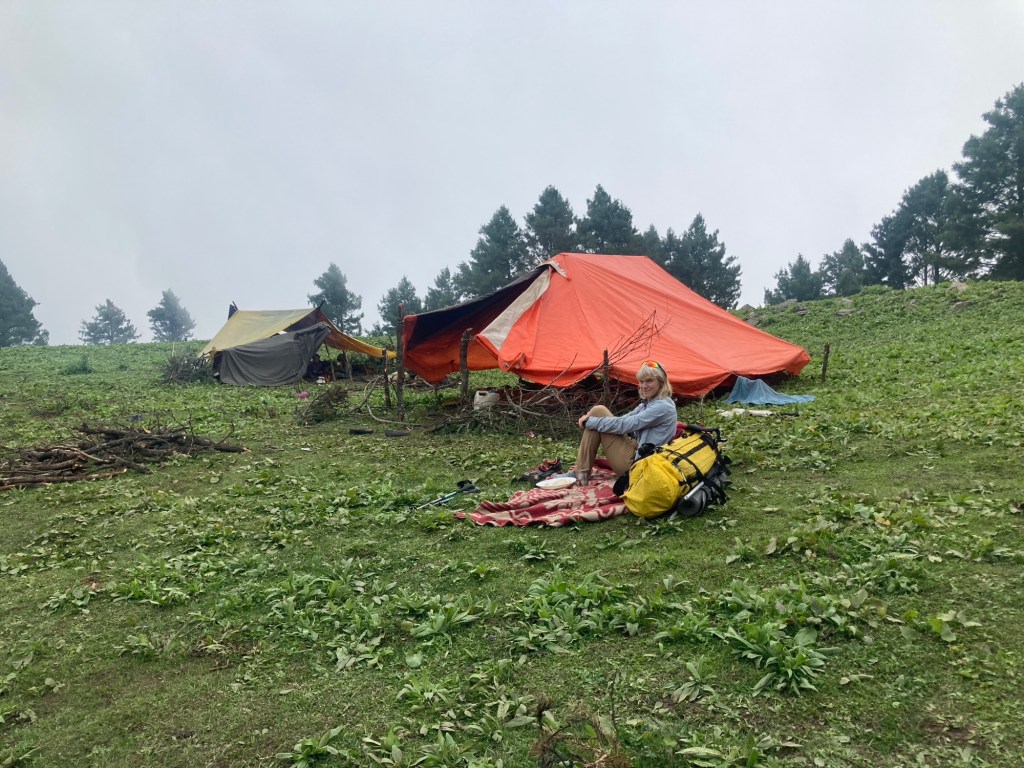
A sign on a local infrastructure project. There’s so many languages spoken here, perhaps English has become a common denominator, relatively free of tensions.We head north up a trail that should cross the mountains at 3100 meters. The Kashmir valley gets an incredible amount of rain. If a trail isn’t kept open by tourist trekking or by the local shepherds, the vegetation takes it over pretty quickly. This was a hard push.The ridge at 3000 m was fantastic. We were wondering who chased their herds so high up in the mountains.This is the deadliest looking mushroom I’ve ever seen This stripped off pine cone just hit me – so it must have been thrown down by a squirrel, which we never seen or heard. Monkey?We learned who is keeping their herds up on these high Mountain ridges. We met a camp of three Bakarwal women and children. Marta shares our food. The only word we had in common was chai, which means teaTheir men were off shepherding during the dayI really appreciated taking a long break here. We took a different route back to the village, much easier Hoodlums sitting beside the road eating fresh walnuts
We learned from our host that these nomads are Bakarwal. The obvious question is what did they do in winter? Unbelievably they walk their herds 400 km to the south to Jammu. On the roads, through the major cities at night.
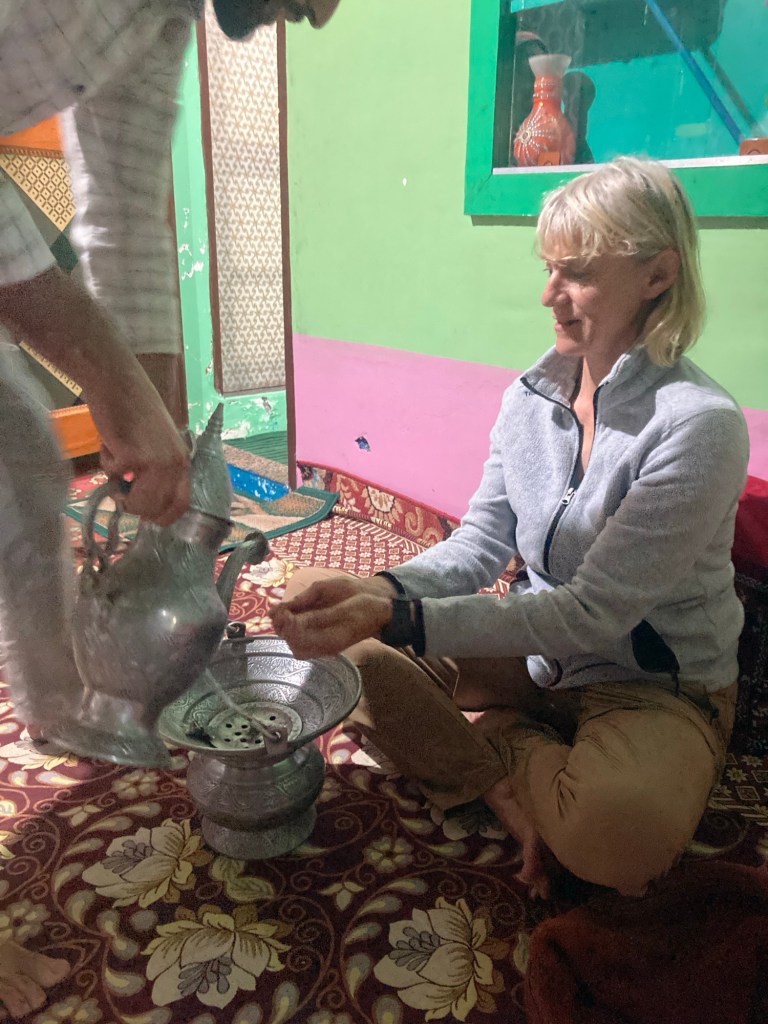
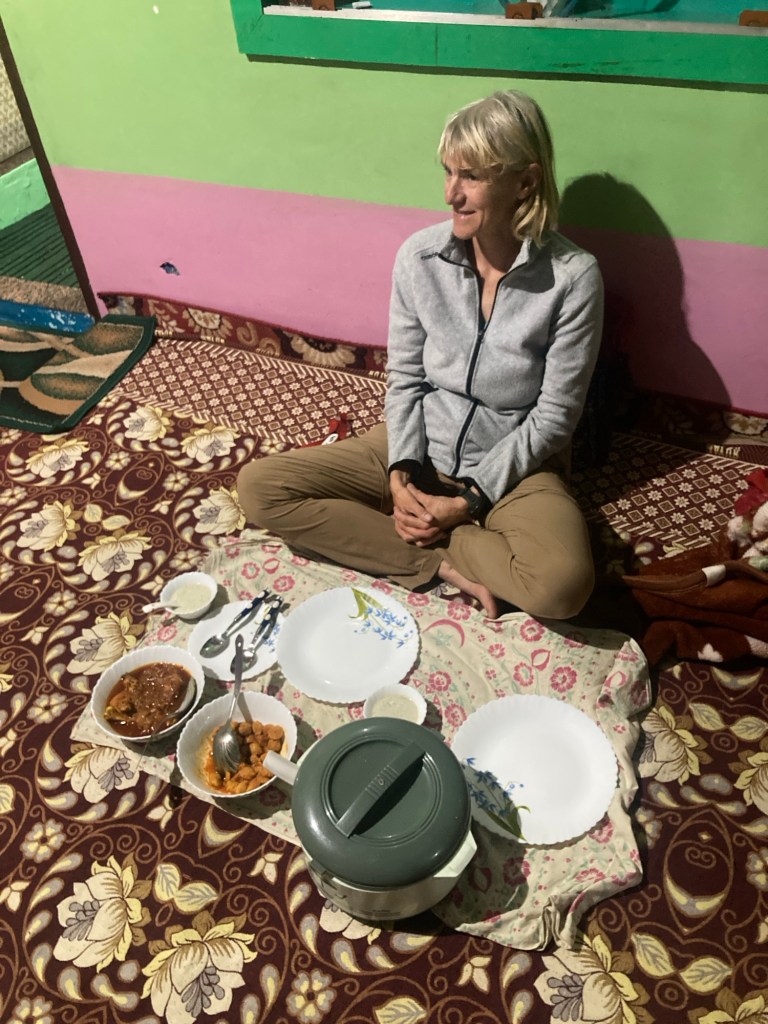
Dinner at our homestay. Washing hands first.It’s hard to believe we have only been in India for 48 hours
We thought dinner was delayed by a blackout. We later learned that the blackouts are scheduled, and everyone was ready with led lamps. Kashmiris just like to eat dinner at 9pm
We had the best sleep of our trip. A few dogs, far off, started barking in the early hours. Amazingly, once the prayer loudspeaker kicked on just after 5am, the dogs shut up and stayed quiet for the next couple hours. We were a little beaten after our big day of hiking, so we chartered the nephew of our host to show us around.
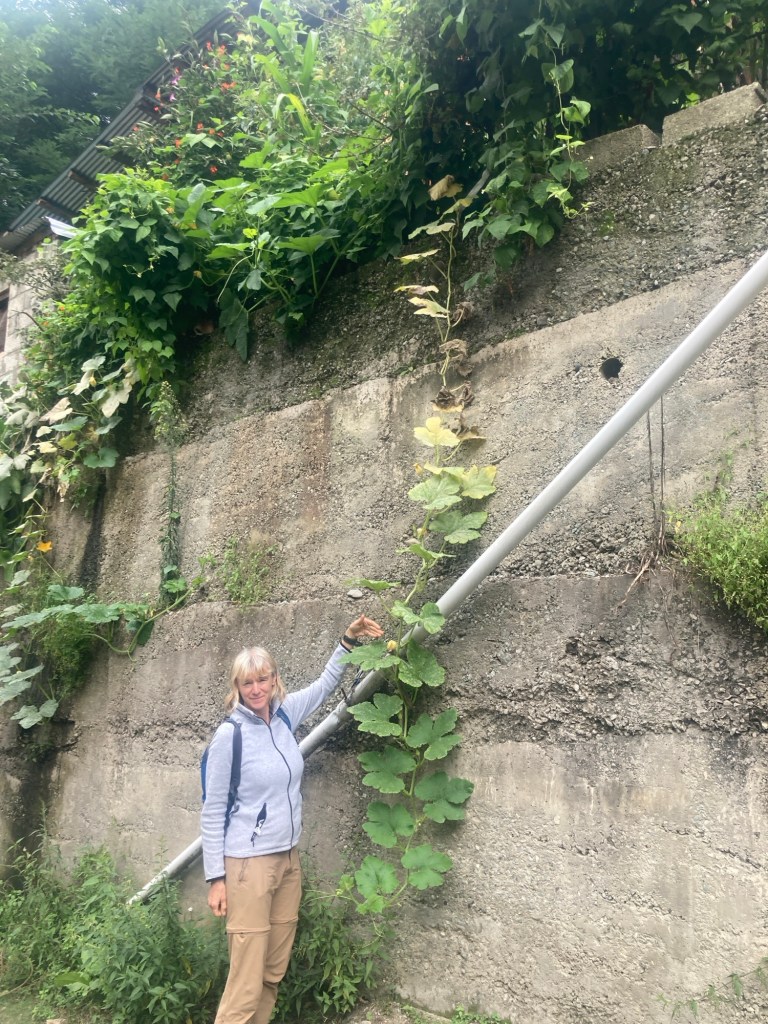
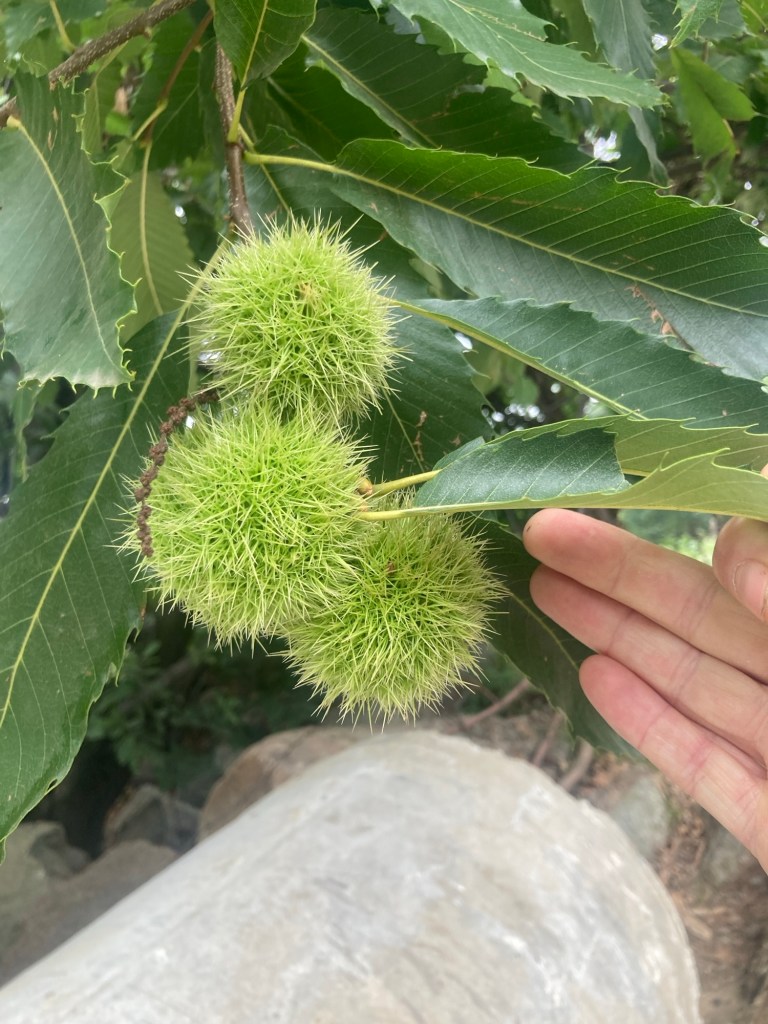
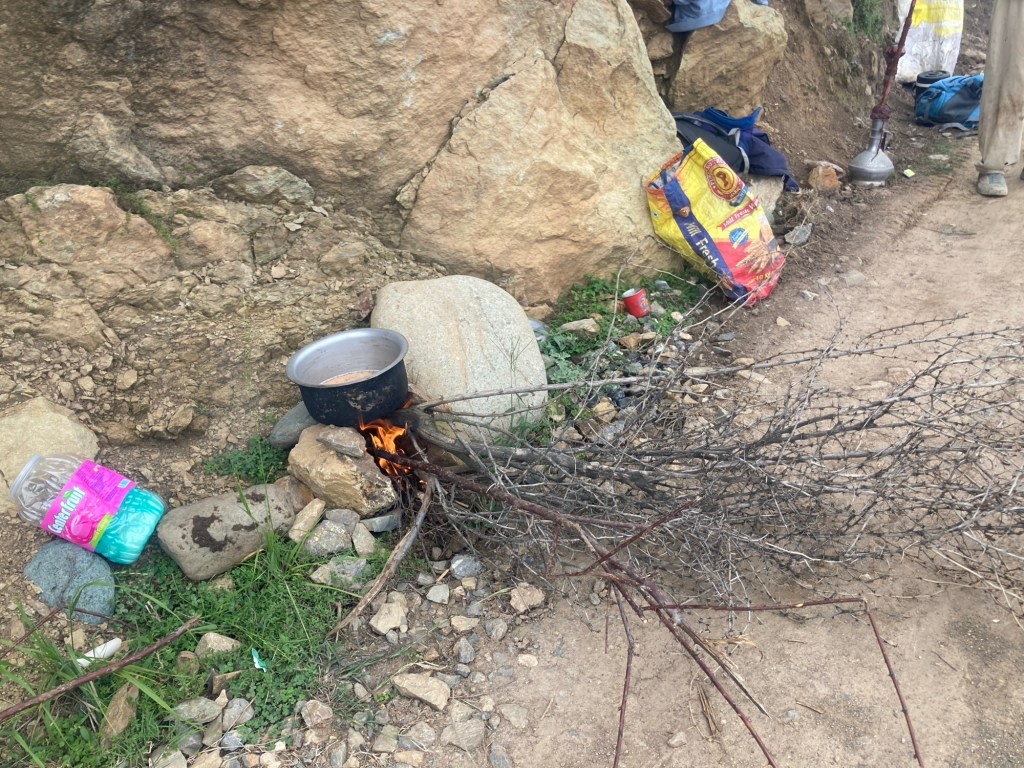
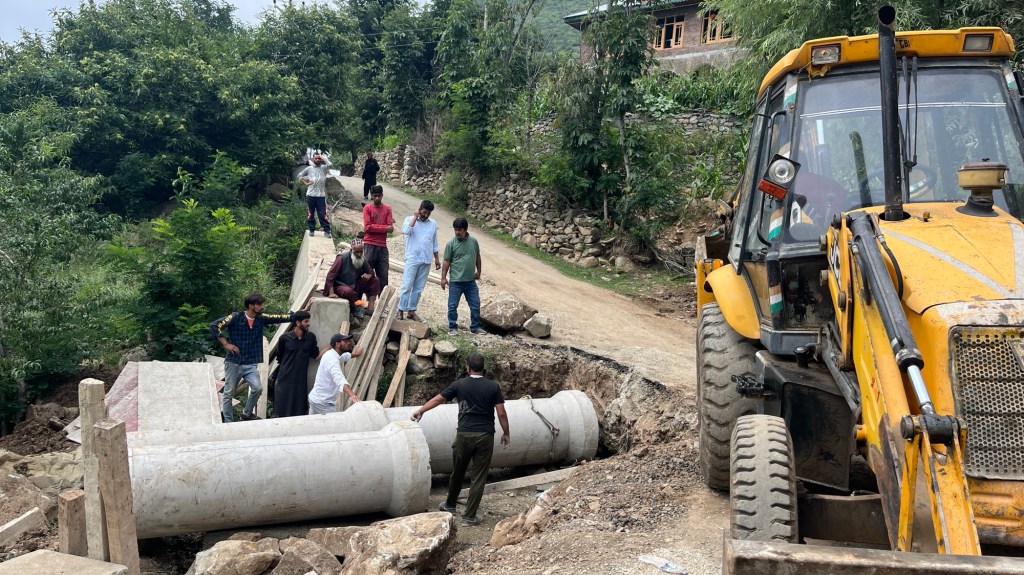
Some type of squash spilling down the retaining wall at our hosts house Turns out these are chestnuts Construction workers along the road making a brew of tea. We are walking up to a high point that paragliders launch off ofWhat’s that idiom about too many cooks?
If you’ve ever shovelled a bit of cement, you will immediately recognize the genius of using a rototiller. Don’t forget to wash it afterwardsI finally got the courage to grab a pic of a genuine Kashmiri ginger (on the right). Update: this may be died
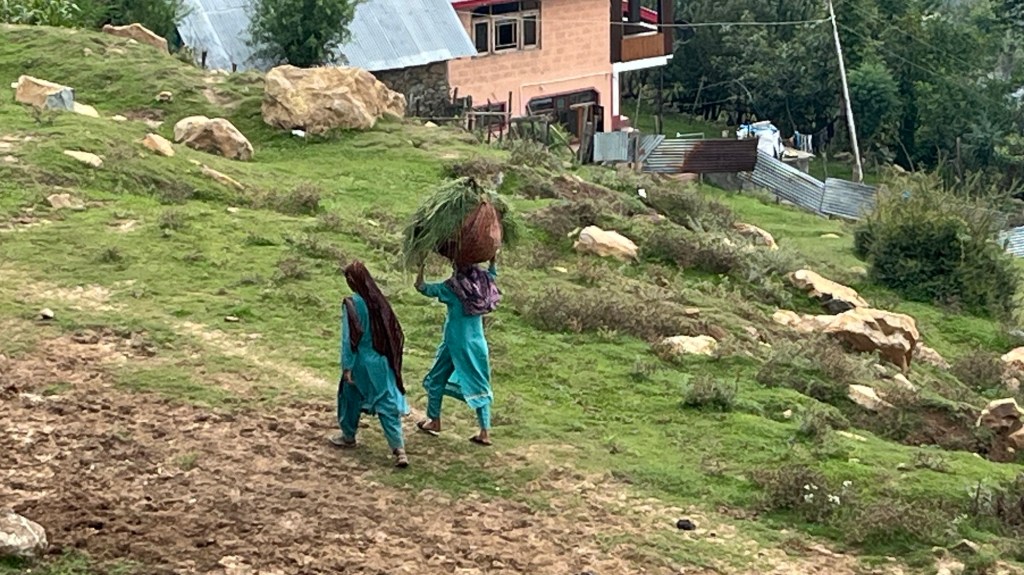
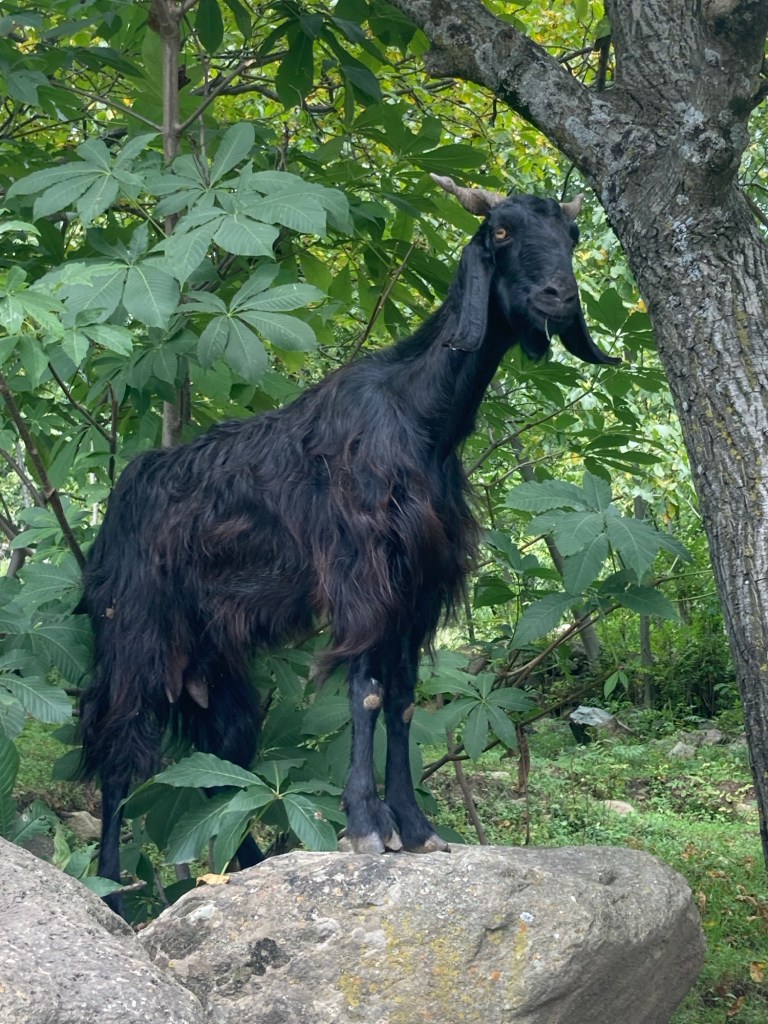
Grass being carried off for drying. I’m not sure how long snow prevents cows from grazing, at least a couple months. Plenty of goats to be seen, but this one was especially photogenicRaja, nephew of our host, who showed us around on what was supposed to be a zero dayWe went for a hike with Raja to a fish farm and into the mountains east of the village. And we happened onto Bakarwal nomads starting their winter migration. 
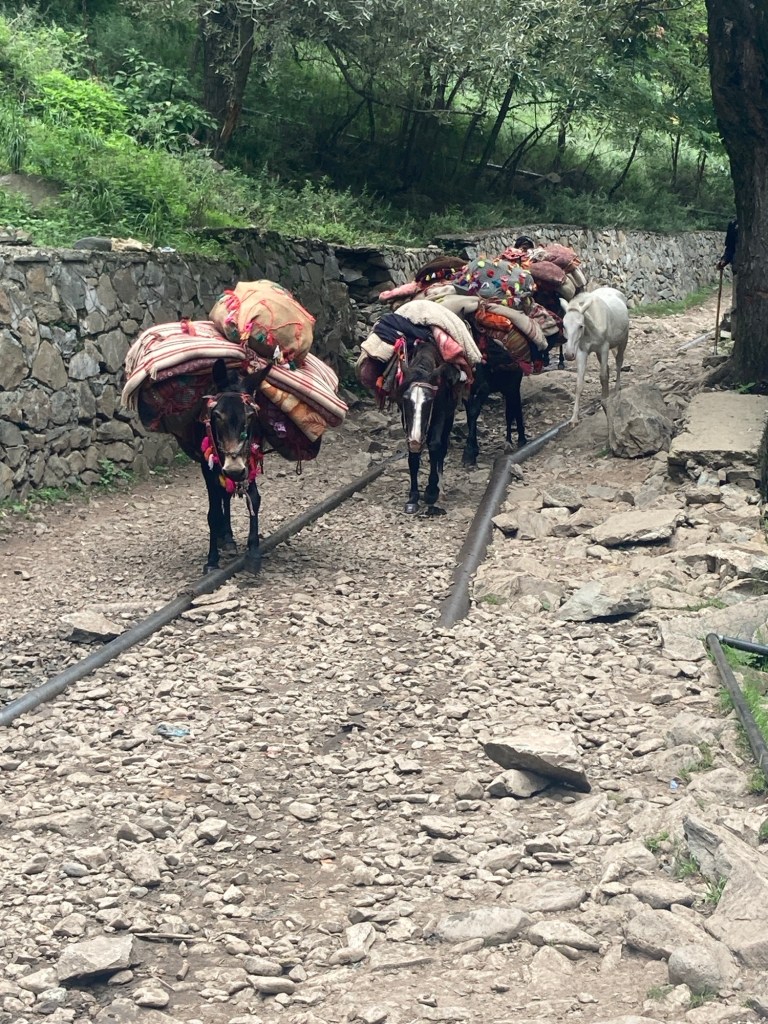
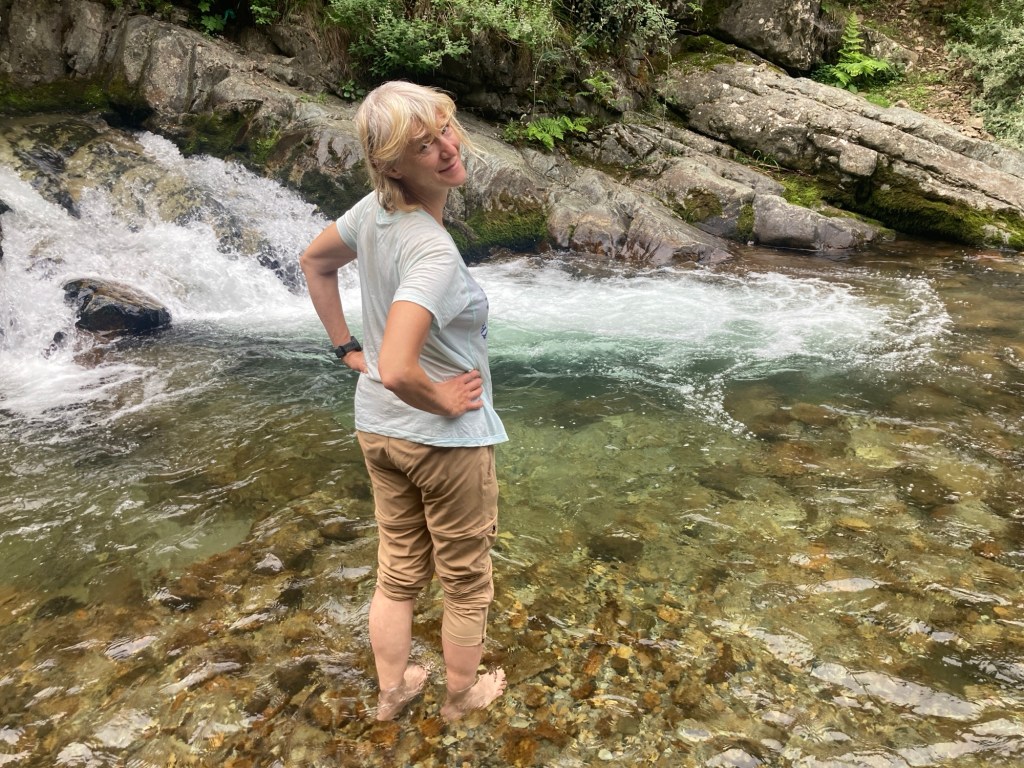
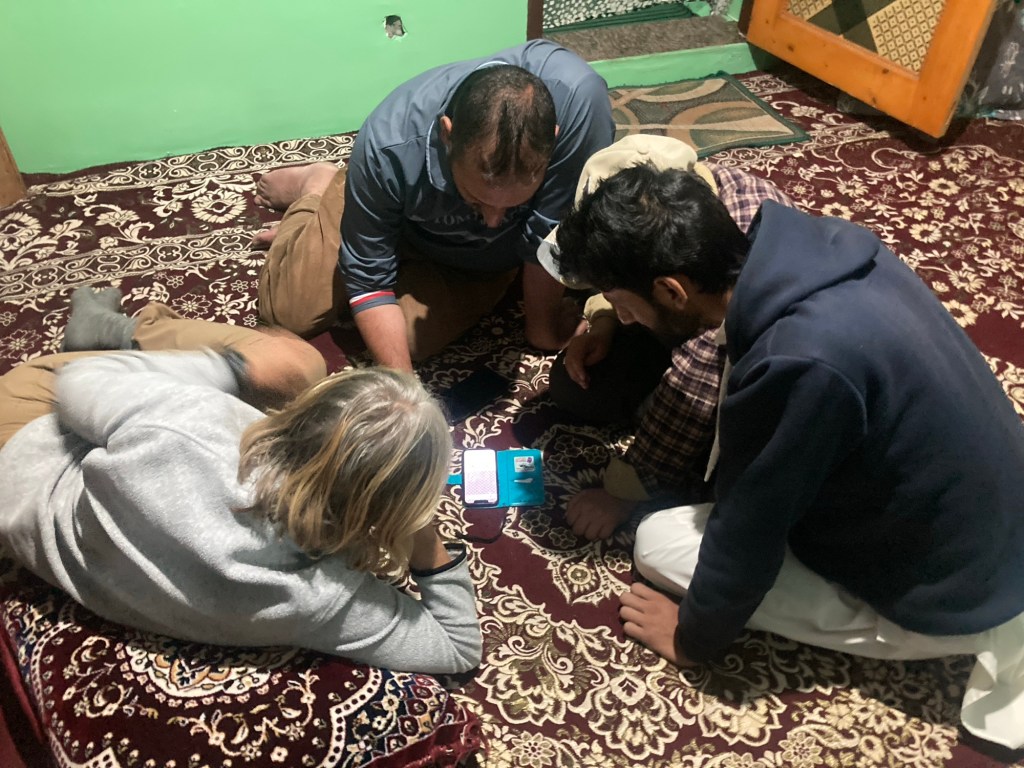
A river of goats headed down from the mountains. On a 400km journey to jammu for winterMarta soaks her feet in the stream that supplies drinking water to everyone We drop into a resort run by a family friend. Our visit has been defined by the enormous circle of family and close friends. Milk is probably the cheapest calories available here. Everyone walks around with a 2L stainless steel flask of milk. Each house makes fresh butterMarta botches pouring the milk teaEven more friends drop by at night to discuss trekking routes in the area. Our hosts. Far more cheery than comes across in photos. Also much better at sitting cross legged than us









 Marta and Chester's Maleficent Adventures